• 中文版
  • BM
  • News
  • Deals
  • Reviews
    • First Impressions
    • Hands-on
    • Comparisons
  • Tech
    • Mobile
    • Computers
    • Cameras
    • Wearables
    • Audio
    • Drones
  • Telco
    • Celcom
    • Digi
    • Maxis
    • Time
    • Tune Talk
    • U Mobile
    • Unifi
    • Yes
  • Cars
  • Contribute
  • Jobs
Menu
  • 中文版
  • BM
  • News
  • Deals
  • Reviews
    • First Impressions
    • Hands-on
    • Comparisons
  • Tech
    • Mobile
    • Computers
    • Cameras
    • Wearables
    • Audio
    • Drones
  • Telco
    • Celcom
    • Digi
    • Maxis
    • Time
    • Tune Talk
    • U Mobile
    • Unifi
    • Yes
  • Cars
  • Contribute
  • Jobs
Search
  • Tech
    • News
    • Mobile
    • Computers
    • Cameras
    • Wearables
    • Audio
    • Drones
  • Telco
    • Celcom
    • Digi
    • Maxis
    • Time
    • U Mobile
    • Unifi
    • Yes
  • Reviews
    • First Impressions
    • Hands-on
    • Comparisons
  • Buyer’s Guide
  • Opinions
  • Digital Life
  • Video
  • Deals
  • How-To
  • Cars
  • Bahasa Melayu
  • EV
  • Contribute
  • Advertise
Menu
  • Tech
    • News
    • Mobile
    • Computers
    • Cameras
    • Wearables
    • Audio
    • Drones
  • Telco
    • Celcom
    • Digi
    • Maxis
    • Time
    • U Mobile
    • Unifi
    • Yes
  • Reviews
    • First Impressions
    • Hands-on
    • Comparisons
  • Buyer’s Guide
  • Opinions
  • Digital Life
  • Video
  • Deals
  • How-To
  • Cars
  • Bahasa Melayu
  • EV
  • Contribute
  • Advertise
Search
Close
Home Transport Cars EV

Japanese carmakers to build EVs in Thailand, with investments of over RM20bil

  • BY Jonathan Lee
  • 27 December 2023
  • 6:26 pm
  • Comment
Share on FacebookShare on Twitter

Thailand has long been the destination for Japanese carmakers to assemble vehicles for Southeast Asian consumption, and this is set to continue even after the switchover to electric vehicles. Four firms will invest a total of 150 billion baht (around RM20.2 billion) in our northern neighbour’s EV industry, the Bangkok Post reported.

Government spokesperson Chai Wacharonke said Toyota and Honda will each invest around 50 billion baht (around RM6.7 billion), with pick-up truck specialists Isuzu and Mitsubishi putting in another 30 billion baht (around RM4 billion) and 20 billion baht (around RM2.7 billion) respectively, according to data from the Board of Investment. He added that production of electric pick-ups will, er, pick up over the next few years as the truck-crazy nation transitions from petrol and diesel engines to EVs. 
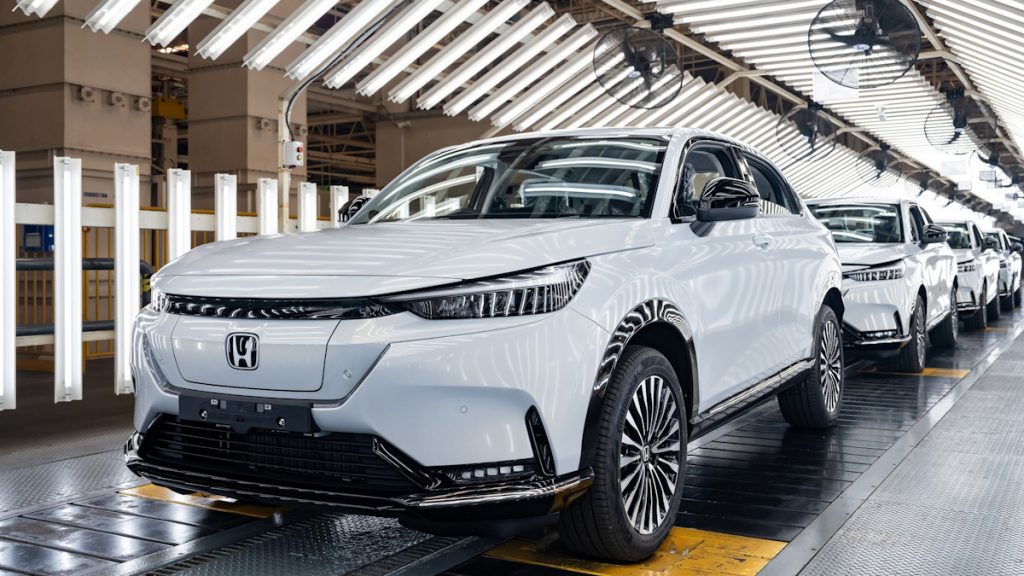
Honda e:N1 EV

Chai confirmed these carmakers will use Thailand as EV production hubs with the support of the government. They have also advocated battery-swapping technology for commercial vehicles, he said.

“The prime minister emphasises that Japanese car manufacturers can play an important role in helping Thailand to become a leader in EV manufacturing in the region,” Chai said. “Thailand is keen to cooperate with Japanese carmakers who want to expand investment in the country to create mutual benefits for the EV industries of both countries.”

The report also stated that the Federation of Thai Industries expects the nation to build 2.5 million vehicles in 2030, 30% of which will consist of EVs.
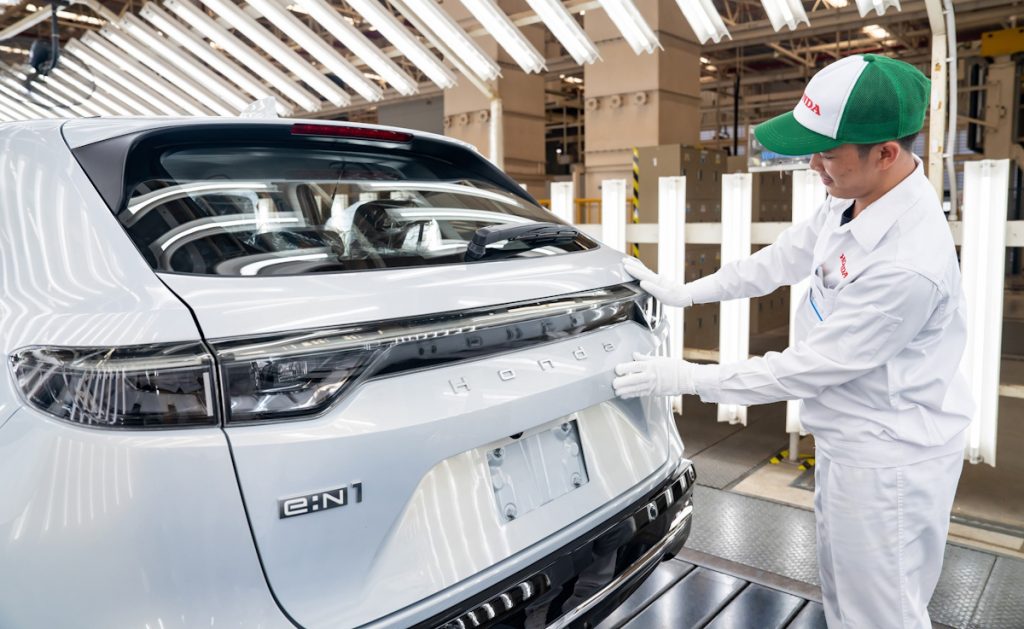
Honda e:N1 EV

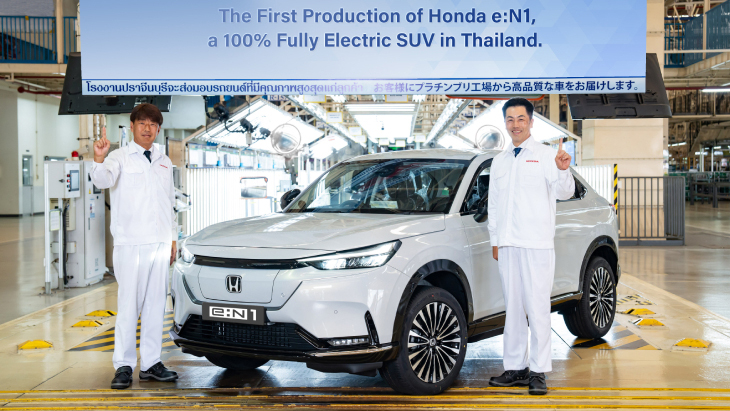
Honda has already taken the first step towards full-scale EV production in Thailand—earlier this month, the company opened an EV production line and built the new e:N1 SUV, based on the HR-V. The car is practically identical to its sibling, save for a massive 15.1-inch vertical touchscreen and a single electric motor that produces 150kW (201hp) and 310Nm of torque. A 68.8kWh battery provides a range of 412km. Details of the Thai launch will be announced in the first quarter of 2024.

Malaysia is also encouraging carmakers to build EVs here, promising to extend tax incentives for CKD locally-assembled models (those for CBU fully-imported EVs will be discontinued at the end of 2025). As it stands, however, only Volvo (with the XC40 and C40) and Mercedes-Benz (with the EQS) have committed to building the zero-emission vehicles here, although Smart is exploring opportunities together with Proton. Both Proton and Perodua are also tipped to be building their own EVs by 2025.

[ SOURCE ]

Tags: Electric Vehicleelectric vehiclesEVEVsHondaIsuzuMitsubishiToyota
Jonathan Lee

Jonathan Lee

POPULAR

Malaysia’s first 5g advanced Broadband: What You Get for RM68/month

January 14, 2026

Neta V now available for only RM40k, but with a limited 6-month warranty

January 31, 2026

Japanese carmakers to build EVs in Thailand, with investments of over RM20bil

December 27, 2023

Perodua QV-E only costs RM1.4k to maintain for 5 years, cheaper than Axia

January 30, 2026
Chery Tiggo 7 PHEV - Tiggo 8 PHEV - Malaysia

Chery Tiggo PHEV models now come with up to RM7,888 in rebates

January 30, 2026

CelcomDigi updates 5G prepaid plan for 2026, no more 28 day validity for “unlimited” options

January 28, 2026

Copyright © 2025 · SoyaCincau.com
Mind Blow Sdn Bhd (1076827-P)

  • ADVERTISE
  • DISCLAIMER

Copyright © 2026 · SoyaCincau.com – Mind Blow Sdn Bhd (1076827-P)

  • ADVERTISE
  • DISCLAIMER