Maxis and U Mobile are reportedly revisiting merger discussions that could potentially create Malaysia’s largest mobile operator. However, a potential merger between the two telcos could raise questions about competition and the future of Malaysia’s dual 5G network model.
According to Bloomberg’s recent report, Maxis has invited selected banks and law firms to submit proposals for a potential transaction. U Mobile’s shareholders are reportedly seeking a valuation of at least RM10 billion.
While both telcos have yet to make an official announcement, a potential merger could significantly reshape Malaysia’s telecommunications landscape. Besides raising questions about the future of Malaysia’s two 5G networks, could the merger also mean fewer choices and less competitive mobile plans for consumers?
Maxis and U Mobile reportedly restarting merger discussions
This isn’t the first time Maxis and U Mobile have explored a potential merger or acquisition.
In February 2026, The Edge reported that high-level negotiations had stalled after U Mobile’s shareholders demanded RM14 billion for the company. According to a source familiar with the discussions, talks had stalled for approximately four months due to disagreements over the asking price, which was described as “too crazy”.
Interestingly, the latest reported valuation of at least RM10 billion is lower than the earlier asking price. However, it remains unclear whether the potential deal would involve cash, shares or a combination of both.
Responding to the recent Bloomberg report, Maxis neither confirmed nor denied the merger discussions.
However, the green telco said it is always evaluating strategic opportunities and partnerships that are value accretive. It added that should there be any material corporate development, they will make the necessary disclosures to the market in a timely manner.
Who owns Maxis and U Mobile?
Maxis is currently majority-owned by BGSM Equity Holdings Sdn Bhd, which holds 62.22% of the listed telco. Its substantial shareholders include BGSM Management, Binariang GSM, Usaha Tegas and Saudi Telecom.
According to Maxis’ shareholding information on their website, other major shareholders include Citigroup Nominees for the Employees Provident Fund (9.16%), AmanahRaya Trustees for Amanah Saham Bumiputera (8.03%) and Citigroup Nominees for EPF Islamic (4.04%).
Meanwhile, U Mobile is currently majority-owned by Mawar Setia Sdn Bhd, an investment holding company founded by Tan Sri Vincent Tan and YAM Tunku Tun Aminah Sultan Ibrahim Ismail. In March 2026, U Mobile confirmed that Mawar Setia had increased its stake to over 50%, following the completion of its acquisition of a substantial shareholding from Singapore’s ST Telemedia.
The transaction resulted in U Mobile becoming majority Malaysian-owned, while YAM Tunku Tun Aminah succeeds Tan Sri Dato Seri Vincent Tan as the new Chairman.
According to the latest SSM records, Affin Hwang Nominees currently holds 47.28% of U Mobile’s listed shares by count, followed by Straits Mobile Investments (23.45%), Sultan Ibrahim (11.04%) and Magnum Berhad (6.80%).
Maxis-U Mobile could form Malaysia’s largest mobile telco
A potential Maxis-U Mobile merger could challenge CelcomDigi’s position as Malaysia’s largest mobile operator.
CelcomDigi currently has 20.3 million subscribers as of Q2 2026, while Maxis has 9.98 million subscribers as of Q2 2026. Meanwhile, U Mobile reportedly has over 9 million subscribers at the end of 2023.
When combined, Maxis and U Mobile would probably have over 20 million subscribers, potentially overtaking CelcomDigi in subscriber count.
Maxis is also among Malaysia’s most profitable telecommunications operators, reporting a net profit of RM1.56 billion for FY2025. A merger could allow the telco to expand its subscriber base while potentially achieving greater efficiencies through network and operational consolidation in the long term.
Another potential advantage for Maxis is greater control over its 5G network infrastructure and services. Unlike its current arrangement with Digital Nasional Berhad (DNB), acquiring U Mobile could allow Maxis to directly manage its 5G network expansion, capacity upgrades and service differentiation. U Mobile’s existing spectrum holdings could also provide greater flexibility in optimising network performance and coverage, subject to regulatory approval.
However, direct ownership and operation of 5G infrastructure also come with higher capital expenditure and operating commitments for Maxis.
Would a Maxis-U Mobile merger mean fewer choices for consumers?
While a merger could create a stronger telco group, bigger doesn’t necessarily mean better for consumers.
Maxis and U Mobile currently sit at opposite ends of the mobile market. The green telco positions itself as a premium brand with some of the most expensive postpaid plans in Malaysia. Meanwhile, U Mobile has built its reputation as a consumer champion, offering affordable prepaid and postpaid plans with generous data allowances.
As the country’s third major mobile telco, U Mobile is seen as a stronger alternative to the two larger players, CelcomDigi and Maxis. If Maxis and U Mobile were to merge, essentially, we are left with a duopoly.
There are other players such as Yes and Unifi Mobile, along with several Mobile Virtual Network Operators (MVNOs). But a combined Maxis-U Mobile could leave CelcomDigi as its only similarly sized competitor.
This raises concerns about reduced price competition. With few big players, there could be less pressure to introduce cheaper plans, larger data allowances and better deals for consumers.
While Maxis and U Mobile could continue operating as separate brands after the merger, the combined entity may have less incentive to maintain a significant price gap between their respective mobile plans, potentially reducing competition and consumer choice.
Of course, any potential merger would also require regulatory scrutiny from the Malaysian Communications and Multimedia Commission (MCMC), particularly to address concerns over market competition, spectrum holdings and Malaysia’s dual 5G network model. We have already seen how regulatory intervention played out during the Celcom-Digi merger.
In June 2022, MCMC approved the Celcom-Digi merger subject to several conditions to address competition concerns. Among them, both telcos were required to return a combined 70MHz of spectrum, establish an independent business unit for MVNOs and divest Yoodo.
Unfortunately, Yoodo became an unexpected casualty of the merger. The popular digital telco, known for its affordable and customisable plans, was discontinued in August 2024 after CelcomDigi failed to secure a new owner within the stipulated divestment period.
A potential Maxis-U Mobile merger could face similar regulatory requirements, including the possibility of returning spectrum to ensure a level playing field.
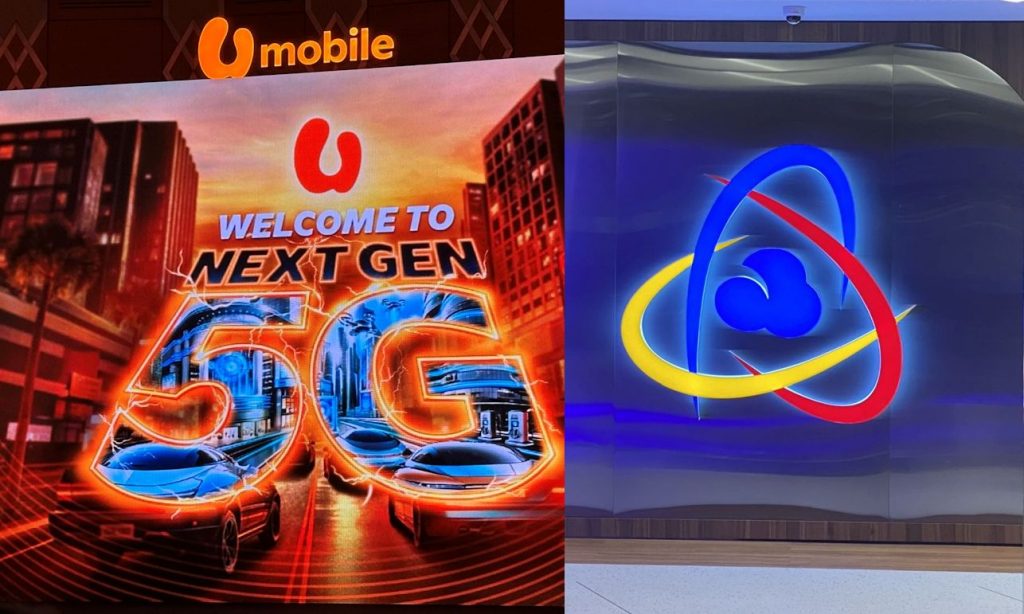
There is also the question of Malaysia’s dual 5G network ownership. Maxis currently holds a stake in DNB, while U Mobile operates the second 5G network. If both telcos combine, Maxis may have to exit DNB to avoid overlapping ownership of the two competing networks.
Such a move could leave CelcomDigi and YTL as DNB’s remaining telco shareholders, while the combined Maxis-U Mobile entity operates on the second 5G network.
Even if Maxis and U Mobile reach an agreement, completing the merger could take considerable time. For comparison, the Celcom-Digi merger took more than 19 months from the announcement of formal merger discussions in April 2021 until its completion in November 2022.
Ultimately, the bigger question is whether the potential merger would deliver better coverage, service quality and value for Malaysians, or simply result in two dominant telco groups with less incentive to compete aggressively on pricing.