
• 中文版
  • BM
  • News
  • Deals
  • Reviews
    • First Impressions
    • Hands-on
    • Comparisons
  • Tech
    • Mobile
    • Computers
    • Cameras
    • Wearables
    • Audio
    • Drones
  • Telco
    • Celcom
    • Digi
    • Maxis
    • Time
    • Tune Talk
    • U Mobile
    • Unifi
    • Yes
  • Cars
  • Contribute
  • Jobs
Menu
  • 中文版
  • BM
  • News
  • Deals
  • Reviews
    • First Impressions
    • Hands-on
    • Comparisons
  • Tech
    • Mobile
    • Computers
    • Cameras
    • Wearables
    • Audio
    • Drones
  • Telco
    • Celcom
    • Digi
    • Maxis
    • Time
    • Tune Talk
    • U Mobile
    • Unifi
    • Yes
  • Cars
  • Contribute
  • Jobs
Search
  • Tech
    • News
    • Mobile
    • Computers
    • Cameras
    • Wearables
    • Audio
    • Drones
  • Telco
    • Celcom
    • Digi
    • Maxis
    • Time
    • U Mobile
    • Unifi
    • Yes
  • Reviews
    • First Impressions
    • Hands-on
    • Comparisons
  • Buyer’s Guide
  • Opinions
  • Digital Life
  • Video
  • Deals
  • How-To
  • Cars
  • Bahasa Melayu
  • EV
  • Contribute
  • Advertise
Menu
  • Tech
    • News
    • Mobile
    • Computers
    • Cameras
    • Wearables
    • Audio
    • Drones
  • Telco
    • Celcom
    • Digi
    • Maxis
    • Time
    • U Mobile
    • Unifi
    • Yes
  • Reviews
    • First Impressions
    • Hands-on
    • Comparisons
  • Buyer’s Guide
  • Opinions
  • Digital Life
  • Video
  • Deals
  • How-To
  • Cars
  • Bahasa Melayu
  • EV
  • Contribute
  • Advertise
Search
Close
Home Transport Cars EV

MITI’s EV policy flip-flop raises bigger questions than just protecting Proton | Let’s Talk About #143

  • BY Alexander Wong
  • 12 May 2026
  • 9:37 pm
  • Comment
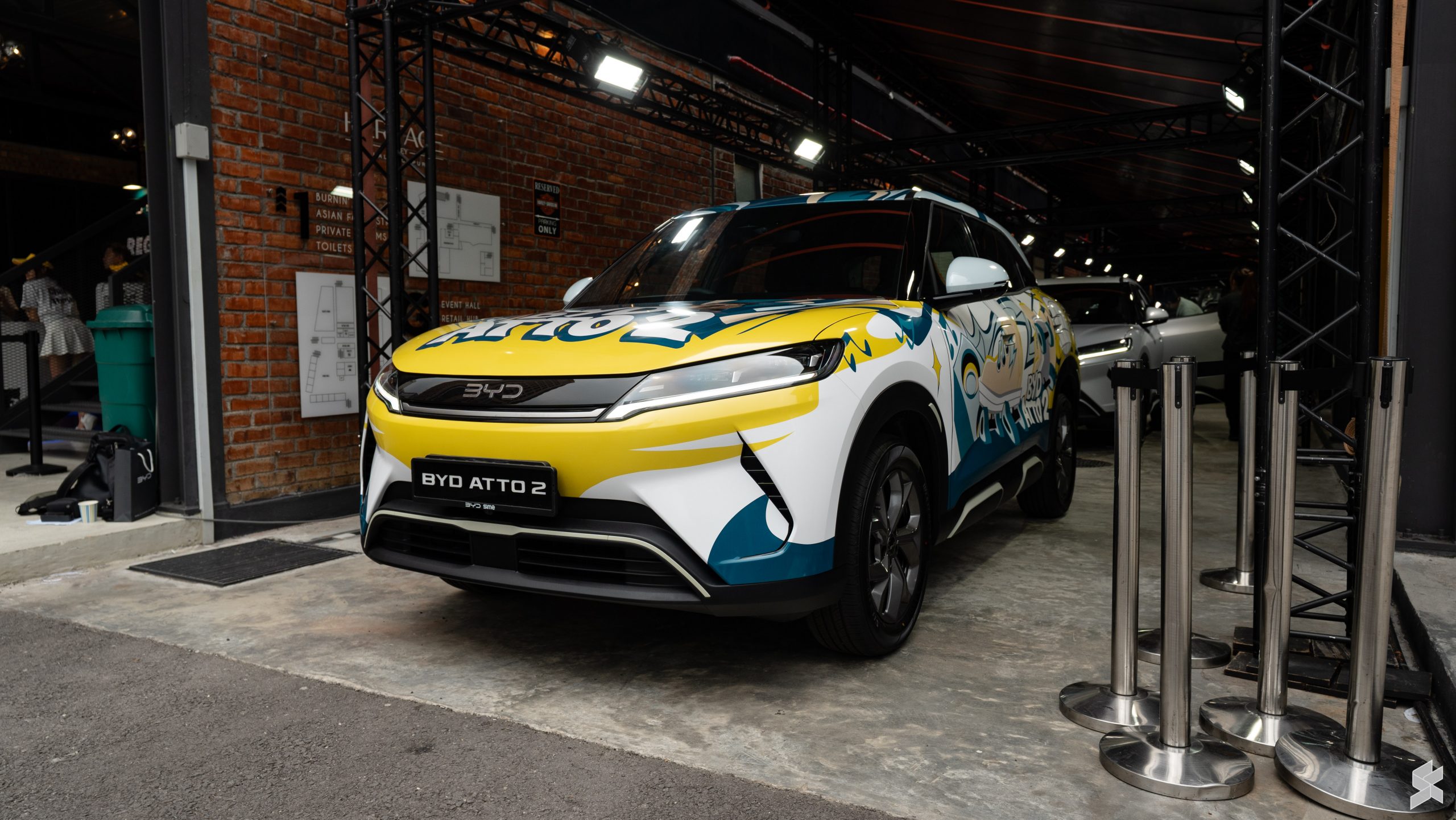
BYD Atto 2 Malaysian Launch
Share on FacebookShare on Twitter

Malaysia’s EV industry is facing major uncertainty again following MITI’s latest policy changes for fully imported (CBU) electric vehicles.

Starting 1st July 2026, imported EVs will need to meet stricter requirements including a minimum RM200,000 CIF value and at least 180kW (241hp) of power output. In reality, this effectively pushes the selling price floor to over RM300,000, potentially wiping out a large number of mainstream sub-RM150,000 EV options currently available in Malaysia.

In the latest episode of Let’s Talk About, Amin and Alex discuss why the new policy could significantly impact brands such as BYD and other affordable EV players which have contributed heavily to Malaysia’s recent EV adoption growth in the past two years.

The discussion also touches on MITI’s repeated flip-flops involving both CBU and CKD EV policies, and how policy uncertainty could discourage automakers from committing to long-term local assembly investments in Malaysia.

Another controversial issue raised is the reported requirement for BYD to export 80% of its locally assembled production volume. In addition, they would need to adhere to a floor selling price of RM100,000. This condition appears to be very difficult to fulfil and is not commonly imposed on other automotive players in Malaysia.

At the same time, Malaysia’s EV adoption has been accelerating rapidly with more than 44,000 EVs registered in 2025 alone. With fuel subsidies reportedly reaching as high as RM7 billion in a month, the team also discusses whether slowing down affordable EV adoption runs counter to the country’s longer-term goal of reducing dependency on subsidised petrol and diesel.
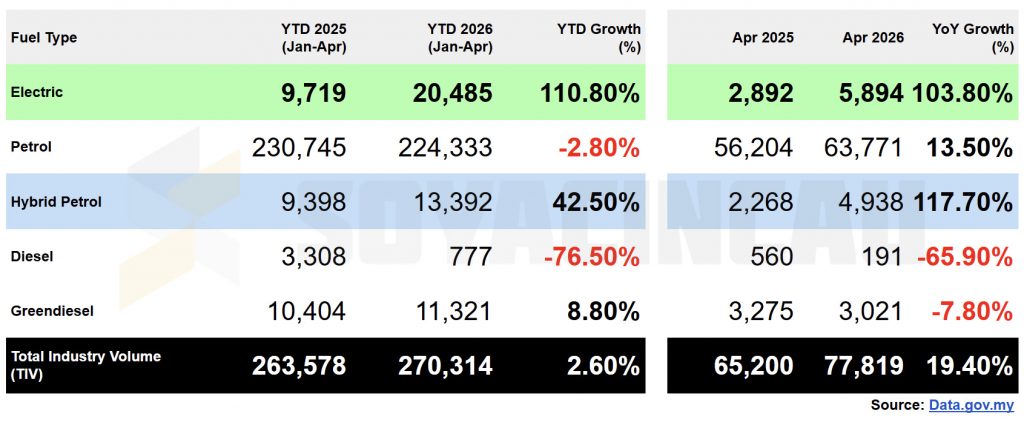
Malaysia’s EV market continued to show strong growth in April 2026. Based on the latest JPJ registration data, a total of 5,894 EVs were registered last month, representing a 103.8% year-on-year increase compared to 2,892 units recorded in April 2025.

EVs also accounted for 7.6% of Malaysia’s total industry volume (TIV), showing that demand for EVs continues to grow rapidly into 2026.

The strong growth was largely driven by more affordable mainstream EV models led by Proton, BYD and Tesla, while several new Chinese EV brands also continued to gain traction in Malaysia.

As current CKD production capacity remains limited, affordable imported EVs still play a significant role in supporting Malaysia’s EV transition and to reduce pressure from rising fuel subsidy cost.

Malaysia has aimed at having EVs account for 15% of TIV by 2030 and 80% by 2050.

Tags: BYDCBU EVCKDCKD EVElectric VehicleEVLets Talk AboutMITIPeroduaProton
Alexander Wong

Alexander Wong

POPULAR

BYD Atto 2 Malaysian Launch

MITI’s EV policy flip-flop raises bigger questions than just protecting Proton | Let’s Talk About #143

May 12, 2026
BYD Tech Discovery KL

MITI’s CBU EV ruling will wipe out current EV lineup from BYD, iCaur, Mini, Smart, Toyota, and more

May 7, 2026

MITI increases minimum CBU EV price to RM300K? Imported EVs with 240hp and below not allowed?

May 6, 2026
Proton Saga Cross AMA02 by Theottle

Proton Saga Cross AMA02 to begin production in October?

May 4, 2026
Proton EV Plant, Tanjung Malim

MITI says EVs won’t become more expensive, but can Malaysia’s CKD industry fill the gap?

May 10, 2026

The Best Camera is the One You Have with You; The OPPO Find X9 Ultra Wants to be Your Only One

May 6, 2026

Copyright © 2025 · SoyaCincau.com
Mind Blow Sdn Bhd (1076827-P)

  • ADVERTISE
  • DISCLAIMER

Copyright © 2026 · SoyaCincau.com – Mind Blow Sdn Bhd (1076827-P)

  • ADVERTISE
  • DISCLAIMER