• 中文版
  • BM
  • News
  • Deals
  • Reviews
    • First Impressions
    • Hands-on
    • Comparisons
  • Tech
    • Mobile
    • Computers
    • Cameras
    • Wearables
    • Audio
    • Drones
  • Telco
    • Celcom
    • Digi
    • Maxis
    • Time
    • Tune Talk
    • U Mobile
    • Unifi
    • Yes
  • Cars
  • Contribute
  • Jobs
Menu
  • 中文版
  • BM
  • News
  • Deals
  • Reviews
    • First Impressions
    • Hands-on
    • Comparisons
  • Tech
    • Mobile
    • Computers
    • Cameras
    • Wearables
    • Audio
    • Drones
  • Telco
    • Celcom
    • Digi
    • Maxis
    • Time
    • Tune Talk
    • U Mobile
    • Unifi
    • Yes
  • Cars
  • Contribute
  • Jobs
Search
  • Tech
    • News
    • Mobile
    • Computers
    • Cameras
    • Wearables
    • Audio
    • Drones
  • Telco
    • Celcom
    • Digi
    • Maxis
    • Time
    • U Mobile
    • Unifi
    • Yes
  • Reviews
    • First Impressions
    • Hands-on
    • Comparisons
  • Buyer’s Guide
  • Opinions
  • Digital Life
  • Video
  • Deals
  • How-To
  • Cars
  • Bahasa Melayu
  • EV
  • Contribute
  • Advertise
Menu
  • Tech
    • News
    • Mobile
    • Computers
    • Cameras
    • Wearables
    • Audio
    • Drones
  • Telco
    • Celcom
    • Digi
    • Maxis
    • Time
    • U Mobile
    • Unifi
    • Yes
  • Reviews
    • First Impressions
    • Hands-on
    • Comparisons
  • Buyer’s Guide
  • Opinions
  • Digital Life
  • Video
  • Deals
  • How-To
  • Cars
  • Bahasa Melayu
  • EV
  • Contribute
  • Advertise
Search
Close
Home News

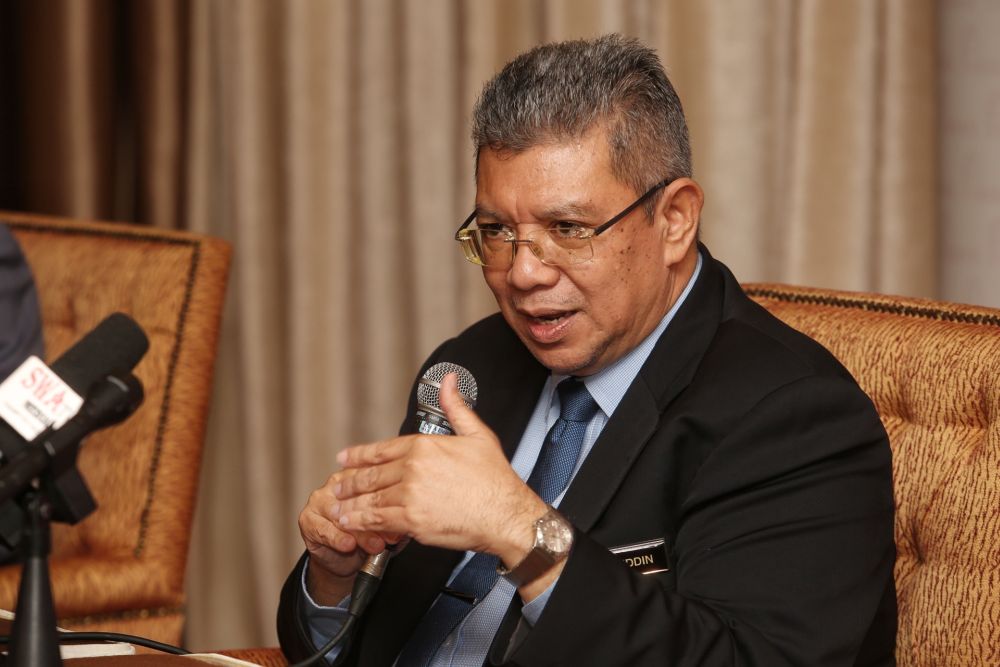
Saifuddin: Trust deficit and fake news among COVID-19 communication challenges

  • BY soyacincau
  • 21 November 2020
  • 10:30 pm
  • Comment
Share on FacebookShare on Twitter

Trust deficit towards agencies tasked with addressing the COVID-19 pandemic has emerged as one of the challenges in the implementation of effective communication initiatives, leading to some people defying standard operating procedures (SOPs) and government instructions.

An analysis has found that there is trust deficit among some people, causing them to question data provided by the Ministry of Health (MOH) and action taken by the National Security Council (MKN), besides being angry, sarcastic and cynical as well as making political statements.

Communications and Multimedia Minister Datuk Saifuddin Abdullah said today the analysis was based on media intelligence, people’s sentiments, the Communications and Multimedia Ministry’s COVID-19 war room, academic surveys as well as professional opinions, including those from counsellors and psychologists. 

It also found that there is demand and supply of ‘disinformation’ that in turn causes the deliberate spread of fake news, fraud and denials, to the extent that there are some (people) who seem to live in a parallel/fictional universe, he said.

“Fatigue/stress and seasonal forgetfulness these first start with some of the frontliners and people, to a point that it causes a certain percentage to not or fail to fully comply with SOPs and directives, yet to embrace the new norms and undergo positive behavioural change,” Saifuddin told Bernama.

Saifuddin said the analysis also found that some people have not grasped the fact of having to co-exist with COVID-19 for a certain period of time.

He said the analysis aims to obtain the latest scientific data and input to have a real and accurate understanding of the current status and performance, and short/medium-term impact of the pandemic, health and non-health initiatives (including financial and economic) and communication.

It is to secure better solutions so that the implementation of COVID-19 communication initiatives can be carried out more effectively, he added.

However, Saifuddin said, the effectiveness of the communication initiatives implemented have been quite good so far, although the effort needs to be intensified with more systematic planning and implementation.

“In the context of an invisible virus that has spread in the community, the existence of a small percentage who do not comply with SOPs and directives must be seen as a major issue,” he said.

The police yesterday detained 455 people for breaching movement control order (MCO) rules. Senior Minister (Security Cluster) Datuk Seri Ismail Sabri Yaakob, in a statement today, said the violations include not maintaining physical distancing, indulging in entertainment centre activities and failing to wear face masks. — Bernama via Malay Mail

[ IMAGE SOURCE ]

Related reading

Malaysia wants to fight fake news with a new 24-hour TV news channel
Dr Noor Hisham insists CMCO not a failure despite rising COVID-19 cases in Klang Valley
Health Ministry: MySejahtera has helped to detect over 9,000 COVID-19 cases in Malaysia
Tags: covid-19Fake newsSaifuddin Abdullah
soyacincau

soyacincau

POPULAR

Saifuddin: Trust deficit and fake news among COVID-19 communication challenges

November 21, 2020

Malaysia now spending over RM4 billion monthly on fuel subsidies. It’s time to accelerate EV shift

March 29, 2026

Is Your Current Phone Generations Behind? Here’s a Simpler Way to Close the Gap

March 13, 2026
Tesla Model Y L Malaysia

Tesla Model Y L 3-row electric SUV to launch in Malaysia on 1 April: 681km range, supports V2L

March 30, 2026
Image source: Jakub Zerdzicki on Pexels

AEON Bank’s Personal Financing-i (PF-i): Flexible Funds to Help Ease Budget Constraints

December 24, 2025

The Xiaomi 17 Proves You Don’t Need a Giant Phone for Pro-Level Photos

February 28, 2026

Copyright © 2025 · SoyaCincau.com
Mind Blow Sdn Bhd (1076827-P)

  • ADVERTISE
  • DISCLAIMER

Copyright © 2026 · SoyaCincau.com – Mind Blow Sdn Bhd (1076827-P)

  • ADVERTISE
  • DISCLAIMER