Civil servants who fail to comply with the government’s ban on using Waze will face strict disciplinary action, as the National Security Council (MKN) clarifies why Google Maps remains permitted despite sharing the same parent company.
Speaking at a media conference today, National Security Director-General YM Raja Dato’ Nushirwan bin Zainal Abidin and National Cyber Security Agency (NACSA) Chief Executive Ir. Dr. Megat Zuhairy bin Megat Tajuddin detailed the legal and security considerations behind the government’s targeted directive.
Google Maps exempted due to legal jurisdiction

Addressing public confusion over why Google Maps remains allowed while Waze is prohibited, MKN clarified that the decision hinges on legal jurisdiction and data controller governance rather than technological origin alone.
According to MKN’s official media statement, Waze Mobile Ltd operates directly under Israeli jurisdiction, subjecting its user terms and data to exclusive court authority in Tel Aviv. In contrast, Google Maps is incorporated and based in the United States, operating strictly under US federal laws.
“This ban does not involve Google Maps because the application is based in the United States and subject to that country’s laws. This position differs from Waze, which is bound by Israeli legislation,“ MKN stated, reiterating that Malaysia does not recognise the Israeli regime and will not compromise on national data sovereignty.
Disciplinary measures for non-compliant civil servants

To enforce the mandate, MKN warned that civil servants caught using Waze while performing official duties will be subjected to disciplinary action under public service conduct rules.
The government highlighted that detailed user telemetry collected by Waze—including granular location tracking, travel patterns, and movement history—poses a direct exposure risk to strategic national interests and sensitive government operations if exploited.
While civil servants face an immediate prohibition, the general public is currently not subject to a blanket ban. MKN explained that the government is adopting a phased, education-first approach to balance national security against individual choice and prevent disrupting the local technology sector. However, authorities strongly encourage all Malaysians to proactively uninstall Waze from their devices, noting that background data collection can still occur even when the app is not actively open.
Waze rejects security risk claims
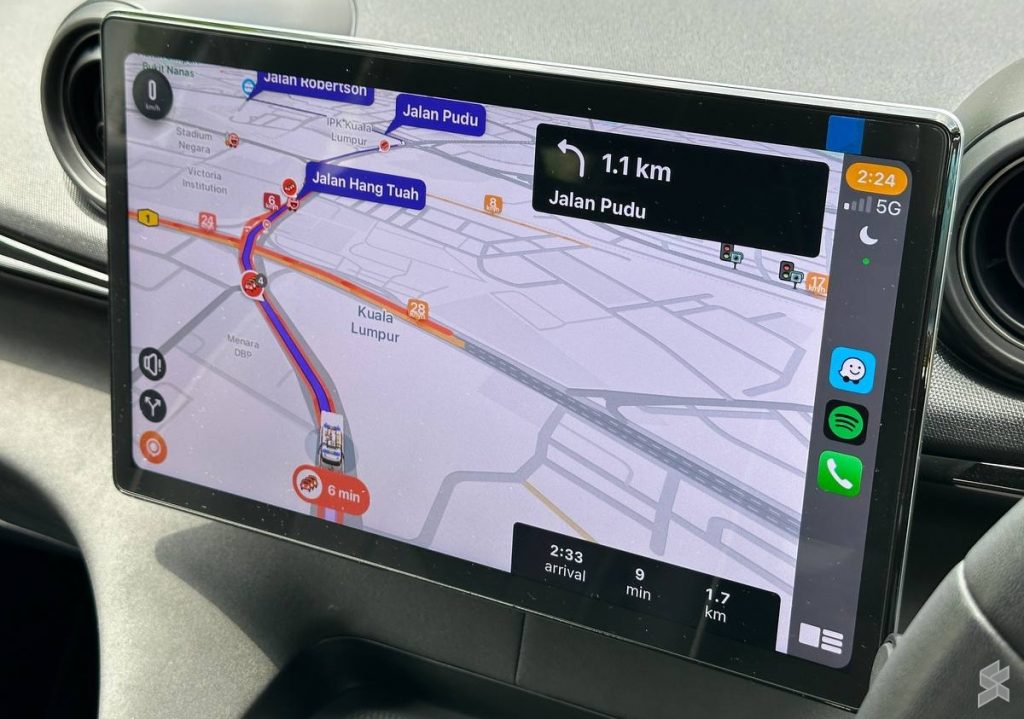
In response to the government’s ban and growing scrutiny, Waze Mobile Ltd has strongly denied that its platform poses any security threat or privacy risk to Malaysian users.
In a statement to the New Straits Times, a Waze spokesperson rejected claims that user telemetry or sensitive operational data was vulnerable to exploitation:
“Claims that Waze collects sensitive government information or allows any entity to exploit personal user data are completely false. Waze operates under strict privacy policies that protect user data and comply with global legal data protection standards,” the spokesperson stated.
On a related note, the local alternative backed by the government, TuJu has stumbled right out of the gate, as TuJu’s developer was forced to temporarily turn off its core navigation feature today for urgent corrective work, following widespread public criticism over severe performance glitches and usability failures.