
• 中文版
  • BM
  • News
  • Deals
  • Reviews
    • First Impressions
    • Hands-on
    • Comparisons
  • Tech
    • Mobile
    • Computers
    • Cameras
    • Wearables
    • Audio
    • Drones
  • Telco
    • Celcom
    • Digi
    • Maxis
    • Time
    • Tune Talk
    • U Mobile
    • Unifi
    • Yes
  • Cars
  • Contribute
  • Jobs
Menu
  • 中文版
  • BM
  • News
  • Deals
  • Reviews
    • First Impressions
    • Hands-on
    • Comparisons
  • Tech
    • Mobile
    • Computers
    • Cameras
    • Wearables
    • Audio
    • Drones
  • Telco
    • Celcom
    • Digi
    • Maxis
    • Time
    • Tune Talk
    • U Mobile
    • Unifi
    • Yes
  • Cars
  • Contribute
  • Jobs
Search
  • Tech
    • News
    • Mobile
    • Computers
    • Cameras
    • Wearables
    • Audio
    • Drones
  • Telco
    • Celcom
    • Digi
    • Maxis
    • Time
    • U Mobile
    • Unifi
    • Yes
  • Reviews
    • First Impressions
    • Hands-on
    • Comparisons
  • Buyer’s Guide
  • Opinions
  • Digital Life
  • Video
  • Deals
  • How-To
  • Cars
  • Bahasa Melayu
  • EV
  • Contribute
  • Advertise
Menu
  • Tech
    • News
    • Mobile
    • Computers
    • Cameras
    • Wearables
    • Audio
    • Drones
  • Telco
    • Celcom
    • Digi
    • Maxis
    • Time
    • U Mobile
    • Unifi
    • Yes
  • Reviews
    • First Impressions
    • Hands-on
    • Comparisons
  • Buyer’s Guide
  • Opinions
  • Digital Life
  • Video
  • Deals
  • How-To
  • Cars
  • Bahasa Melayu
  • EV
  • Contribute
  • Advertise
Search
Close
Home News

GSMA: Southeast Asia mobile emissions rise 20% due to poor renewable energy access

  • BY Janarrthine Kannan
  • 11 September 2026
  • 9:58 am
  • Comment
Share on FacebookShare on Twitter

Mobile operators across Asia Pacific are struggling to meet their climate goals despite growing commitments, mainly due to difficulties in securing clean power.

According to the GSMA Mobile Net Zero Asia Pacific 2026 report launched at M360 ASEAN in Kuala Lumpur, operational emissions in Southeast Asian markets including Malaysia have surged by about 20 per cent since 2019.

Surging data usage pushes network emissions higher

The primary driver behind this emission spike is the massive growth in mobile connectivity.

Between 2019 and 2024, regional data traffic jumped by 350 per cent while mobile connections grew by 6 per cent.

Total operational emissions across Asia Pacific hit 23 MtCO2e in 2024, up 6 per cent over five years. However, performance varies drastically across sub regions.
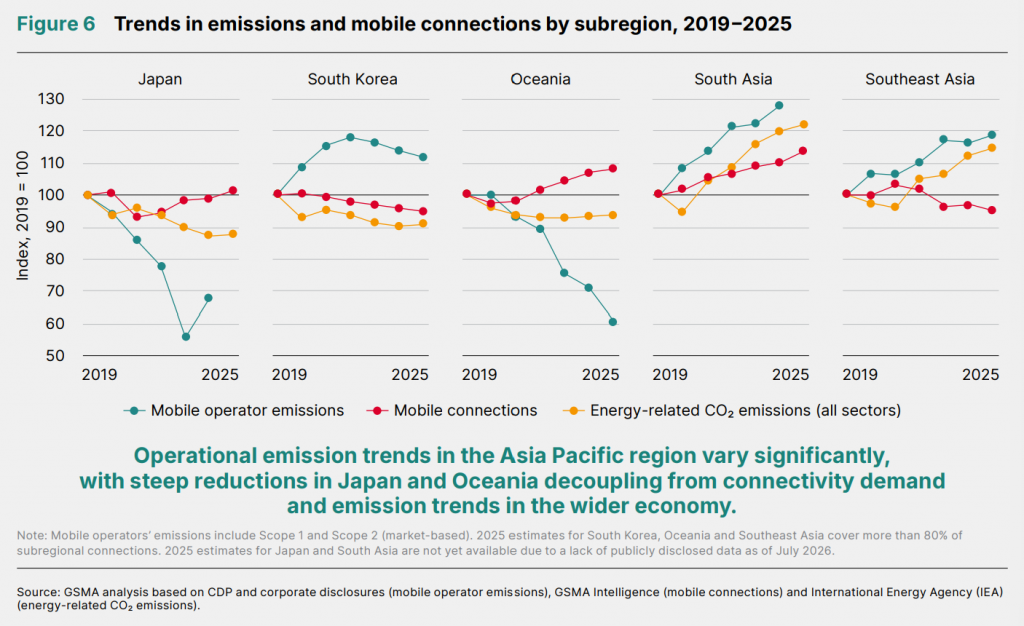
Mature markets like Japan and Oceania reduced operational emissions by more than 30 per cent through aggressive renewable integration, whereas emerging markets saw emissions rise sharply due to heavy reliance on fossil fuelled power grids.

Malaysia and regional telcos lag in clean energy adoption
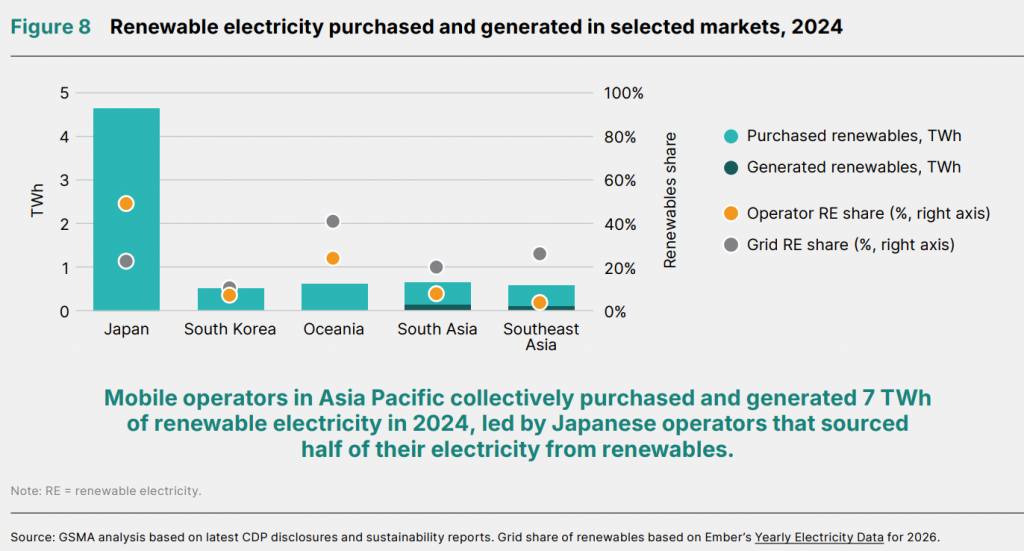
Asia Pacific telcos generated or bought 7 TWh of renewable electricity in 2024, covering 15 per cent of their power needs compared to just 1 per cent in 2019.

Despite this progress, the region still trails the global average of 24 per cent, as well as leaders like Europe at 70 per cent and North America at 50 per cent.

Southeast Asia performed poorly, matching just 4 per cent of its electricity needs with renewables, while Malaysia recorded 5 per cent.

Even so, individual telcos demonstrated what is possible, with Philippines operator Globe Telcom powering a third of its operations with green energy in 2025, while Telekom Malaysia and Thailand’s True crossed 20 per cent.

Soaring power bills demand urgent grid reform

Skyrocketing electricity consumption is also hitting telco financials. Regional operators spent 7 billion US dollars on energy in 2024, burning through 50 TWh of electricity and 350 million litres of diesel and gasoline.

These operational costs are expected to climb further in 2026 amid persistent fossil fuel price volatility.

Indirect Scope 3 emissions, which encompass supply chain activities like hardware manufacturing and third party tower construction, pose an even bigger challenge by generating 110 MtCO2e or over 80 per cent of the industry total carbon footprint.

Consequently, the GSMA is calling on regional governments to reform energy markets, fast track renewable grid approvals, and introduce flexible purchasing models for distributed infrastructure like cell towers.

Tags: GSMAM360 ASEAN 2026Mobile Net Zerorenewable energySoutheast AsiatelcoTelekom Malaysia
Janarrthine Kannan

Janarrthine Kannan

POPULAR

This Phone Has a 10,000mAh BlueVolt Battery That Can Power Your Other Devices | vivo V80 Lite 5G

September 4, 2026

GSMA: Southeast Asia mobile emissions rise 20% due to poor renewable energy access

September 11, 2026

More Data, More Value with UNI5G Postpaid: Enjoy 500GB FREE Data!

August 20, 2026
Screenshot

iPhone 18 Pro Malaysia: Same starting price from RM5,499, pre-order starts 12 Sept

September 10, 2026

Looking for Massive 5G Data and Built-In Overseas Roaming? Here Is What U Mobile’s ULTRA Lineup Offers

August 20, 2026

iPhone Duo: Apple’s first foldable coming to Malaysia on 23 Oct, priced from RM9,499

September 10, 2026

Copyright © 2026 · SoyaCincau.com
Mind Blow Sdn Bhd (1076827-P)

  • ADVERTISE
  • DISCLAIMER

Copyright © 2026 · SoyaCincau.com – Mind Blow Sdn Bhd (1076827-P)

  • ADVERTISE
  • DISCLAIMER