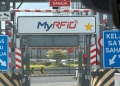
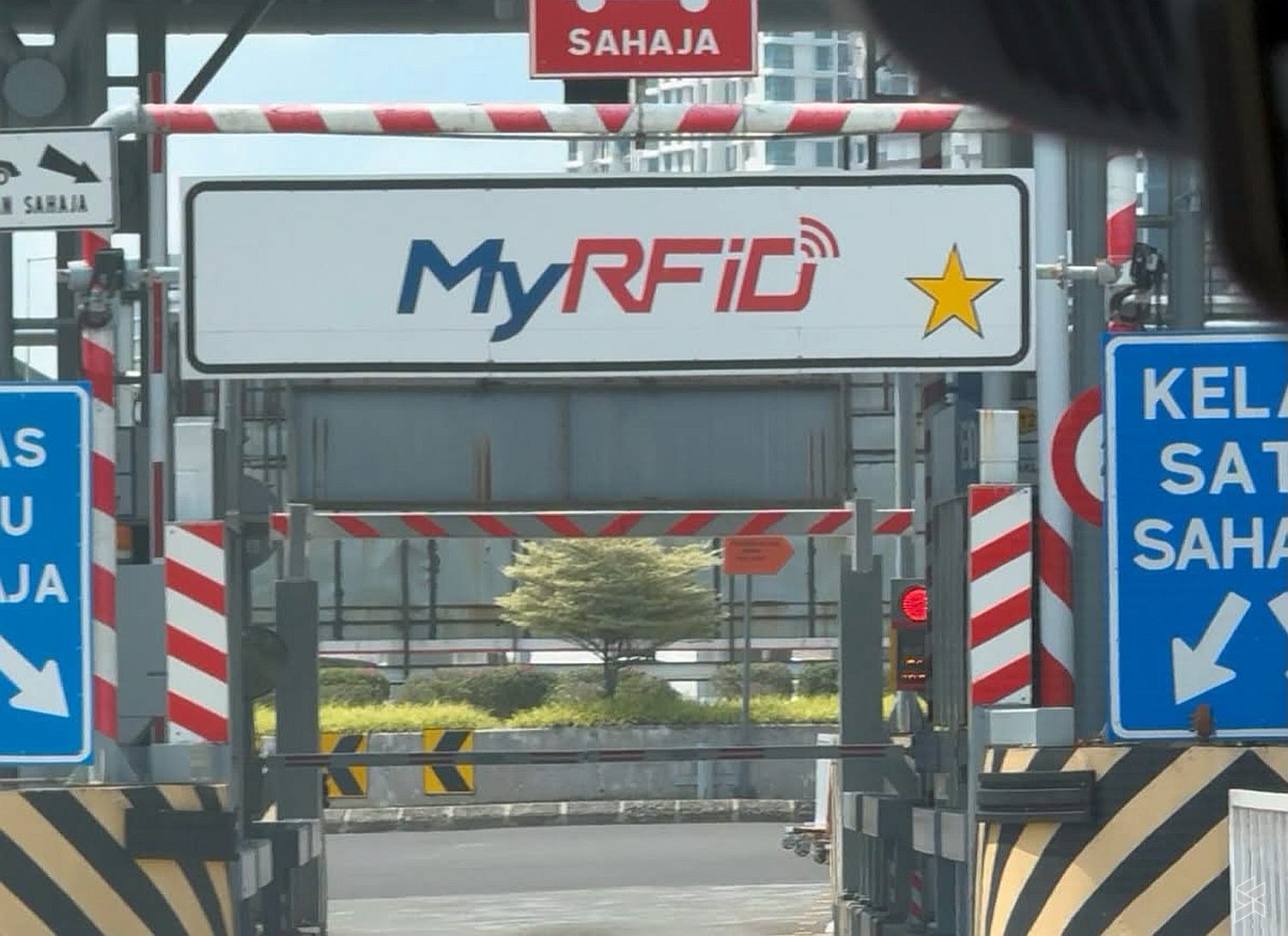
Touch ‘n Go has officially rolled out its new Enhanced RFID lane at the AKLEH Dato Keramat Toll Plaza, giving highway users a glimpse of how toll payments can be made faster and more seamless.
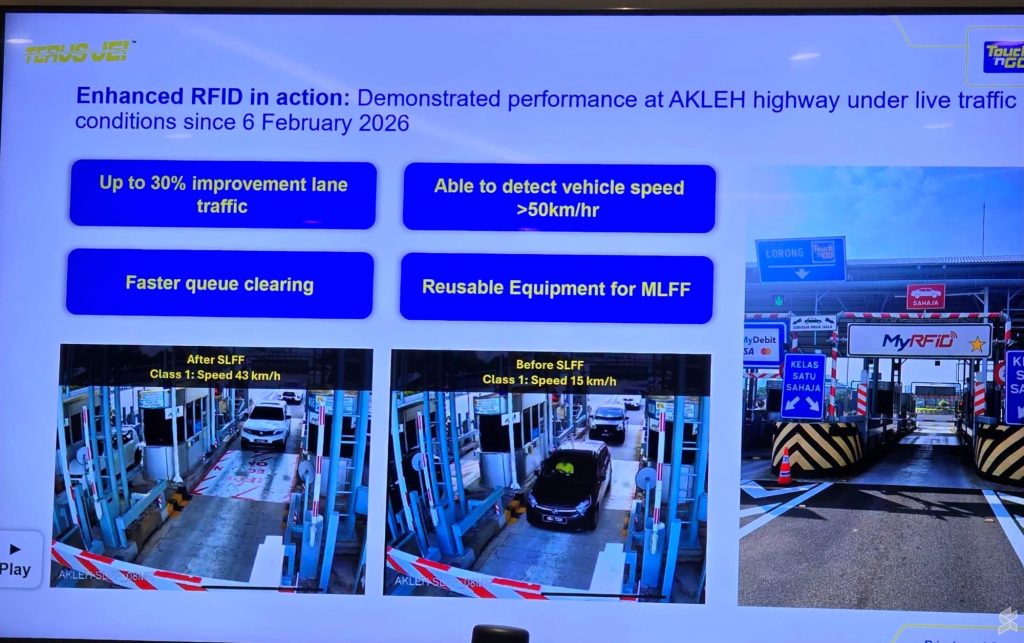
Marked with a distinctive gold star on the RFID signage, the upgraded RFID lane works with all existing Touch ‘n Go RFID tags and forms part of the company’s roadmap towards Multi-Lane Fast Flow (MLFF) tolling.
Touch ‘n Go showcased the Enhanced RFID lane to the media which uses its Malaysian-developed Titan Flow Technology.
The company also revealed plans to deploy 10 Enhanced RFID lanes across selected highways by the end of this year.
Enhanced RFID powered by Titan Flow combines RFID, ANPR and AI
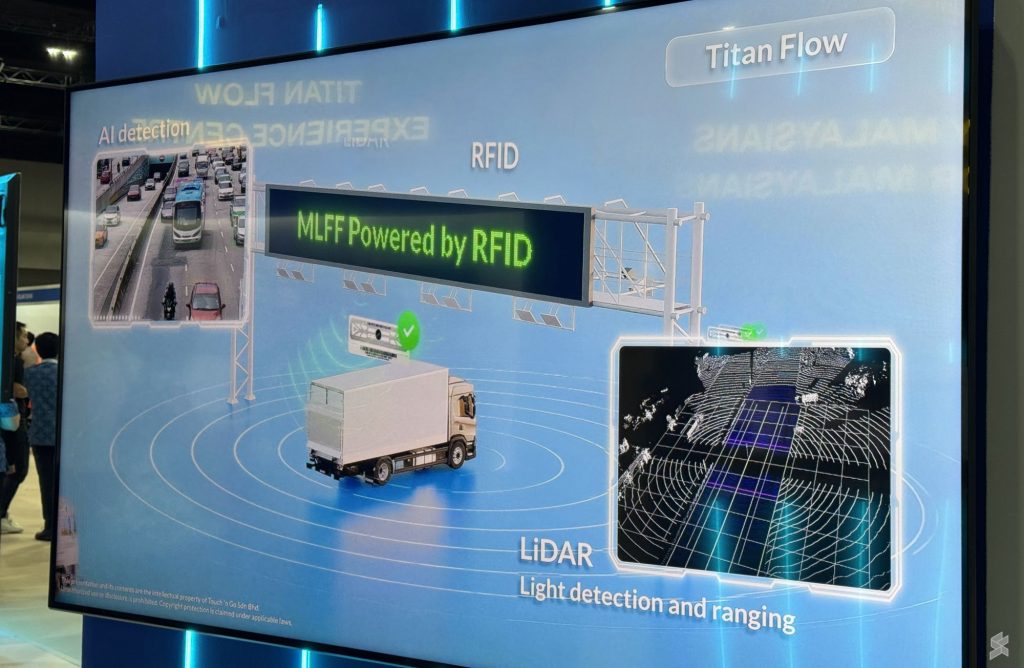
The Enhanced RFID lane is powered by Touch ‘n Go’s homegrown Titan Flow Technology, which combines dual RFID antennas, Automatic Number Plate Recognition (ANPR), Artificial Intelligence (AI) and Machine Learning (ML) to verify vehicles using multiple layers of detection.
According to Touch ‘n Go, the system achieves a 99.98% vehicle detection accuracy under real-world driving and weather conditions. Unlike conventional RFID lanes, the system used for the Enhanced RFID lane includes selected components of Touch ’n Go’s Titan Flow technology, which is capable of detecting vehicles at speeds exceeding 250km/h under controlled system capability parameters
Titan Flow equipment installed in these Enhanced RFID lanes is designed to support future MLFF deployment once the necessary legal framework is in place.
Why Touch ‘n Go believes RFID is the preferred solution for MLFF
While Titan Flow combines several technologies, Touch ‘n Go said RFID remains the primary method of vehicle identification.
According to the company, RFID uses radio waves and is less susceptible to heavy rain, glare and poor visibility than camera-based systems alone. ANPR serves as a secondary verification layer, while AI and ML improve recognition accuracy.
Touch ‘n Go added that standalone ANPR typically achieves around 94.5% detection accuracy, while Titan Flow’s multi-layer approach raises the overall detection accuracy to a claimed 99.98%.
Touch ‘n Go CEO Praba Sangarajoo said the technology was developed specifically for Malaysian road conditions and reflects nearly three decades of experience in the country’s tolling ecosystem.
Enhanced RFID lanes work with existing RFID tags
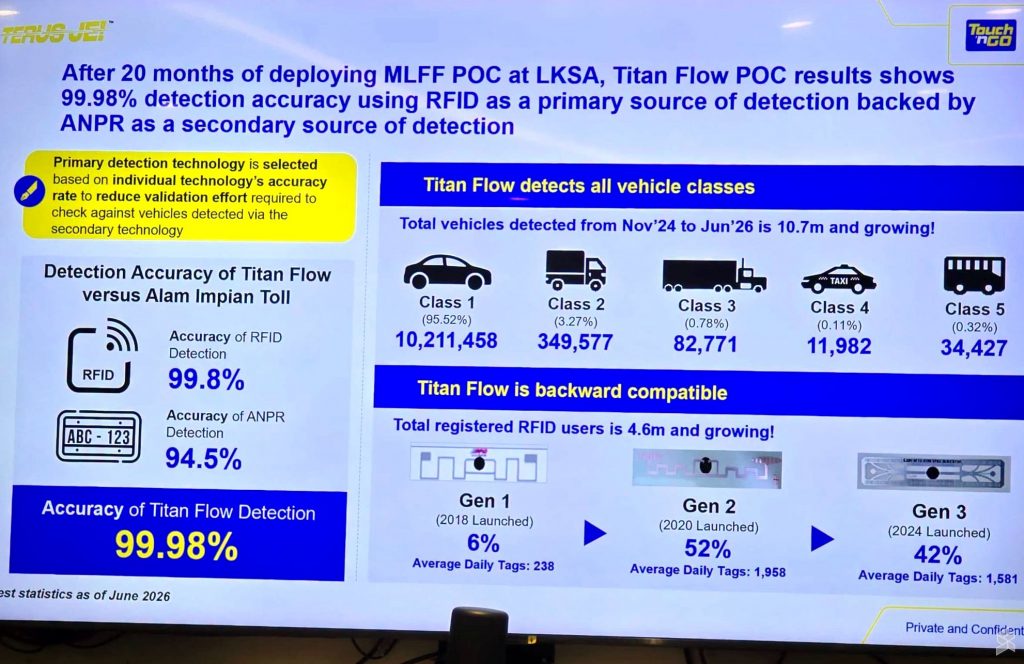
Another benefit of this implementation is that motorists do not need to replace their existing RFID tags to use the new Enhanced RFID lanes. According to Touch ‘n Go, existing RFID tags including the first generation version launched in 2018 are also supported at the enhanced lanes.
Touch ‘n Go also highlighted that Titan Flow builds on an existing ecosystem of more than 4.7 million registered RFID motorists and 27 million verified Touch ‘n Go eWallet users.
The company added that its SOS Balance feature has enabled approximately 36 million journeys without disruption by allowing motorists with insufficient eWallet balance to continue their trip before topping up later.