Malaysia has secured billions of ringgit in data centre investments over the past few years, but building the facilities is only part of the equation. As power demand continues to rise, ensuring a stable and reliable power supply will be critical.
The Energy Transition and Water Transformation Ministry (PETRA) projects Malaysia’s data centre sector could consume as much as 7.7GW of electricity by 2030. According to Energy Transition and Water Transformation Minister Datuk Seri Fadillah Yusof, current electricity consumption by data centres stands at 1,102MW, representing about 54% of the 2,050MW of approved capacity.
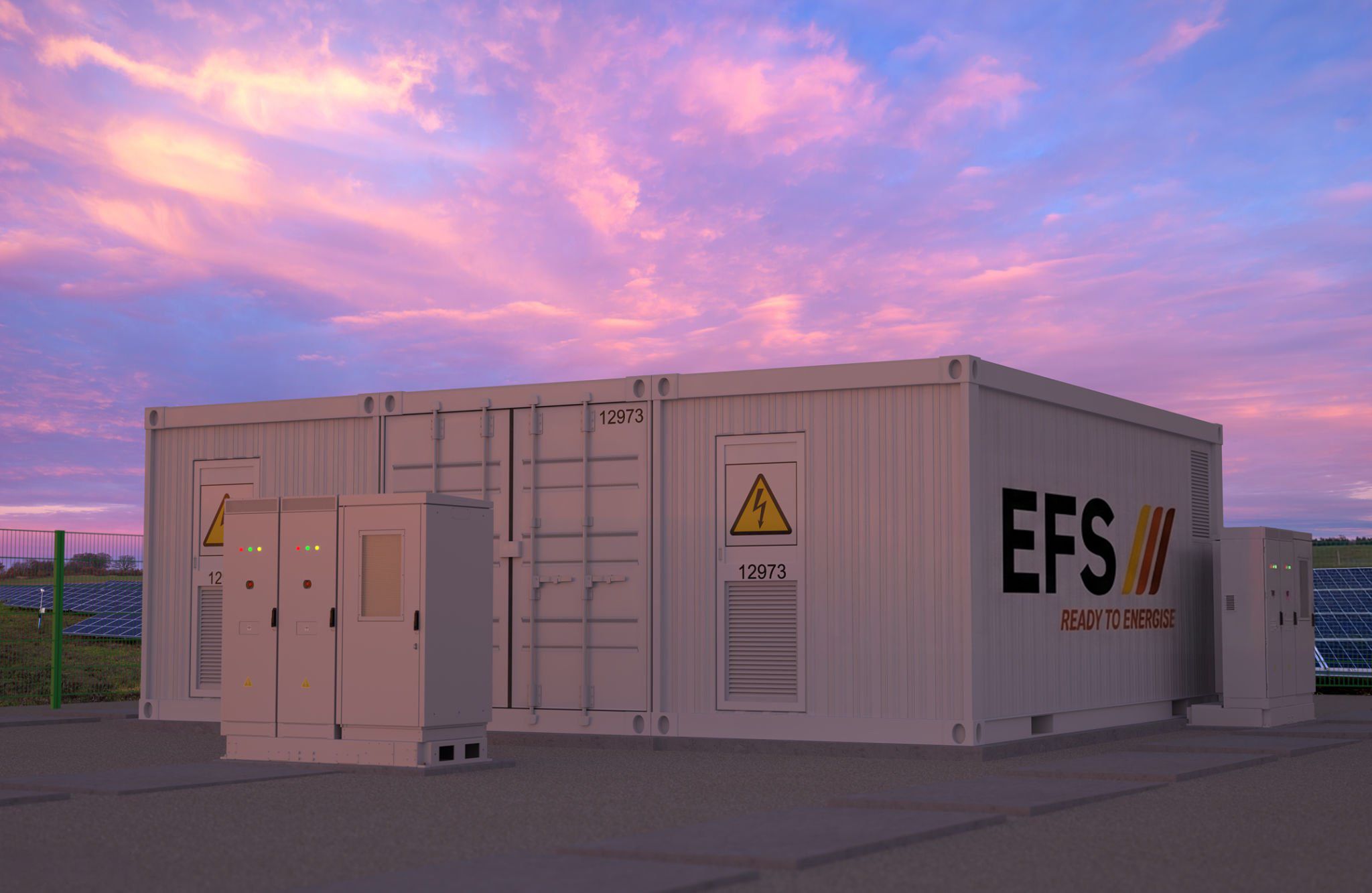
EFS Group believes combining large-scale solar generation with Battery Energy Storage Systems (BESS) could help meet the growing power needs of data centres by extending the use of renewable energy beyond daylight hours while reducing reliance on the grid during periods of peak demand.
Why battery storage matters
While solar power can help reduce emissions and electricity costs, its biggest limitation is that it only generates electricity during the day. By pairing solar with battery storage, excess energy generated can be stored and utilised when demand is high or when solar generation drops.
EFS Group said this approach is particularly relevant for data centres, where uninterrupted power is critical for maintaining operations. The company added that well-designed solar-plus-BESS systems can improve load management, reduce peak demand on the grid and lessen dependence on grid-supplied electricity during critical periods.
The company also highlighted Tenaga Nasional Berhad’s planned capital expenditure increase from RM21 billion between 2022 and 2024 to RM43 billion between 2025 and 2027.
According to EFS Group, Malaysia will require up to 12GW of new generation capacity by 2031, underscoring the scale of investment needed to support future electricity demand.
Baram project pairs 310MWp solar with 900MWh BESS
EFS Group highlighted its involvement in the RM2.32 billion Baram DeepTech Energy Programme in northern Sarawak as an example of how solar generation and battery storage can be deployed together.
Last year, the company signed a Heads of Agreement with Planet QEOS Sdn Bhd, China Construction Sixth Engineering Bureau, ES Sunlogy Berhad, NuEnergy Holdings Berhad and Shenzhen Hopewind Electric Corporation Limited to co-develop what it describes as Malaysia’s first firm solar power plant.
As Planet QEOS’ Agrovoltaic and Food Security Partner, EFS Group is co-developing a 310MWp solar power plant paired with a 900MWh Battery Energy Storage System (BESS), alongside a 650-hectare agrovoltaic farm that integrates solar infrastructure with agriculture in the Baram Highlands of Sarawak.
EFS: Solar-plus-BESS crucial for data centre growth
EFS Group CEO Darren Tan said the Baram project demonstrates how renewable energy generation, battery storage and agriculture can be integrated into a single ecosystem. He added that the same solar-plus-BESS capability will be needed as Malaysia’s data centre demand catches up with committed capacity.
Darren said, “The next few years will decide whether Malaysia’s data centre ambitions are backed by power that is actually there when it’s needed, or whether the country ends up playing catch-up.”
The company also cited government figures showing that RM280 billion in data centre investments have been pledged to Malaysia, of which RM131 billion has been realised so far. EFS Group said companies and policymakers that treat solar-plus-BESS as core infrastructure rather than a sustainability add-on will be better positioned as those investments move towards deployment.
According to EFS Group, the next phase of Malaysia’s industrial growth will increasingly depend on integrated energy solutions rather than standalone power generation. The company believes solar-plus-BESS will become a fundamental part of how data centres, manufacturers and industrial parks plan for long-term resilience.