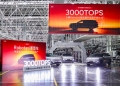
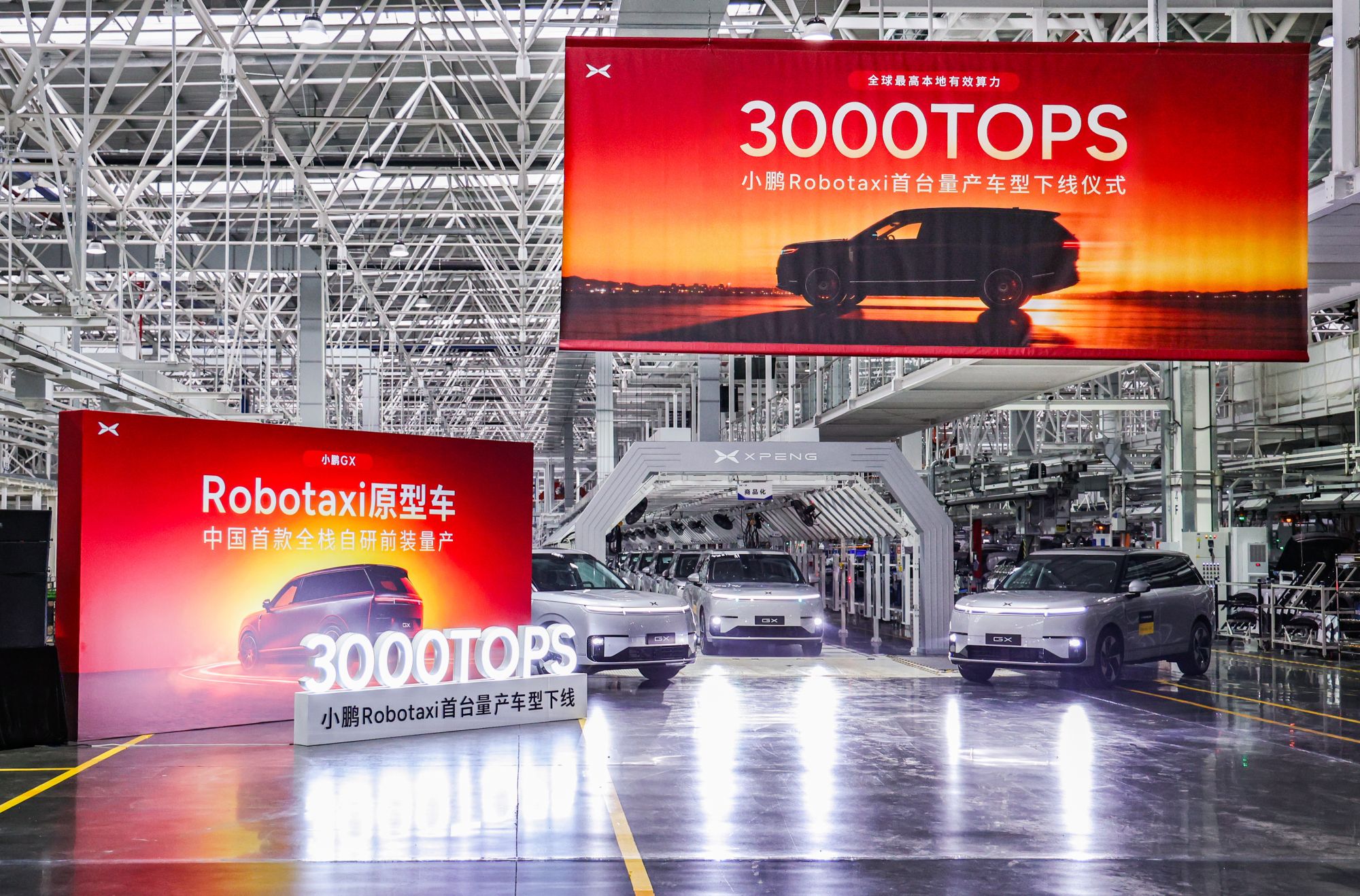
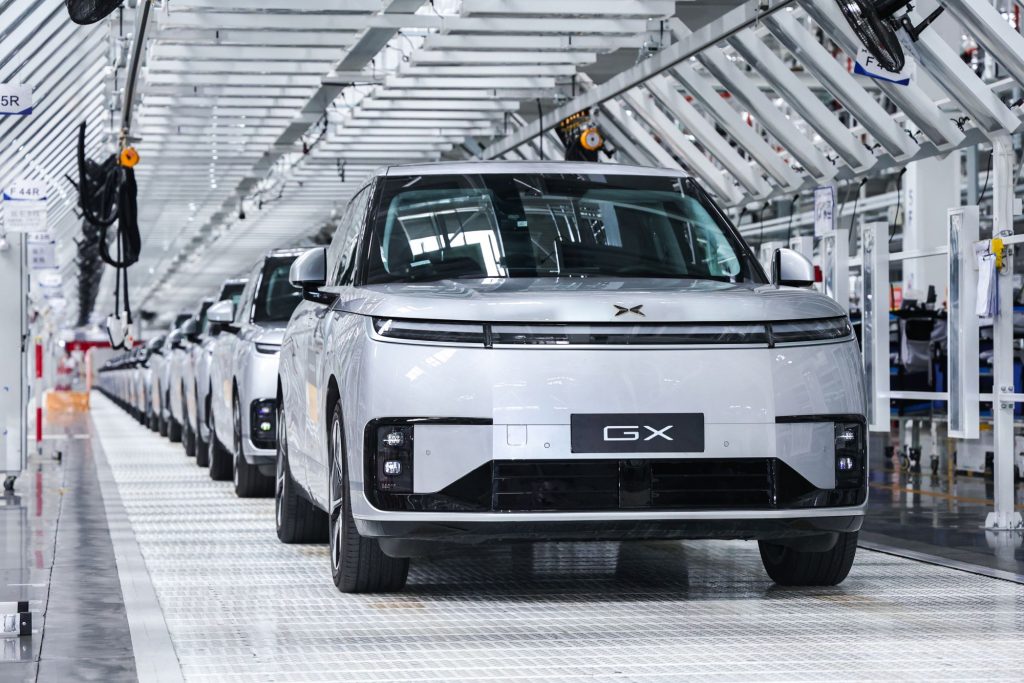
XPeng has officially rolled off its first mass-produced Robotaxi from the production line in Guangzhou, China. According to the company, this marks the first time a Chinese automaker has achieved mass production of a Robotaxi through full-stack in-house development.
The newly unveiled Robotaxi is built on the XPeng GX platform and is engineered to Level 4 (L4) autonomous driving standards. XPeng said the vehicle is a “production-ready, pre-assembled Robotaxi model” developed entirely using its own in-house technologies.
XPeng added that the Robotaxi is powered by four self-developed Turing AI chips, delivering what it claims is an effective onboard computing power of 3,000 TOPS.
XPeng Robotaxi uses pure vision system, no LiDAR or HD maps
Unlike several other autonomous driving solutions that rely on LiDAR and high-definition mapping, XPeng said its Robotaxi uses a pure vision approach. The system is powered by its VLA 2.0 end-to-end large model architecture.
According to XPeng, the VLA 2.0 model eliminates the language translation step typically found in traditional “Vision-Language-Action” three-stage architectures, which reduces system response latency to under 80 milliseconds. The company also claims the system offers enhanced urban generalisation capabilities for cross-city and cross-border deployment.
XPeng said the Robotaxi has already secured a road testing permit for intelligent connected vehicles in Guangzhou in January 2026, allowing it to conduct routine L4 public road testing.
In March 2026, the company has established a dedicated Robotaxi business unit responsible for product definition, R&D testing and operations, which would accelerate its commercialisation roadmap.
XPeng plans pilot Robotaxi operations later this year
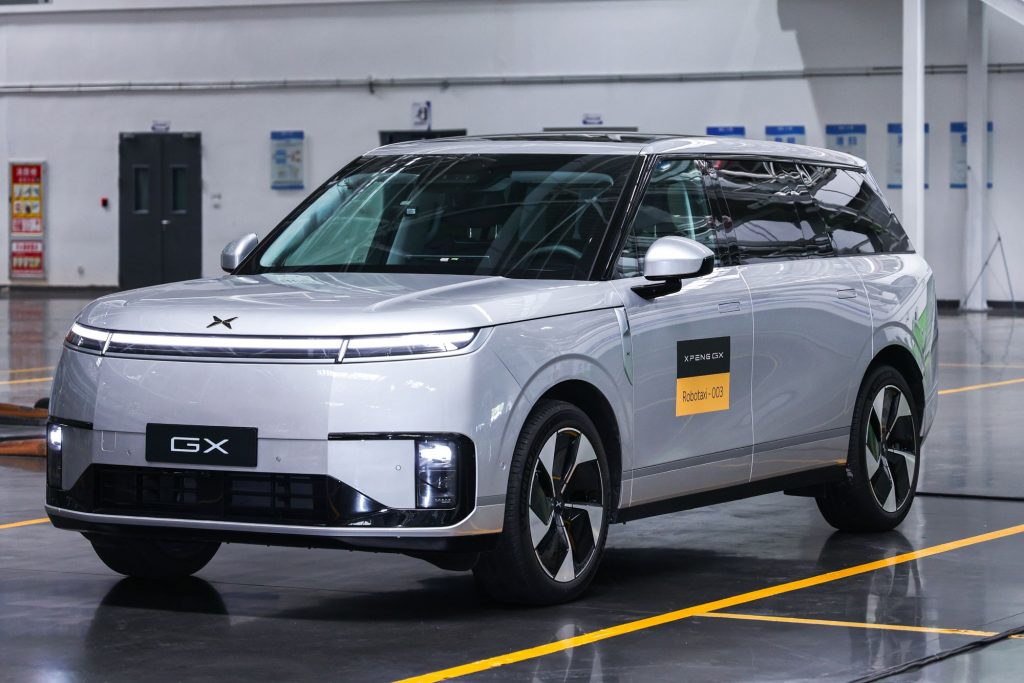
XPeng said it plans to begin pilot Robotaxi operations in the second half of 2026 to validate technical feasibility, user acceptance and the business model.
It aims to achieve fully autonomous operations without having an on-site safety officer by early 2027.
XPeng also announced plans to open its Robotaxi SDK to ecosystem partners, with Amap named as its first global ecosystem partner.
XPeng Robotaxi offers privacy glass and comfort gravity seats
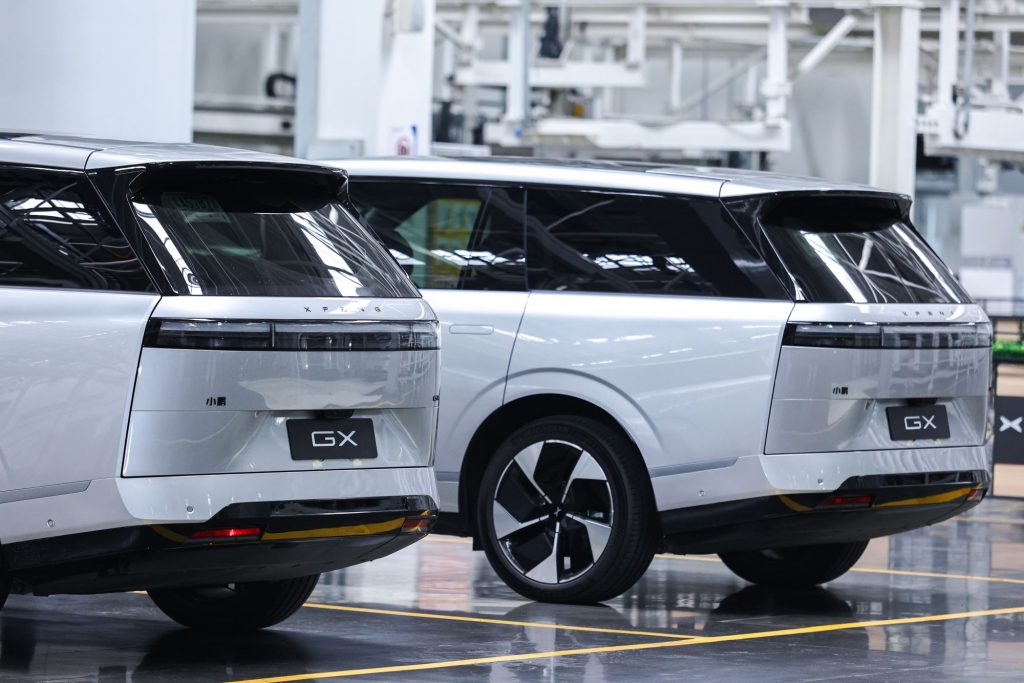
XPeng added that the Robotaxi is designed to offer a premium passenger experience. The mass-produced vehicle is equipped with privacy glass, comfort gravity seats and rear in-car entertainment screens. Passengers can also control multimedia playback and in-car settings through the built-in voice assistant.
As one of their flagship offering, XPeng said the Robotaxi shares the same VLA 2.0 large model foundation used across its broader physical AI ecosystem. This includes the XPeng IRON humanoid robot and XPeng’s flying car.
XPeng GX specs and performance
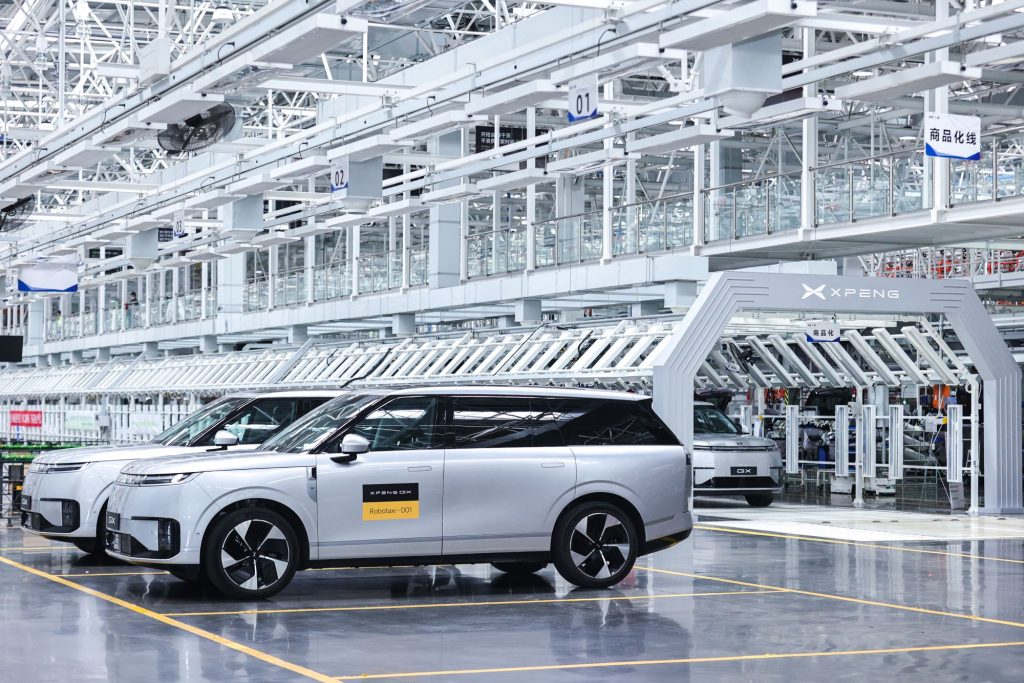
The XPeng GX itself is the brand’s biggest and premium SUV at the moment. The flagship 6-seater SUV offered in both fully electric (EV) and range extended electric vehicle (REEV) options.
The dual-motor all-wheel-drive EV boasts 430kW (577hp) with 695Nm of torque, and claims to offer up to 750km of CLTC-rated range with its 110kWh battery pack.
XPeng says the GX supports 5C ultra-fast charging on its 800V platform, capable of charging from 10% to 80% in about 12 minutes.
Meanwhile, the REEV version comes with a smaller 63.3kWh battery pack paired with a 1.5-litre turbocharged range extender engine. This variant boasts up to 430km of pure electric range and up to 1,585km combined CLTC-rated range.