Dr. Amalina Bakri, a Malaysian doctor with a large Twitter following, posted a few Facebook pages claiming to be her in order to scam users on the platform. She explains that she doesn’t even have a Facebook page.
“There are scammers that have edited my pictures to trick people into buying their products. Please do not believe and share/like/click on the links. I ask that you help report the pages. I do not have Facebook. Thank you,” wrote Dr. Amalina.
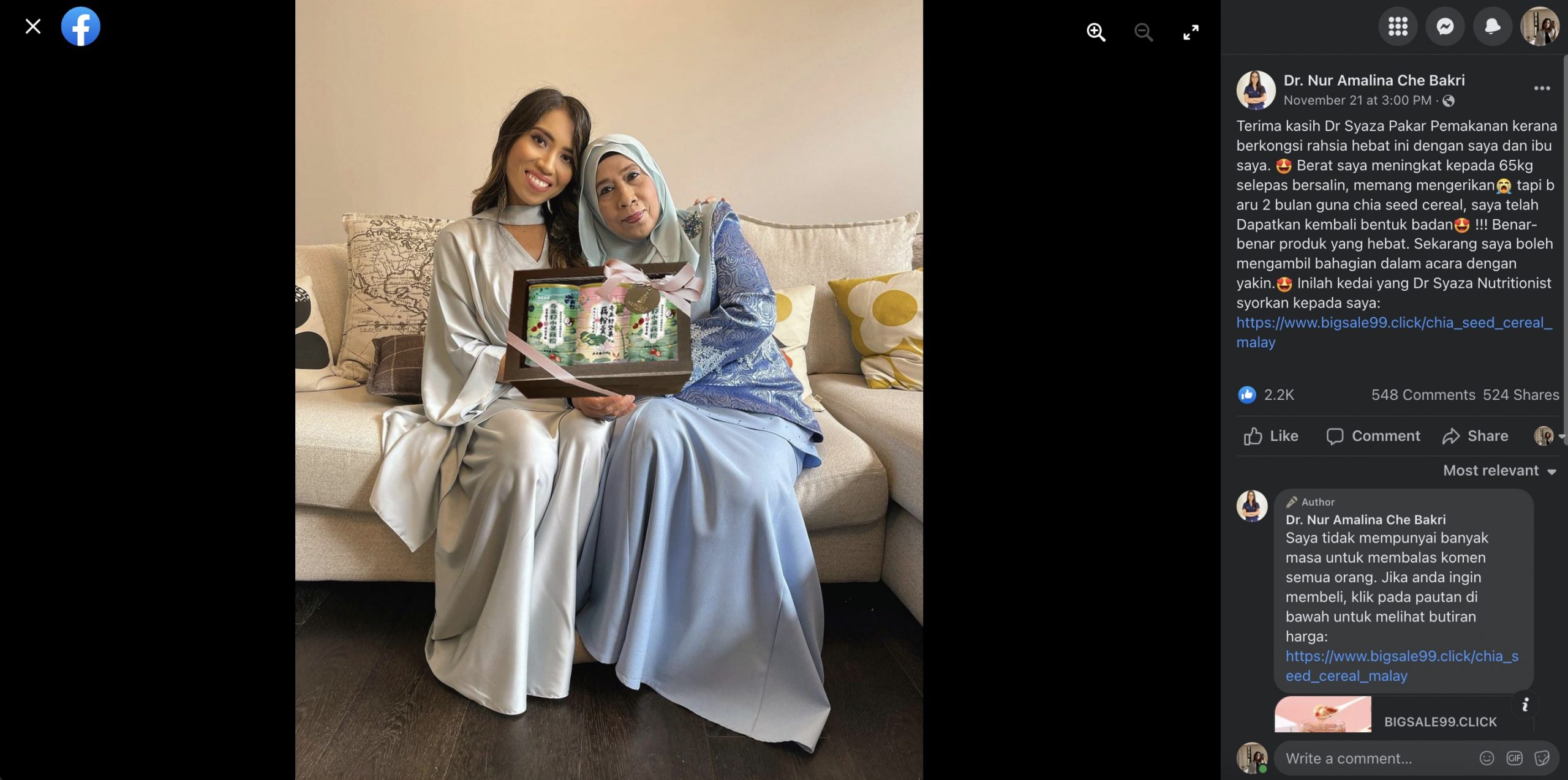
Looking at the screenshots of the posts, it looks like several Facebook pages have used Dr. Amalina’s real images and name to sell their health food items like chia seeds. The images also have food items photoshopped in them to make it look like the doctor is holding them.
A quick check on Facebook also shows a profile with her name, with just one post trying to sell chia seeds to unsuspecting users. The page itself is categorised as a “shopping mall”, and does not have its own Facebook header. The profile picture is a picture of the real Dr. Amalina, likely taken from her Twitter page. A total of 230 users have “liked” the page.
The only post on the page has reached 2.2K lines, 524 shares, and 548 comments. In the comments section, the scammer users Dr. Amalina’s name to say that she “doesn’t have enough time to reply to comments” but asked the users to click a link to take them to purchase chia seeds.
Some users have shared the post to warn others about scammers using the doctor’s likeness to scam others. But some look like they’re genuinely sharing the post.
It looks like Facebook still has a huge problem when it comes to scammers. I’ve recently tried my hand at making my own scam page for an experiment, but I wasn’t able to do so successfully. However, scam pages with more resources like possibly “farms” to mine engagement like the fake Dr. Amalina page could get away with something like this for a while.
Some of the pages seem like they have disappeared. But the page that is still up has the potential to scam more people—as long as it stays up.
We’ve also reported that scammers on Facebook have taken advantage of so many victims already. Fatin from SoyaCincau BM even interviewed a victim who lost thousands of ringgit because of a fake page on Facebook.
Scams like these can be difficult to spot, especially the more effective ones. Make sure you remember to stay away from things like too-good-to-be-true offers, people you don’t know that ask you for money right away, and if they ask you for personal information like bank details, passwords, or access to your computer. And remember to also do your fact-checking and research from reputable sources. You can look up this article to learn how some scammers get you, as well.
[ SOURCE ]
Samsung Galaxy S26 users can finally share photos, videos and files seamlessly with Apple iPhone,…
The Oppo Find X9 series is getting a new model which aims to take zooming…
Fiuu says it processed USD 13 billion (approximately RM54 billion) in Total Payment Volume (TPV)…
Following its recent deployment in Kulai, Johor, DC Handal has deployed a couple of new…
JomCharge and DBKL continue to deploy more street-level EV chargers in Kuchai Lama, Kuala Lumpur.…
ChargEV has expanded the EV charging infrastructure at Aeon Mall Nilai in Negeri Sembilan. They…
This website uses cookies.