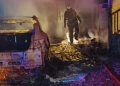
An EV that was charging on the porch is believed to be the cause of the fire that destroyed a 2-storey house in Alam Damai, Cheras yesterday. While the residential property sustained 100% damage, no injuries or casualties were reported.
According to Kuala Lumpur Fire and Rescue Department (JBPM) Assistant Director of Operations, Ahmad Mukhlis Mukhtar, firefighters received an emergency call at 5:03 AM. A total of 22 personnel from the Cheras, Sungai Besi, and Bandar Tun Razak fire stations were deployed to the scene and managed to contain the fire before wrapping up the operation at 6:41 AM.
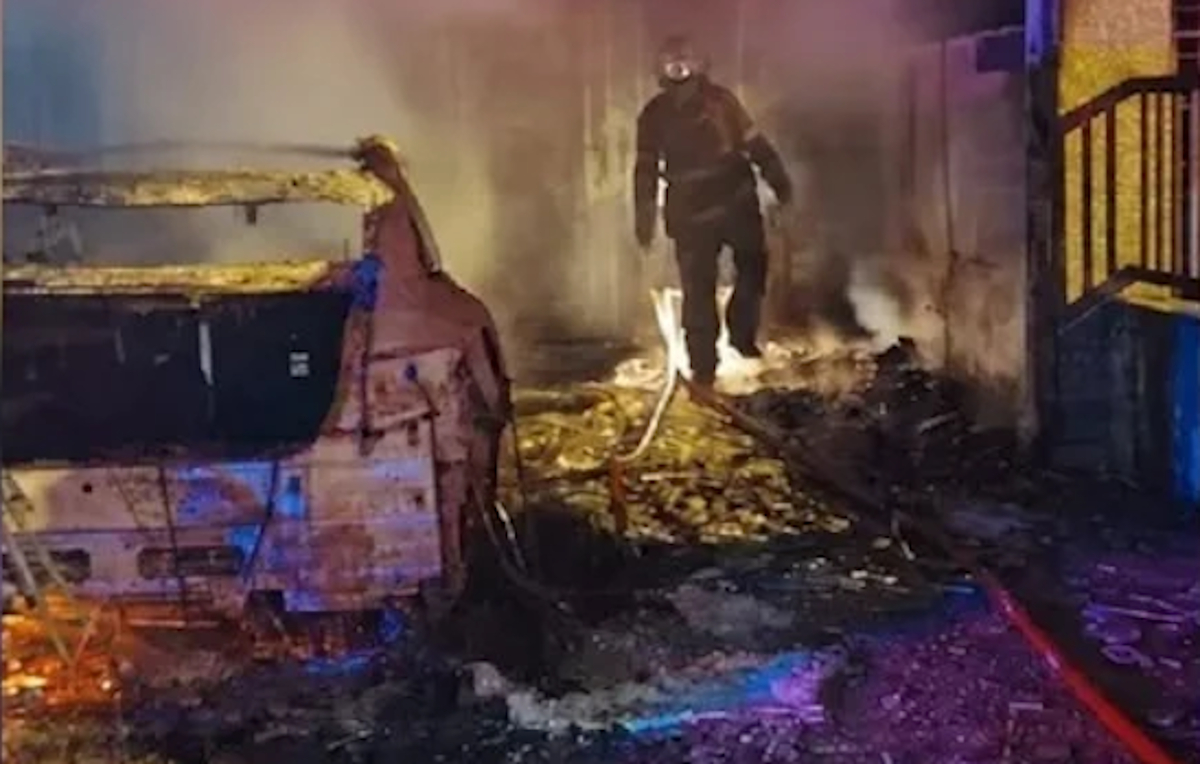
It appeared that JBPM’s official statement did not disclose the brand or model of the EV involved. However, a visual comparison of the burnt carcass in one of the photos provided by JBPM seemed to point to Mercedes-Benz EQE.
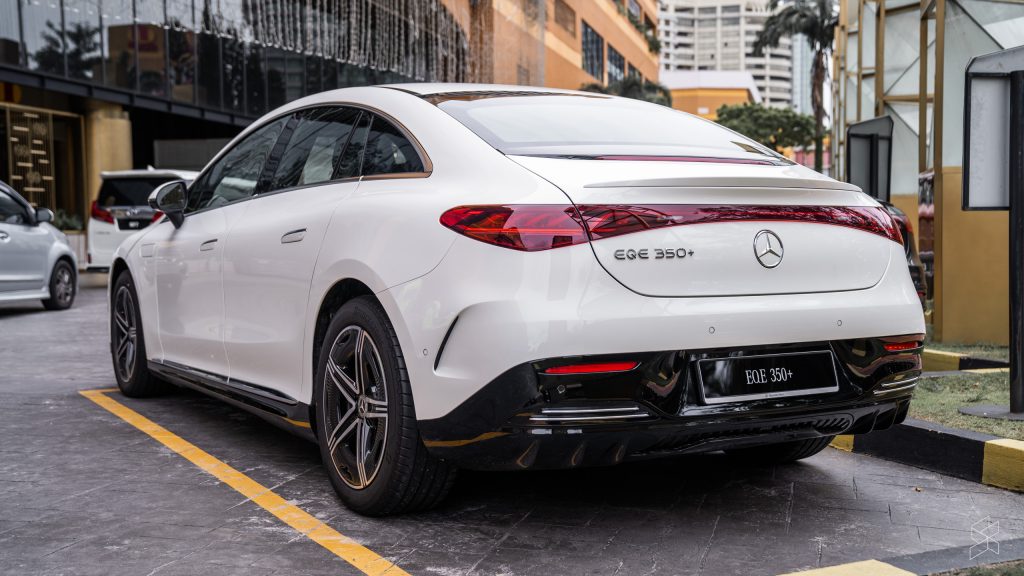
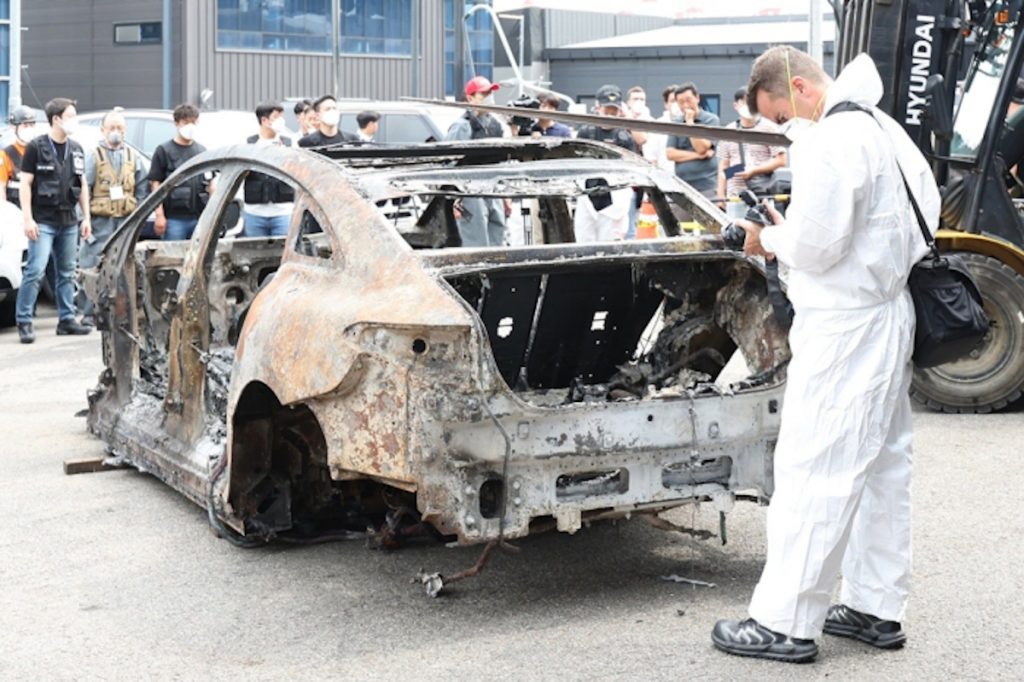
Specifically, the exposed rear structural frame of the burned vehicle in Cheras exhibits a distinct design match when cross-referenced against images of the Mercedes-Benz EQE involved in the August 2024 underground garage fire in Incheon, South Korea:
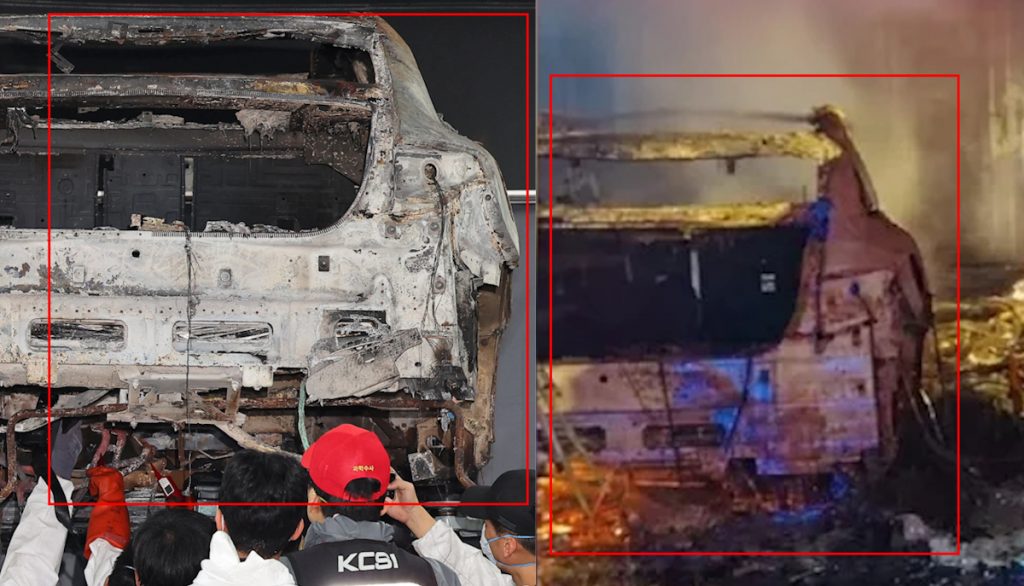
Key identifying features include the outline of the rear hatch opening and the shape of the right taillight structure. In addition to that, there are also the square cutouts on the lower rear frame.
We have since reached out to JBPM Kuala Lumpur and Mercedes-Benz Malaysia for further clarification and are currently awaiting official responses.
While we are on the topic of EV fires, the General Insurance Association of Malaysia (PIAM) has clarified that standard fire insurance policies generally still apply regardless of whether the fire was caused by an EV, a petrol-powered vehicle or other electrical sources.
This was its response to speculations online that EVs pose a major fire risk and that insurance companies may refuse to cover damages if an EV catches fire at home or inside a building car park. The association also pointed out that available data and statistics do not indicate that EVs have a higher fire risk compared to petrol or diesel vehicles.
In fact, PIAM said ICE vehicles currently present a higher fire exposure risk than EVs. The association also said that while standard fire insurance policies generally apply, actual coverage will still depend on the individual policy terms, insured value and exclusions stated by the insurer.
[ SOURCE ]