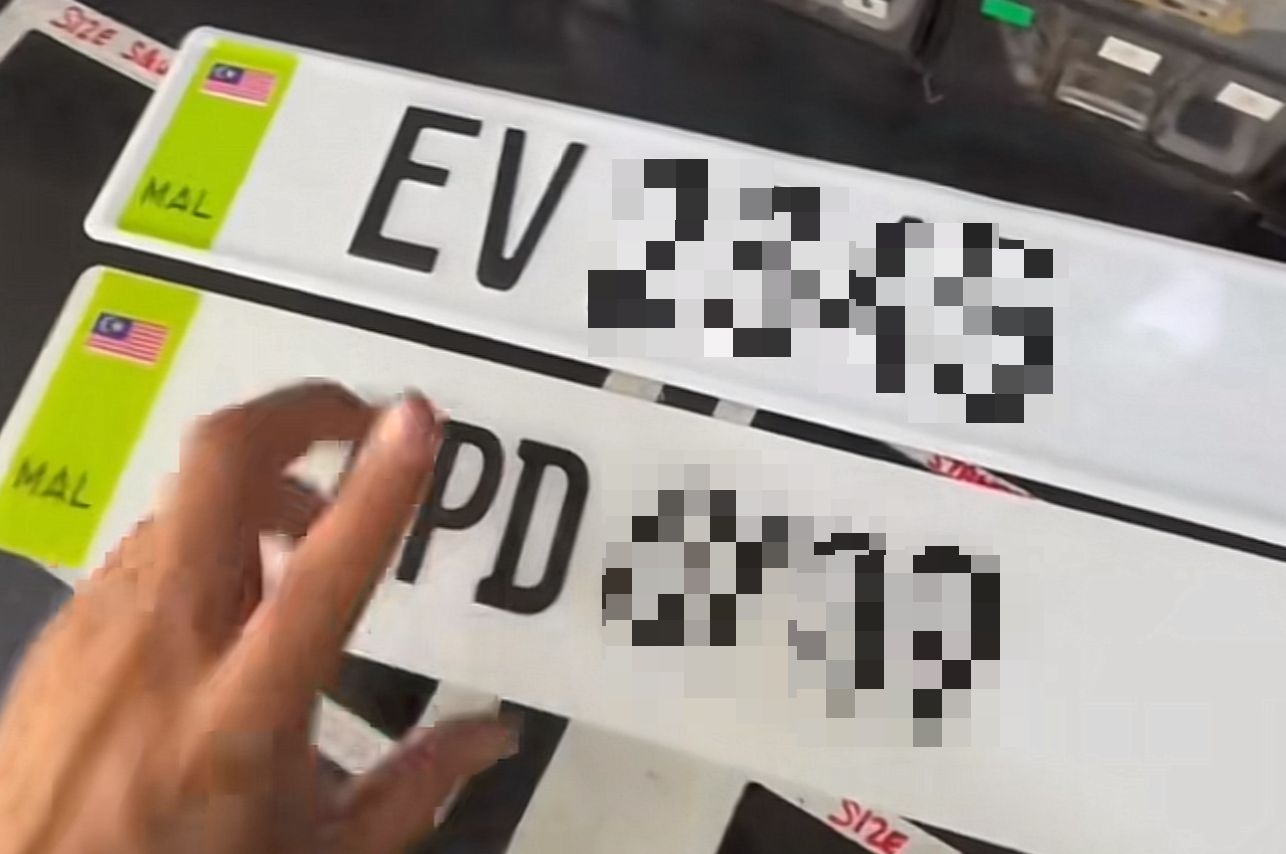
We have heard it many times before. Using fancy number plates for vehicles is against the law and as it can affect law enforcement and barrier-less MLFF tolling implementation.
To address the non-standardised number plate problem once and for all, the government introduced JPJePlate, which has been made mandatory for all zero emissions vehicles including EVs and FCEVs since 9th September 2024 by the Ministry of Transport (MOT).
Priced at RM98, the JPJePlate for EVs features a standardised aluminium plate design with a “Euro style” stripe in green. The plate also has security and redundant validation features to prevent counterfeiting and tampering.
However, it seems that enterprising business owners are now offering non-authorised JPJePlates. Customers are able to use different materials and customise the format of the plates.
With these third-party alternatives being sold openly in the market, it appears that the Road Transport Department’s (JPJ) ambition to standardise all vehicle number plates in the country is now in jeopardy.
Accessory shops selling fake JPJePlates
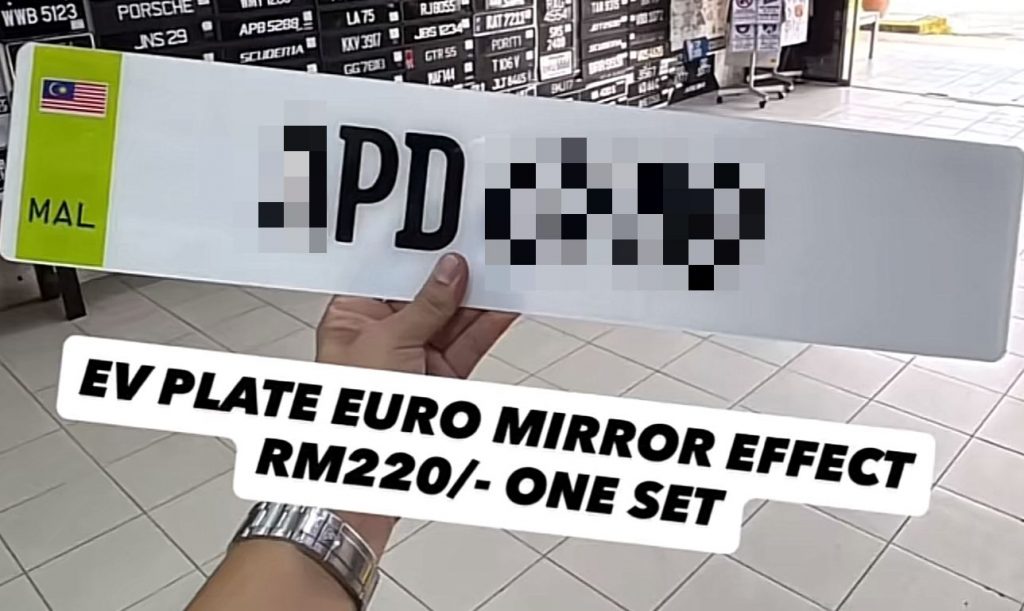
As spotted online, some accessory shops are offering aftermarket JPJePlate with the option for either aluminium or acrylic materials. Obviously these do not follow the JPJePlate specification and they lack the security and RFID functions that come with the legit plates.
A seller was seen offering one set of the “EV Plate” with mirror effect for RM220.
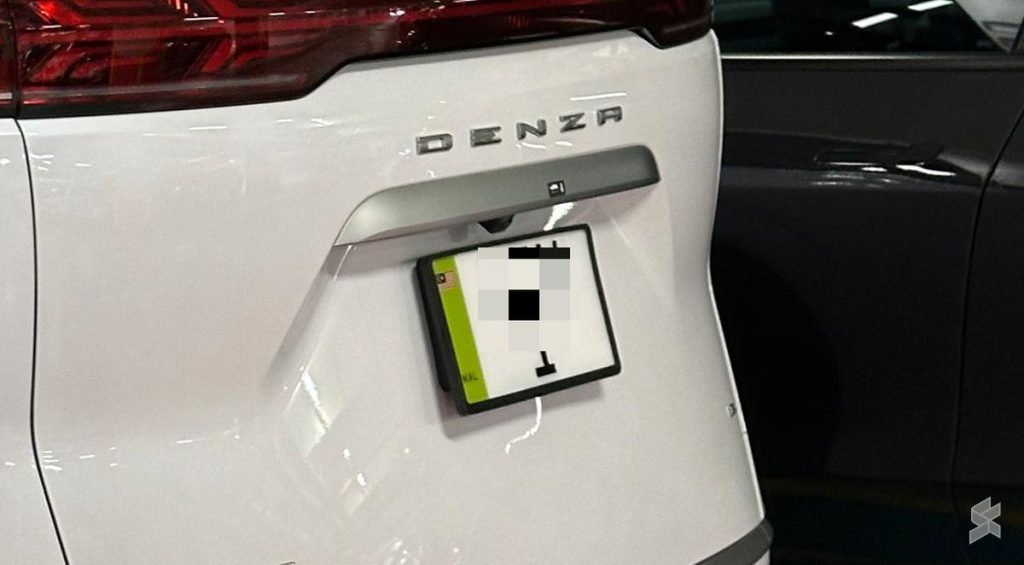
Even on the road, we also spotted various forms of non-authorised JPJePlates being used on EVs. Besides using non-standardised font sizes, we even spotted a square two-row design which isn’t an option available for JPJePlate.
The official JPJePlate is currently produced exclusively by Handal Ceria in Cyberjaya using technology from Tonnjes International Group. These plates can be fitted by authorised installers nationwide.
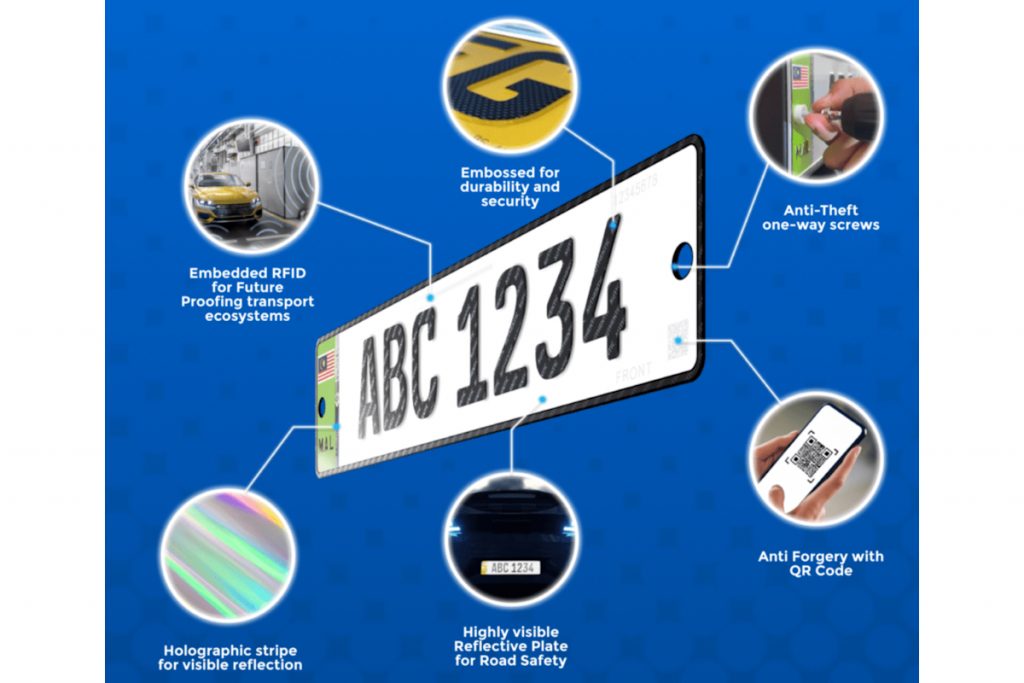
The 9 key features of the JPJePlate include embossed registration number, green stripe with the Malaysian flag, embossed “MAL” for International Registration Code, holographic stripes, anti-counterfeiting foil, QR code as digital signature, embedded RFID and laser-engraved serial number.
Also included as an additional JPJePlate RFID windshield sticker and a pair of one-way security screws.
If the government and other partners do plan to introduce new features for the JPJePlate in the feature, obviously it won’t work if you use the fake version.
JPJePlate is pointless without proper enforcement
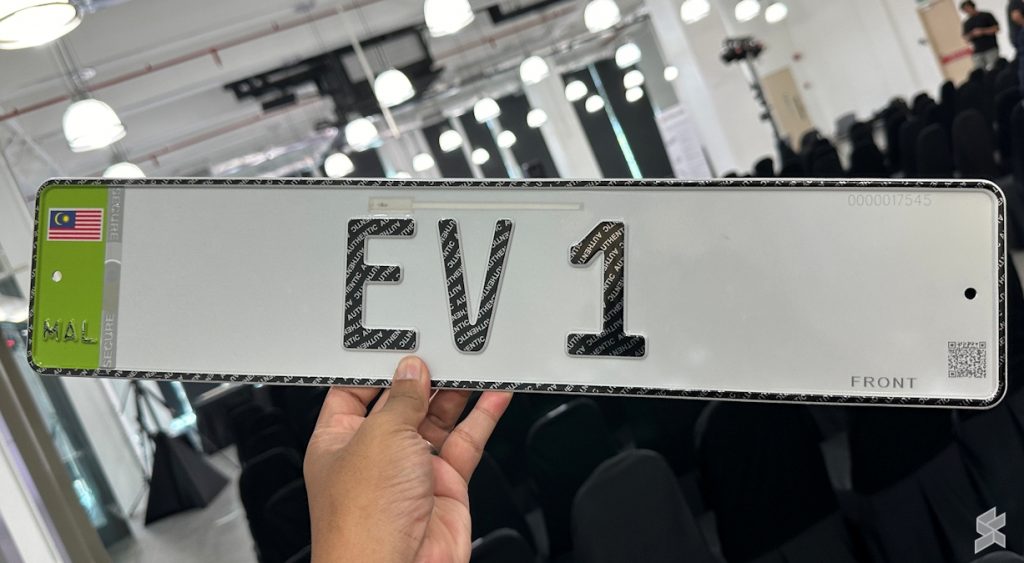
Despite announcing that JPJePlate is mandatory for all new Zero Emission Vehicle since 9th of September 2024, there seems to be the lack of enforcement.
Newly registered EVs on the road can still be seen with black and non-standardised plates, and there’s no clear roadmap of expanding JPJePlate’s mandatory usage for other types of vehicles including petrol and diesel.
As stated in JPJ’s official FAQ for JPJePlate, these new number plates are being rolled out as a Pilot Project with Handal Ceria and the single company selection was intended to ensure an organised and controlled implementation. It added that the approach is a practical step by MOT and JPJ to collaborate, streamline the process and address any issues that may arise.
The FAQ added that the implementation will eventually be expanded to include all types of vehicles in subsequent phases and the addition of more suppliers will be considered.