
While Android has come a long way since the dark days and has matured into a really awesome mobile operating system, there’s one area where it simply can’t hold a candle to its rival, Apple’s iOS: Rate of adoption. About half a year after its launch, Android Oreo is still only on just over 1% of all Android devices.
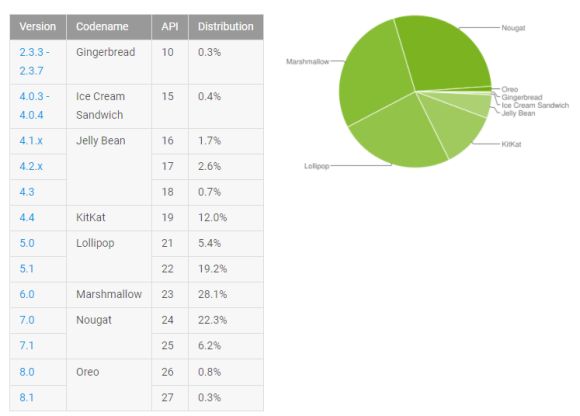
Yeah, just over 1% for both 8.0 (0.8%) and 8.1 (0.3%). There are more devices still stuck on Jelly Bean than there are devices on Oreo. This data comes directly from Google who collected it over a 7-day period ending February 5th of devices that visited the Google Play Store.
The majority of Android devices (28.5%) are still on Android Nougat (7.1 and 7.2 combined) while 28.1% of smartphones are still on Android Marshmallow. KitKat and Lollipop’s numbers are also pretty high, sitting at 12% and 24.5% respectively. Meanwhile, the “legacy” versions like Jelly Bean, Ice Cream Sandwich and Gingerbread are sitting at 5%, 0.4% and 0.3% respectively.

Meanwhile, on the other side of the pond, Apple’s latest numbers show that iOS 11 is currently on 65% of all devices (last measured by the App Store on January 18th). And this is despite iOS 11’s slow initial adoption.
How can Google fix this situation?
But Android has always had adoption rate problems because of its fragmented nature. Individual Android OEMs (Samsung, HTC, LG, etc.) will want to have their own proprietary hardware/software features and all of this will require extensive testing and work put in before each major Android OS update to ensure stability. And this isn’t easy with the way Android’s software layers communicate with the phone hardware.

Google’s trying to take matters into their own hands with their own Pixel and Pixel 2 handsets, but the fact is these phones are hard to get a hold of outside of their selected markets. You still can’t officially get one in Malaysia and not many are willing to get them at a marked up price from grey-importers.
But doing their own hardware isn’t the only solution Google’s throwing into the ring. There’s also Project Treble which will allow the for upgrading of the Android OS framework without needing to rework any vendor implementations.
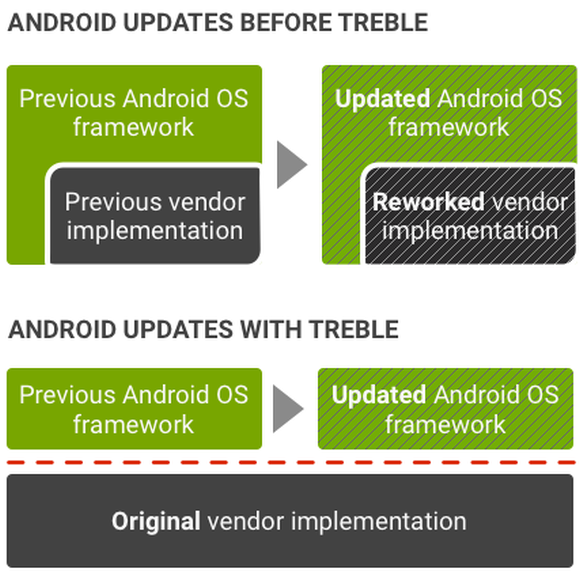
That said, this does not mean that it removes any need to test OEM-specific proprietary technology with each update of Android, it just makes it easier to update by removing the need to reconfigure lower-level hardware parts for each OS update. You can get a more detailed explanation of Project Treble in Android Authority’s comprehensive article here.
How much will all of this improve new Android OS adoption rate in the future? Only time will tell.
Of course, the numbers are set to improve once Samsung gets around to rolling out oreo onto their devices. In the meantime, I’d love to hear your thoughts on this. Let me know in the comments below.
[SOURCE]