This isn’t fake news. The Malaysian Communications and Multimedia Commission (MCMC) has confirmed that Malaysia’s new Early Warning System (EWS) will undergo a nationwide public test on 29 November 2026.
The confirmation comes after MCMC issued a statement late yesterday evening clarifying that the previously reported disaster alert test scheduled for 19 November was strictly an internal technical exercise, not a public test.
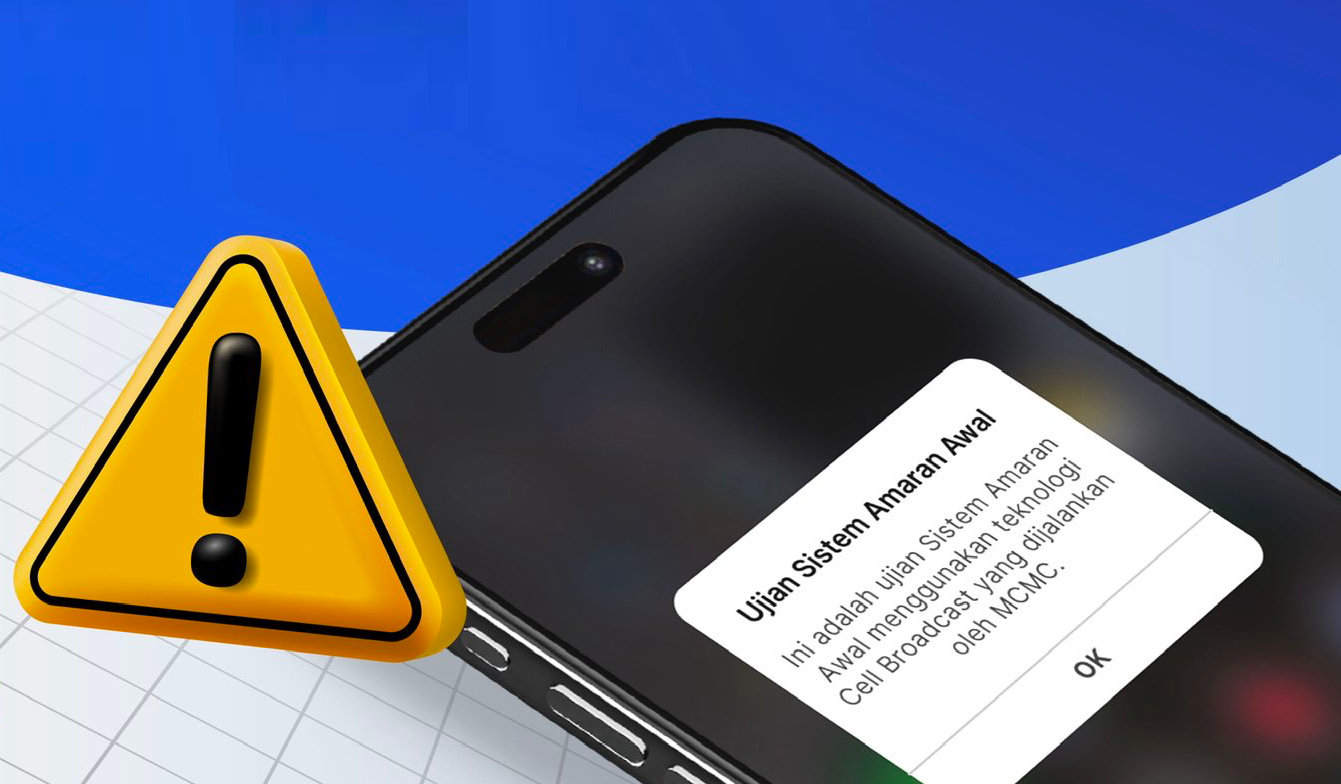
MCMC has now shared a clearer timeline for the phased implementation of its new Early Warning System, which uses Cell Broadcast System (CBS) technology to deliver disaster warnings directly to mobile phones.
Nationwide Early Warning System test on 29 November
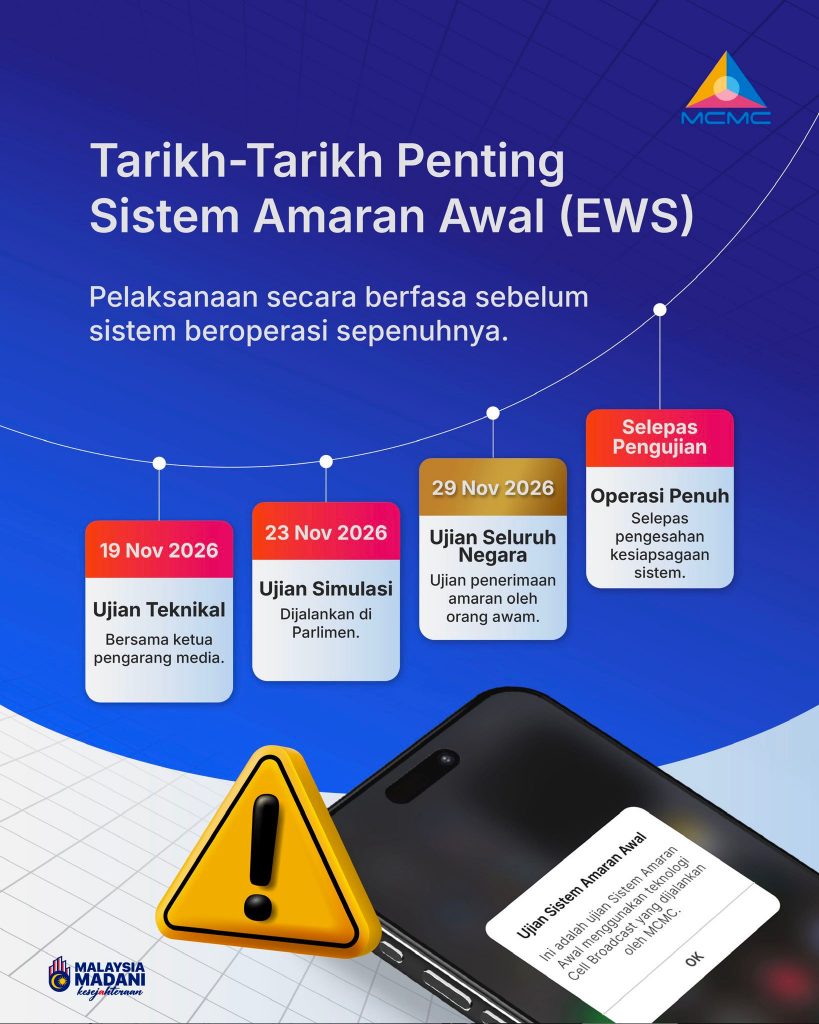
According to MCMC’s latest timeline, the EWS rollout involves three scheduled testing phases before the system becomes fully operational.
- 19 November 2026 – Technical Test: An internal technical exercise at MCMC’s headquarters in Cyberjaya, involving chief editors and media representatives.
- 23 November 2026 – Simulation Test: A simulation exercise conducted at Parliament.
- 29 November 2026 – Nationwide Test: A nationwide exercise to test the public’s ability to receive emergency alerts on their mobile phones.
Following these exercises, the EWS will enter full operation once the authorities have confirmed the system’s readiness.
At the moment, MCMC has not provided a specific date for the full rollout. The system could become operational by the end of 2026 if the remaining tests and readiness assessments go according to plan.
MCMC urges Malaysians to update their phones to receive disaster alerts
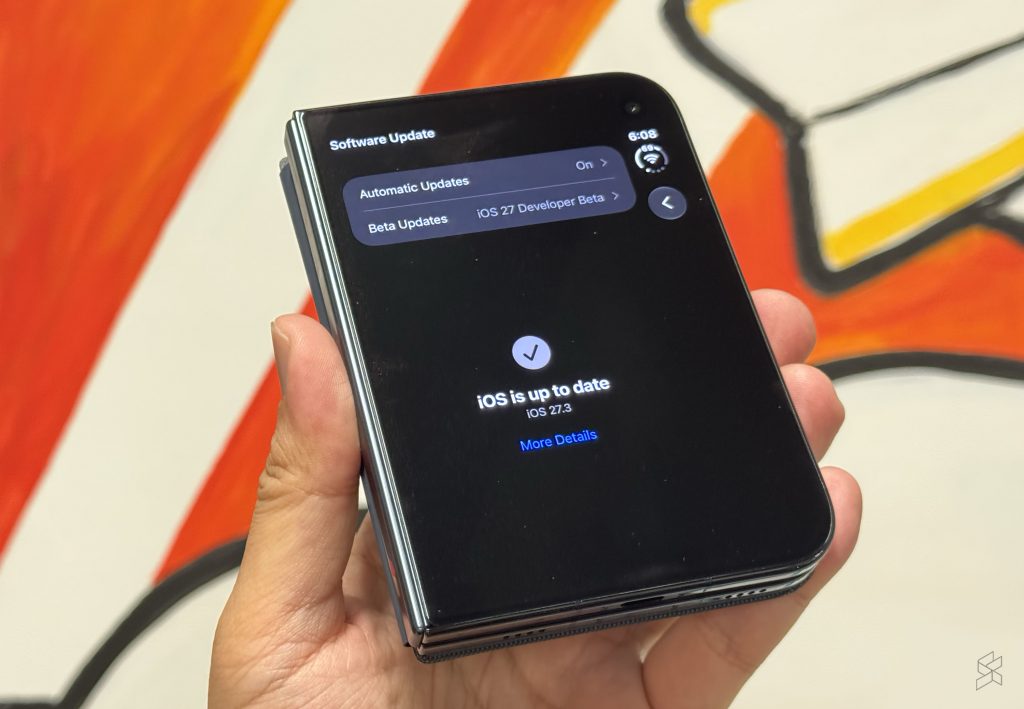
In a separate media statement issued today, MCMC has urged Malaysians to update their mobile phones to the latest available operating system to ensure they are ready to receive emergency alerts through EWS.
According to the regulator, the preliminary minimum device requirements are as follows:
- Apple iPhone: iPhone 11 and newer, running iOS 27.2 or later.
- Android: Smartphones running Android 12 or later.
- Huawei: Smartphones running EMUI 16 or later.
MCMC stresses that these requirements remain subject to final technical verification.
Besides updating their devices, users are also advised to restart their phones after installing software updates and ensure that emergency alert settings are enabled, where applicable.
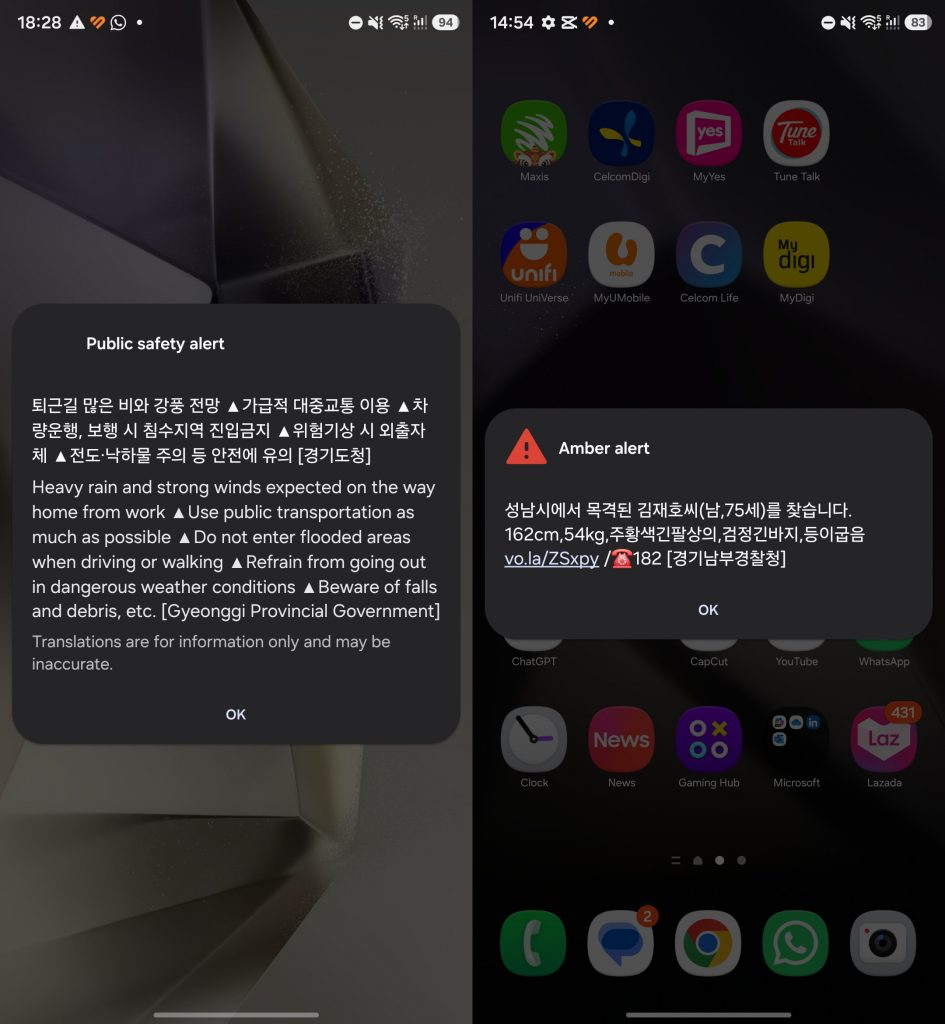
The EWS uses Cell Broadcast System technology, which allows authorities to send emergency alerts simultaneously to compatible mobile phones within a designated geographical area.
Unlike conventional SMS, cell broadcast does not require individual phone numbers to be targeted. Instead, emergency warnings can be transmitted through mobile network cells covering an affected area.
Users also do not need to download a separate app, register or subscribe to a specific service to receive these alerts.
The EWS is being implemented through collaboration between MCMC, the National Disaster Management Agency (NADMA), relevant technical agencies and telecommunications service providers.
With the nationwide test now scheduled for 29 November, Malaysians have a clearer picture of when they can expect to receive the first public test alerts.