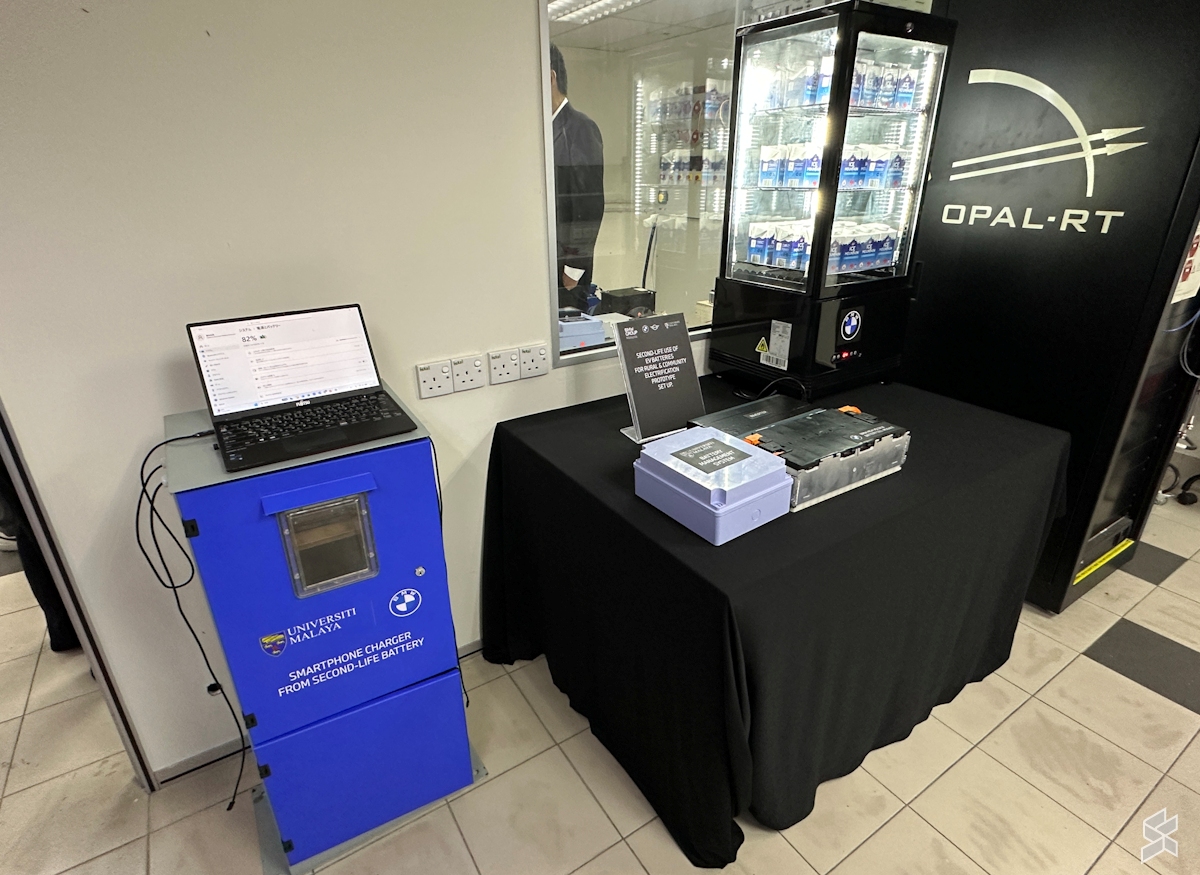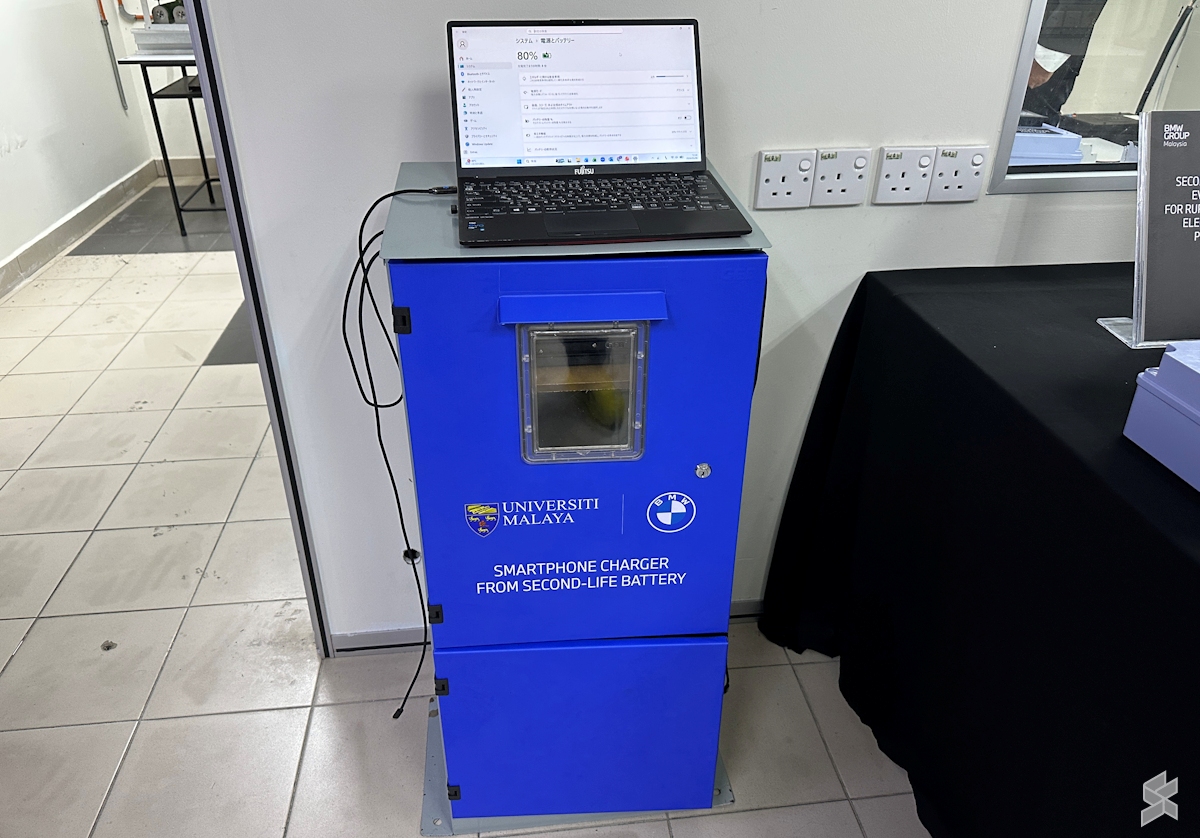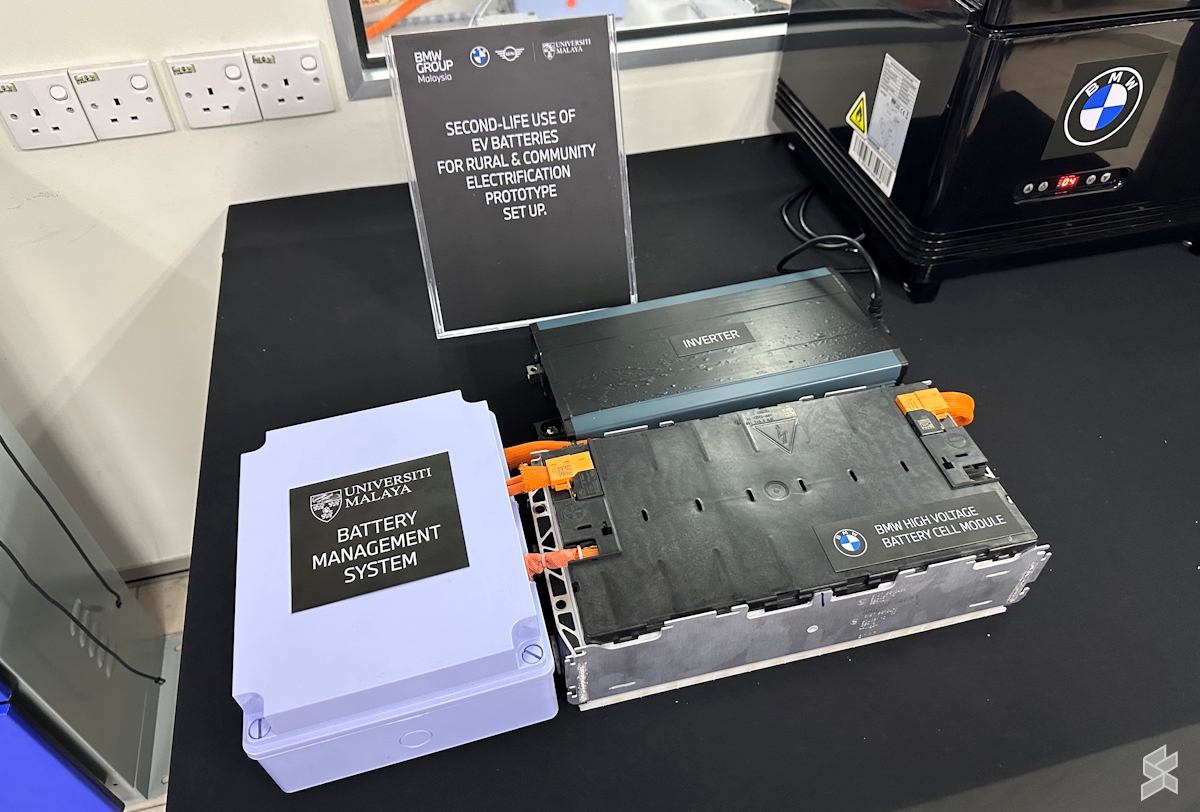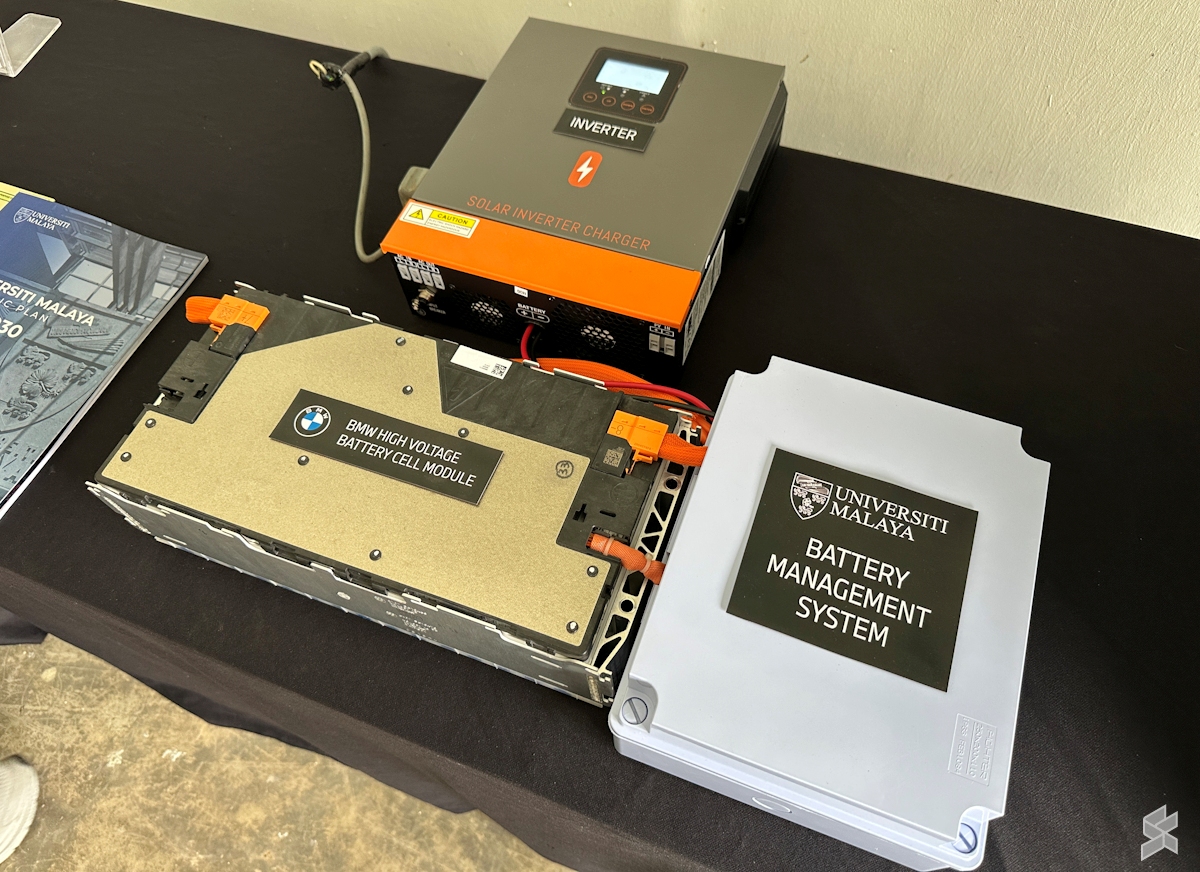
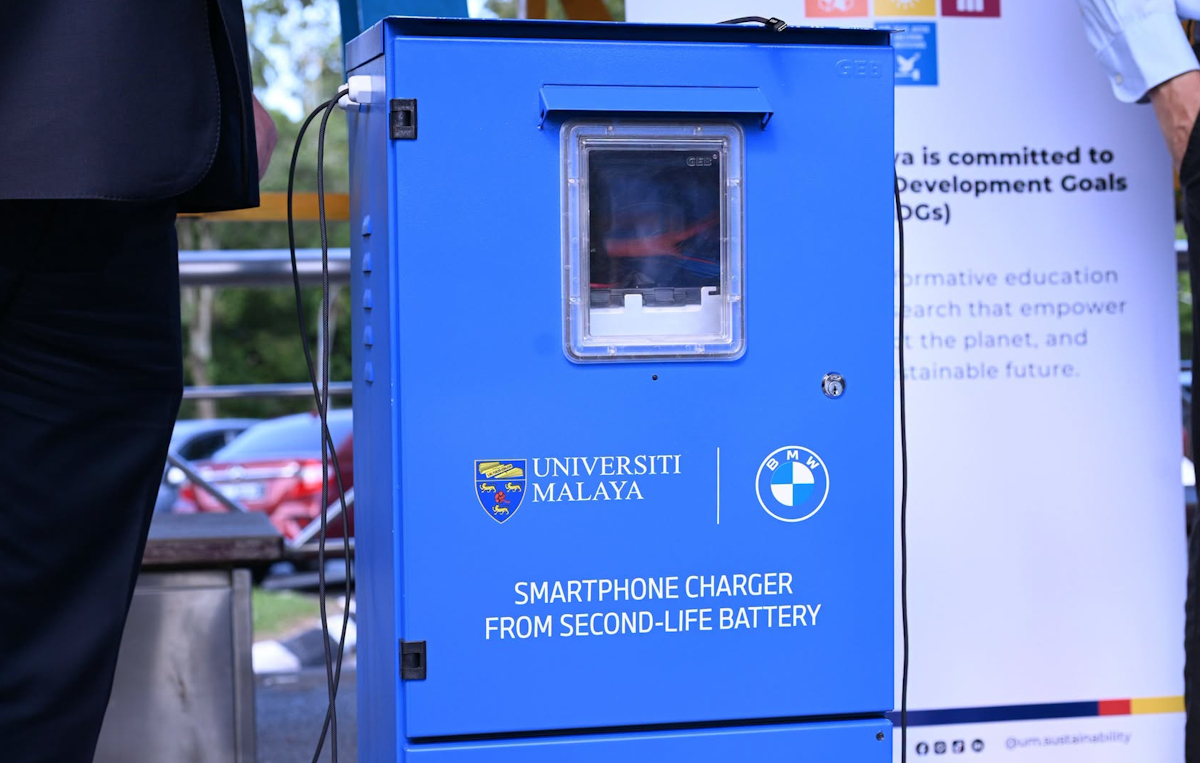
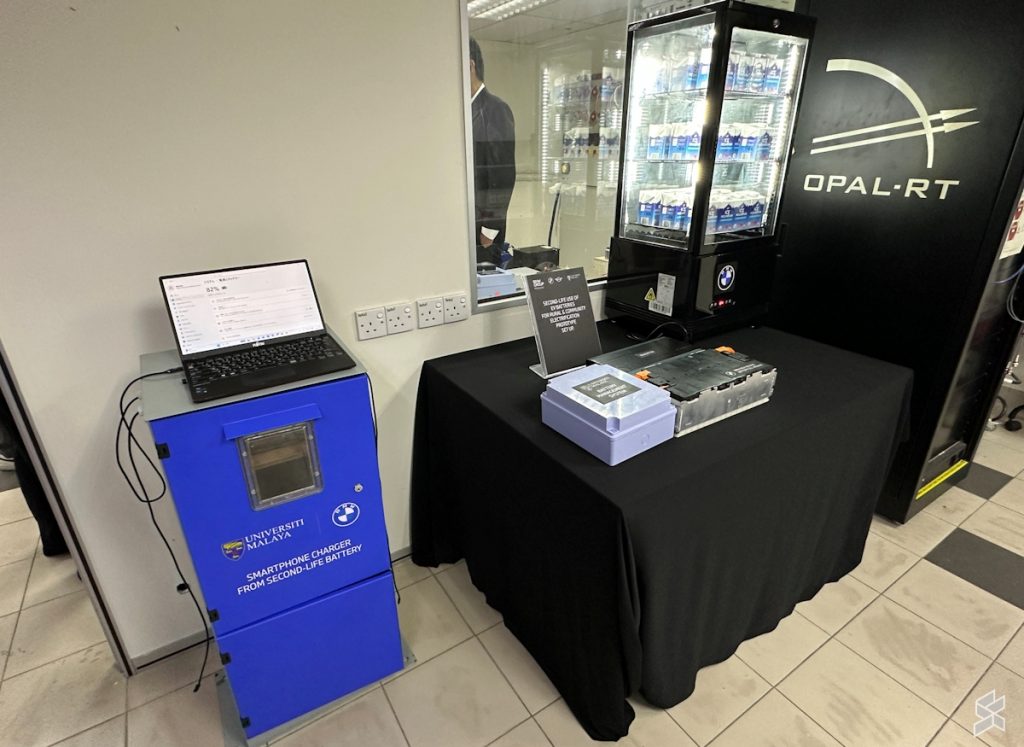
BMW Malaysia and Universiti Malaya (UM) have begun rolling out on-campus mobile device charging stations. What makes these charging stations special is that they run on a Battery Energy Storage System (BESS) utilising retired batteries from BMW fully electric (EV) and plug-in hybrid (PHEV) models.
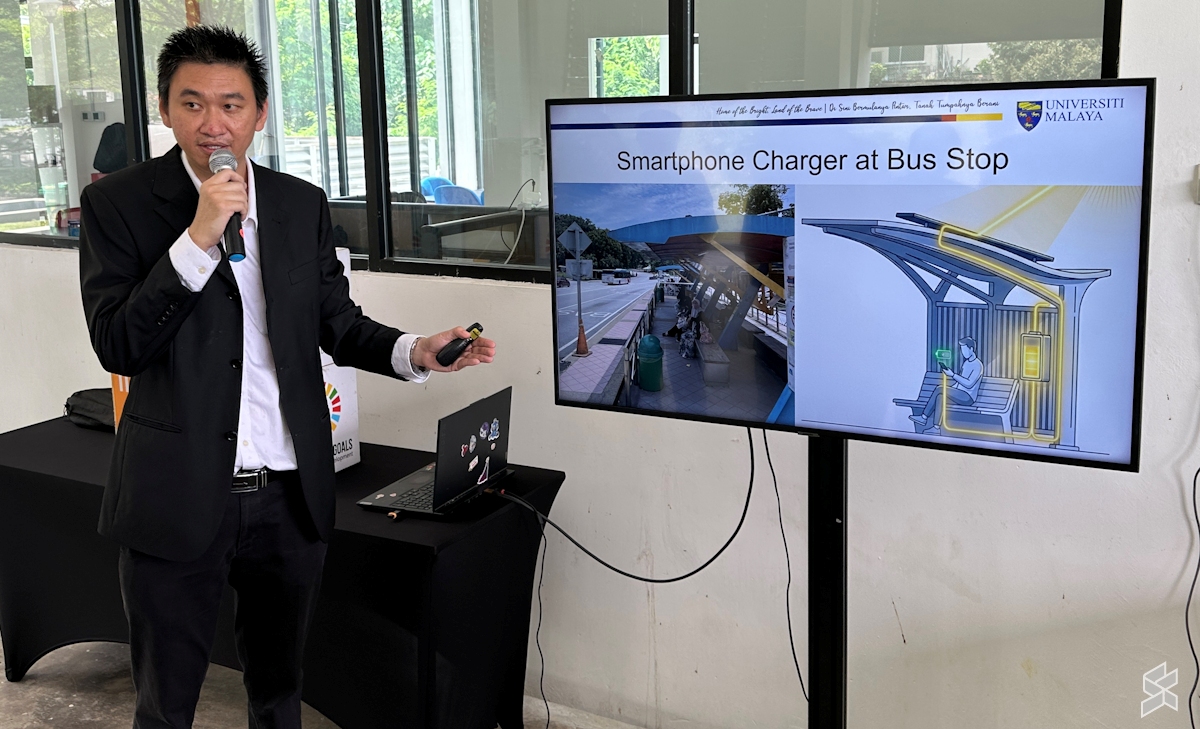
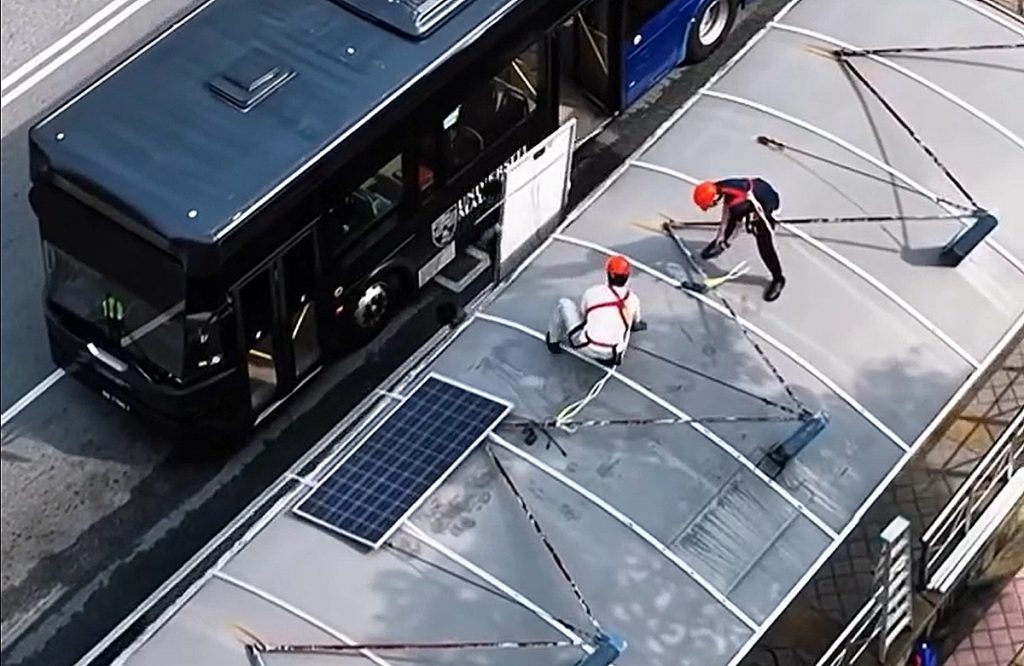
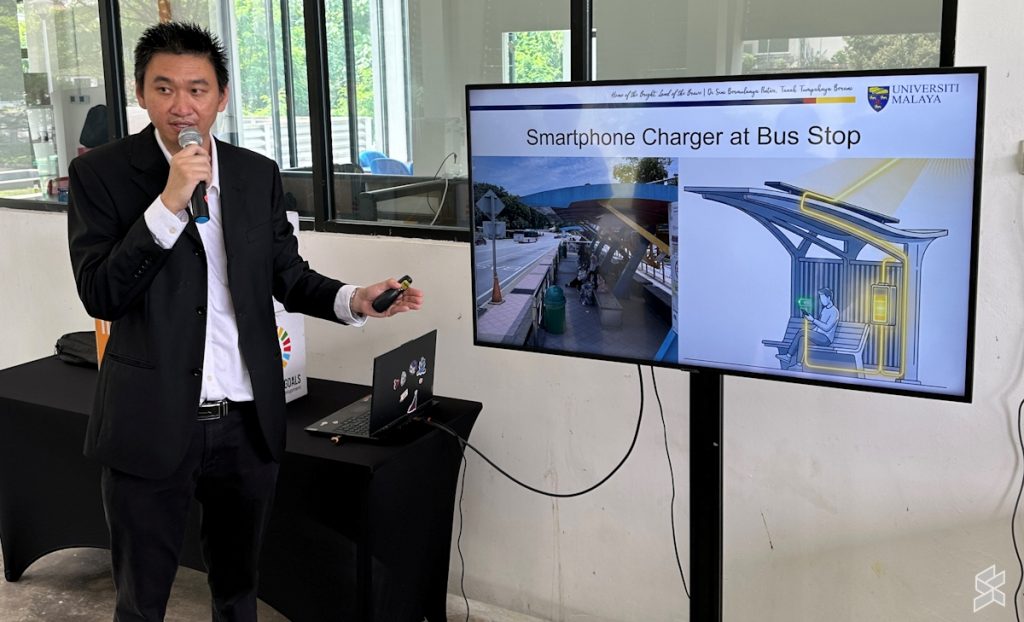
UM Sentral has been chosen as the first site for the charging station—a fitting location given its role as the university’s main bus hub. Equipped with four USB cables, the station is primarily designed to charge smartphones, but a prototype shown during a media briefing in May appeared powerful enough to power an average laptop. A set of solar panels has also been installed on the bus station’s roof to charge the system.
According to UM, the mobile device charging station was designed, developed, and deployed by UM students themselves under the supervision of researchers from the UM Power Energy Dedicated Advanced Centre (UMPEDAC).
This is part of BMW Malaysia RE:GENERATE x UM collaboration
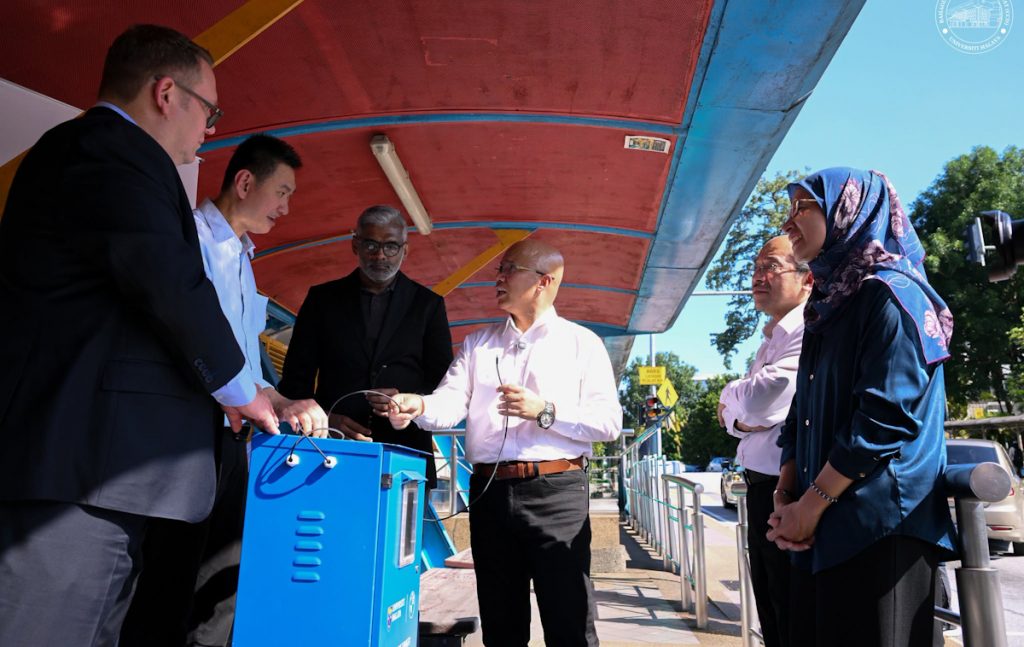
The on-campus mobile charging station is part of the BMW Malaysia RE:GENERATE x Universiti Malaya’s long-term initiative to explore the potential of second-life EV batteries. Also involved in this project are UM’s Sustainable Development Centre (UMSDC) and Community Engagement Centre (UMCares).
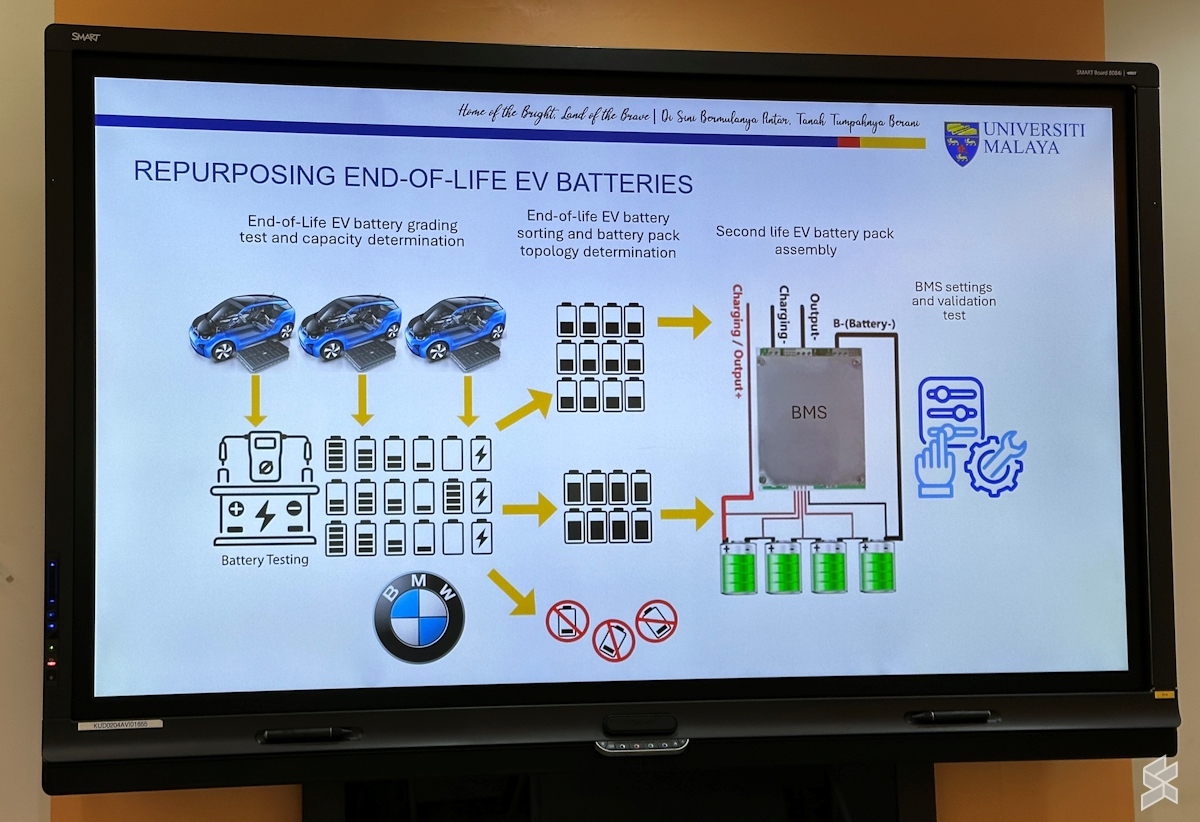
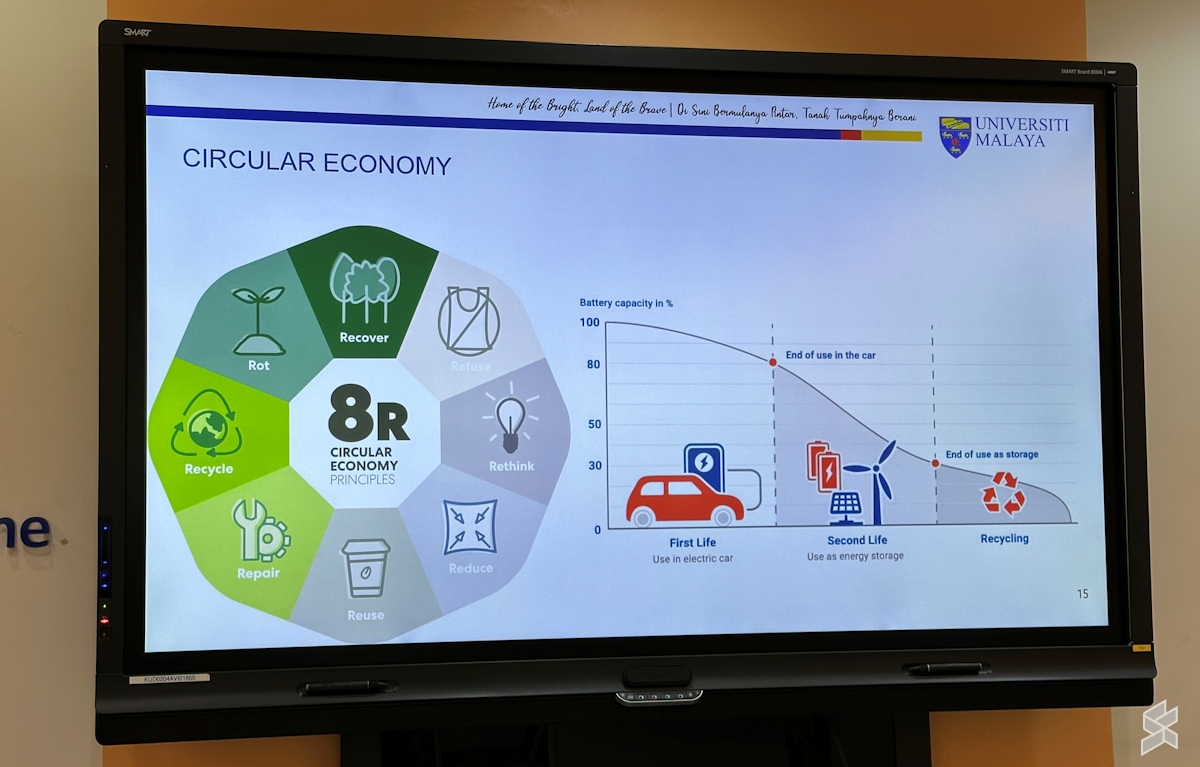
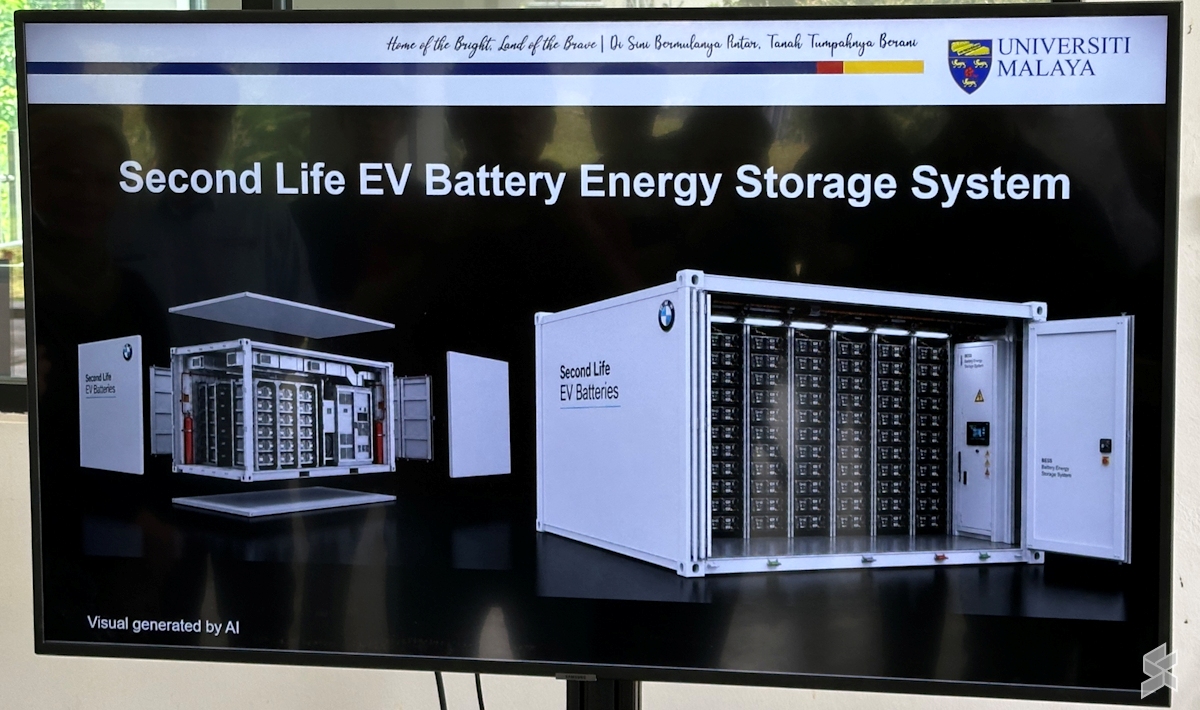
The high-voltage battery in an EV, PHEV, or HEV is usually deemed unsuitable for automotive operation once it reaches a certain State of Health (SoH). For BMW vehicles, an EV battery pack is retired when its SoH drops below 70%. Despite this, the battery usually retains significant residual capacity, making it viable for stationary energy storage applications like a BESS.
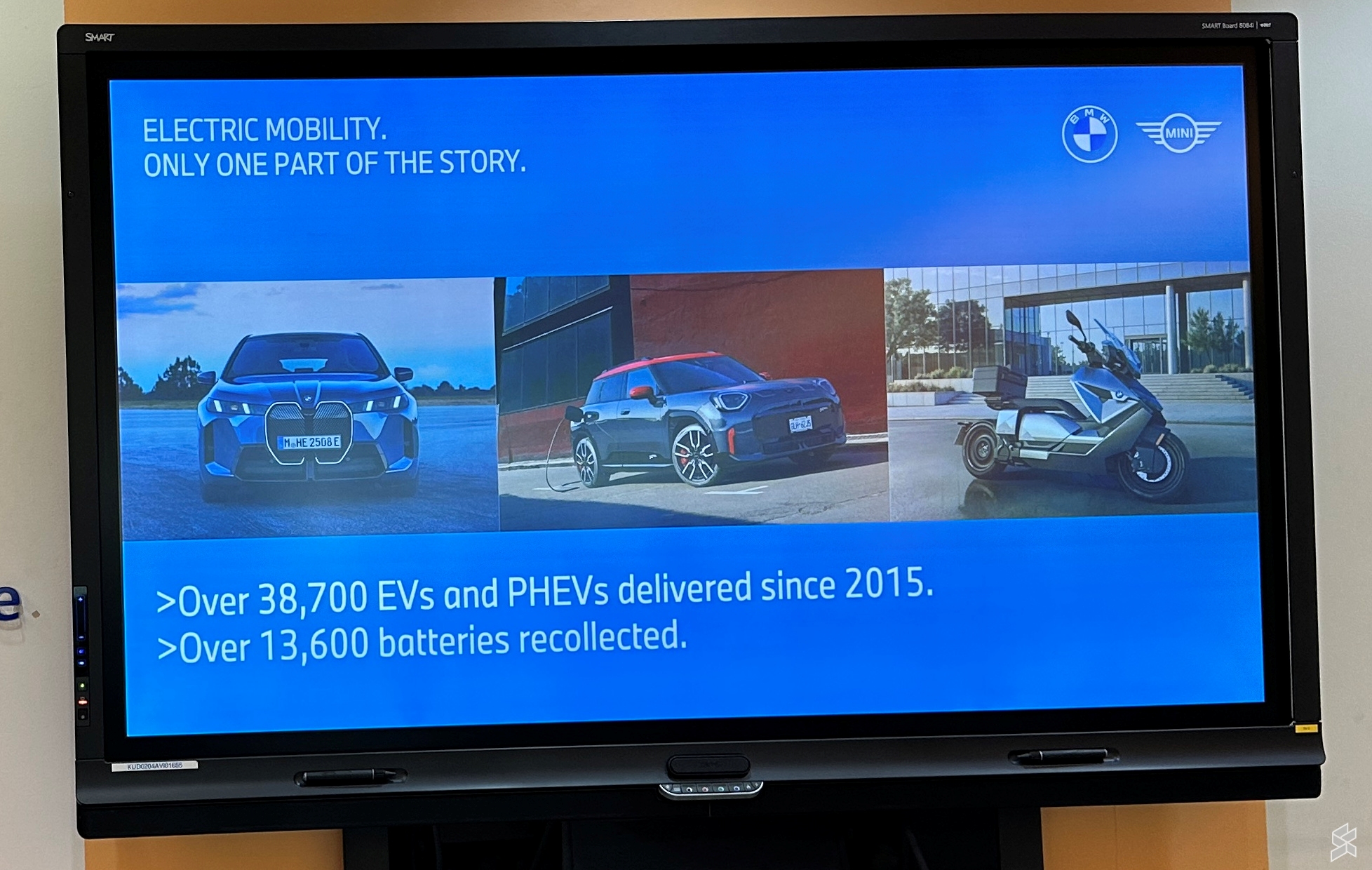
While some might consider EVs a “new” phenomenon, BMW has been selling electrified vehicles in Malaysia for over a decade. BMW Malaysia reported that the company has delivered over 38,700 EVs and PHEVs as of March 2026.
As standard practice, BMW Malaysia collects retired EV batteries—recovering over 13,600 units to date. A portion of these batteries is delivered to UMPEDAC, where Associate Professor Dr Tan Chia Kwang, alongside researchers and PhD students, evaluates their health before repurposing them for BESS projects.
The UMPEDAC research team noted that newer-generation BMW EV batteries feature higher energy density and retain more capacity, averaging 1.6 kWh per pack. In contrast, older-generation battery packs received by the team average 0.5 kWh per pack.
As a result, older battery packs are repurposed for the on-campus mobile charging stations, while the newer, healthier packs are earmarked for a different BESS designed for UM’s Rural Electrification Project.
UM is also developing BESS for rural homes and more
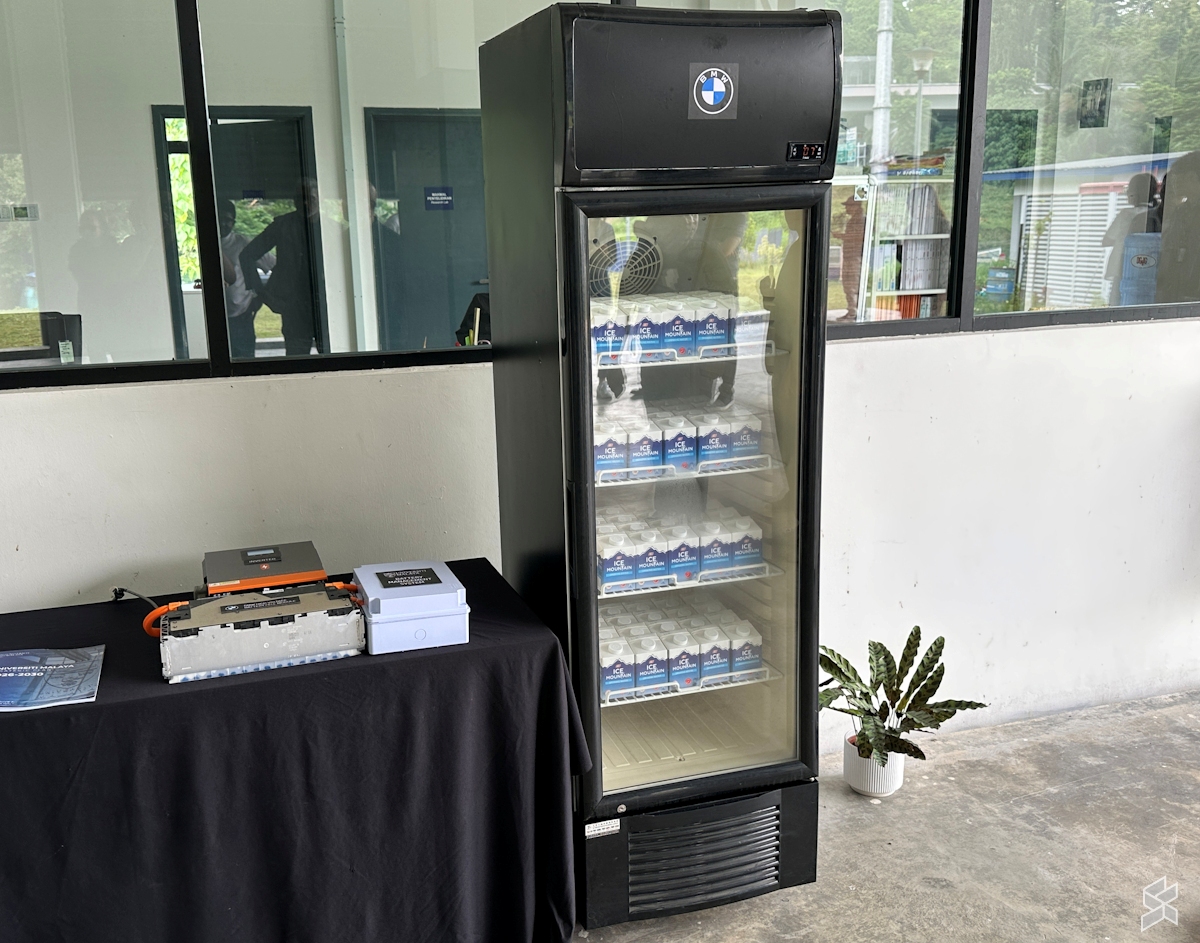
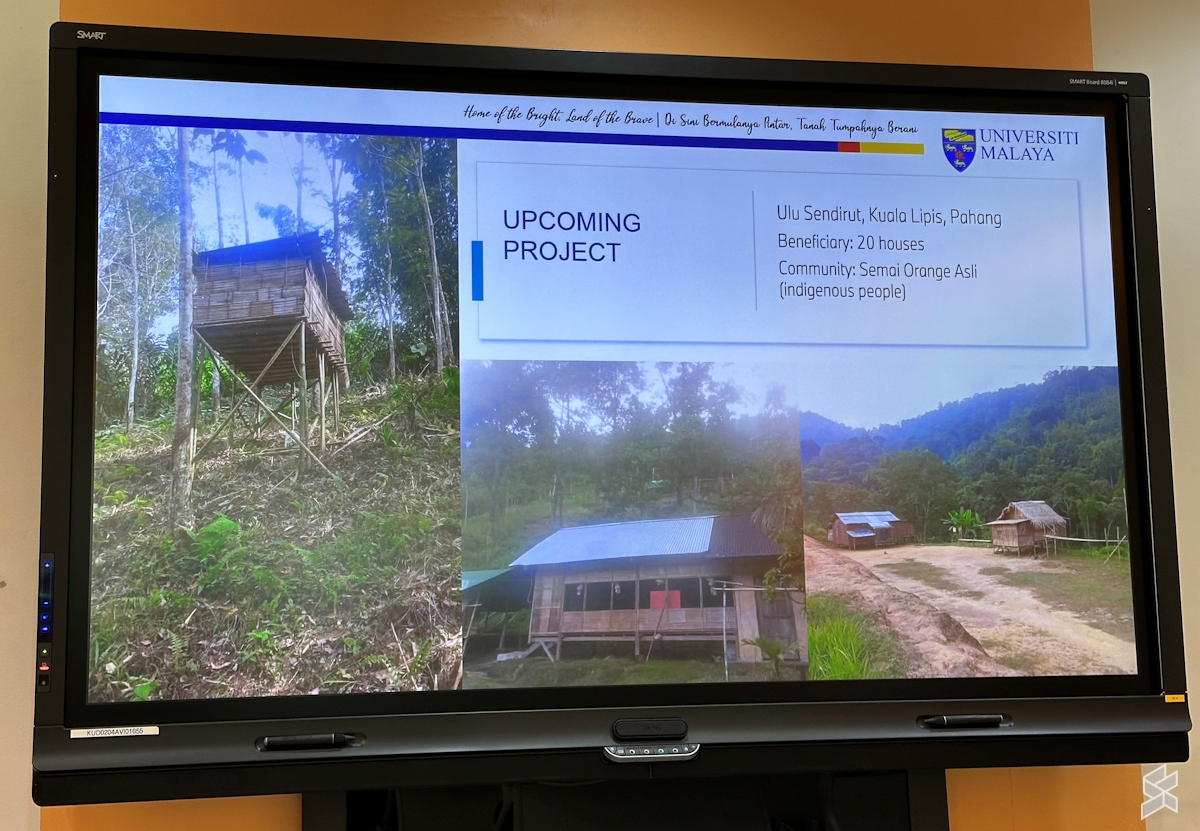
Speaking about the rural electrification effort, the team at UMPEDAC is concurrently developing a BESS aimed at off-grid rural communities. Once ready for deployment, the system will be installed in the Semai Orang Asli community in Ulu Sendirut, Kuala Lipis, Pahang.
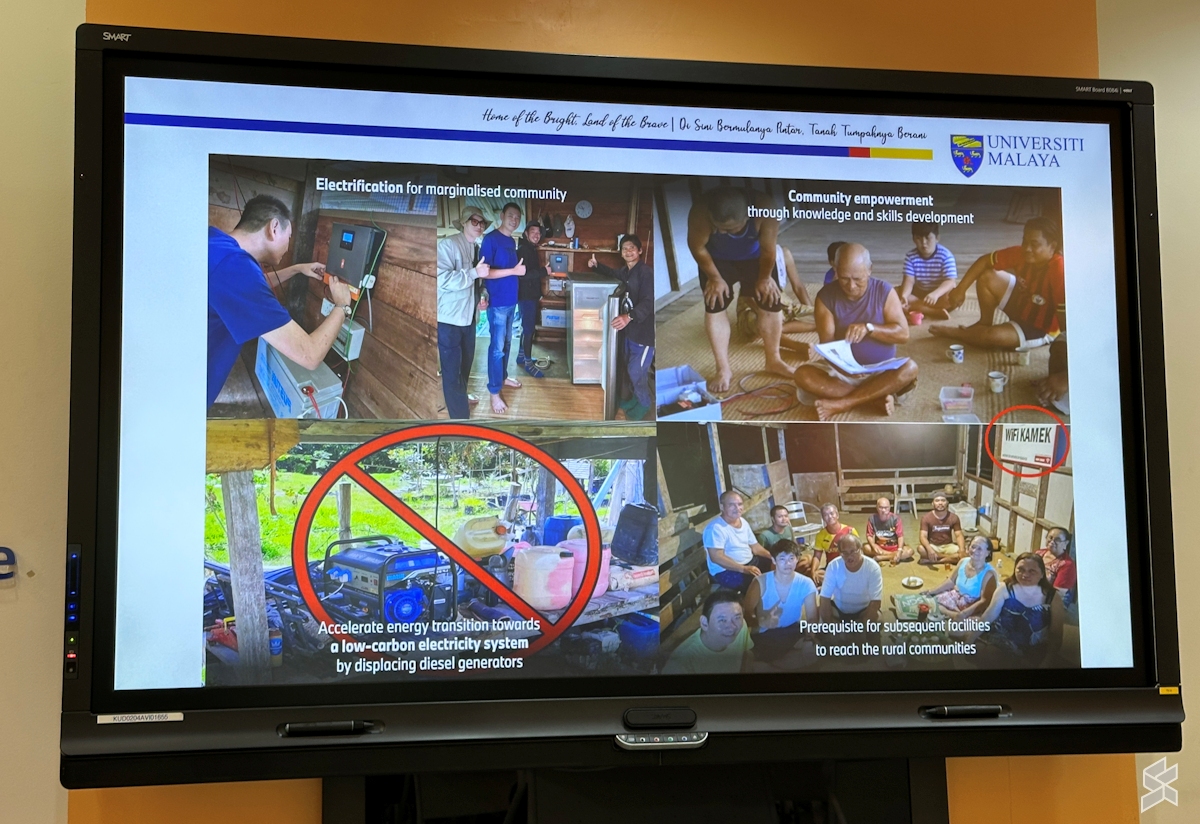
The system’s operation is straightforward: solar panels charge the batteries during the day, and the stored energy powers household appliances at night. The BESS designed by the UMPEDAC team is powerful enough to run lights, fans, and even a refrigerator.
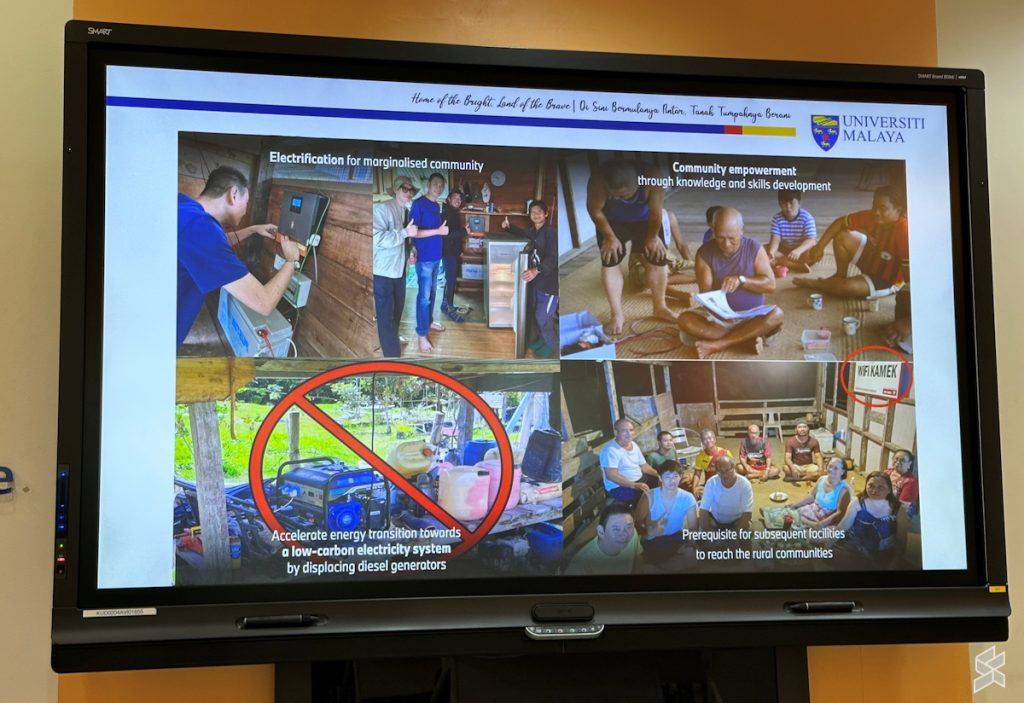
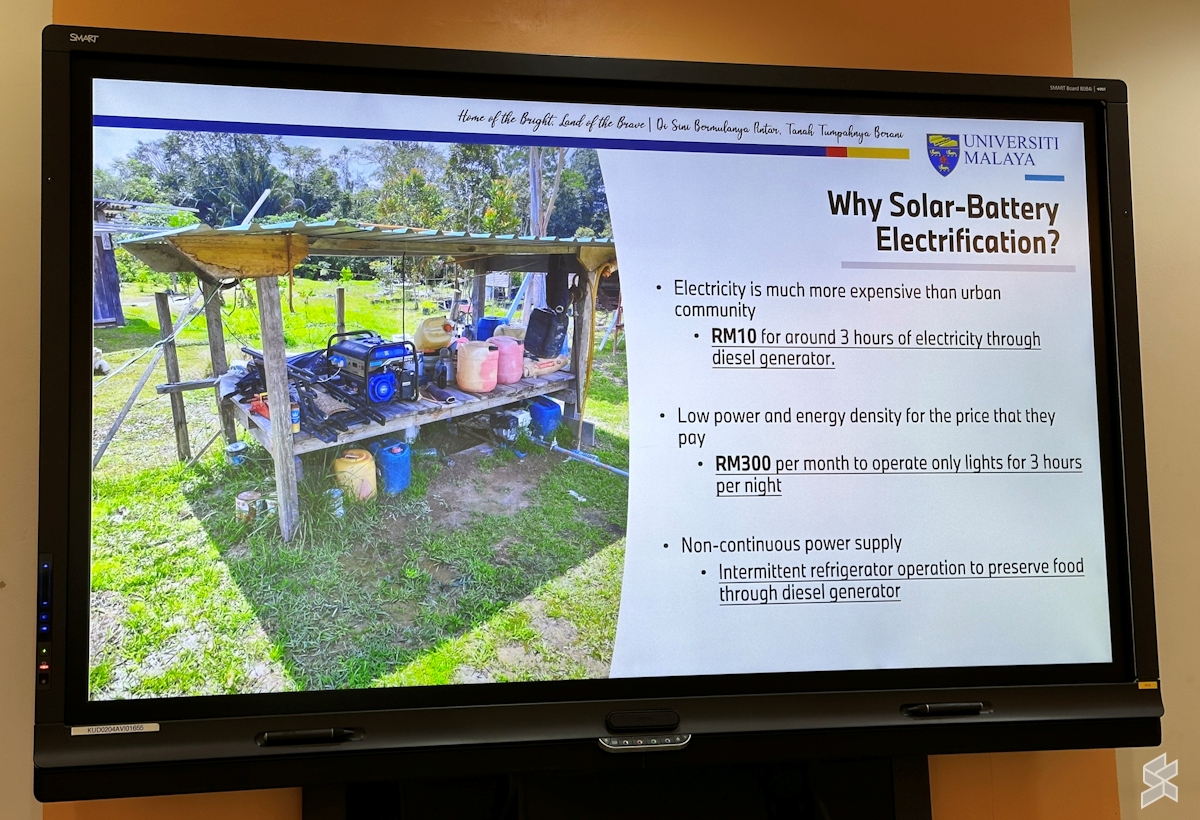
The research team highlighted that refrigeration significantly improves quality of life in rural areas, allowing families who hunt or gather food to store their provisions and reduce food waste. Additionally, the BESS helps reduce reliance on costly petrol or diesel power generators.
Interestingly enough, BMW Malaysia retains ownership of the retired EV batteries used throughout these initiatives. The automaker will take responsibility for retrieving and properly recycling the battery packs once they reach the end of their usable second life.
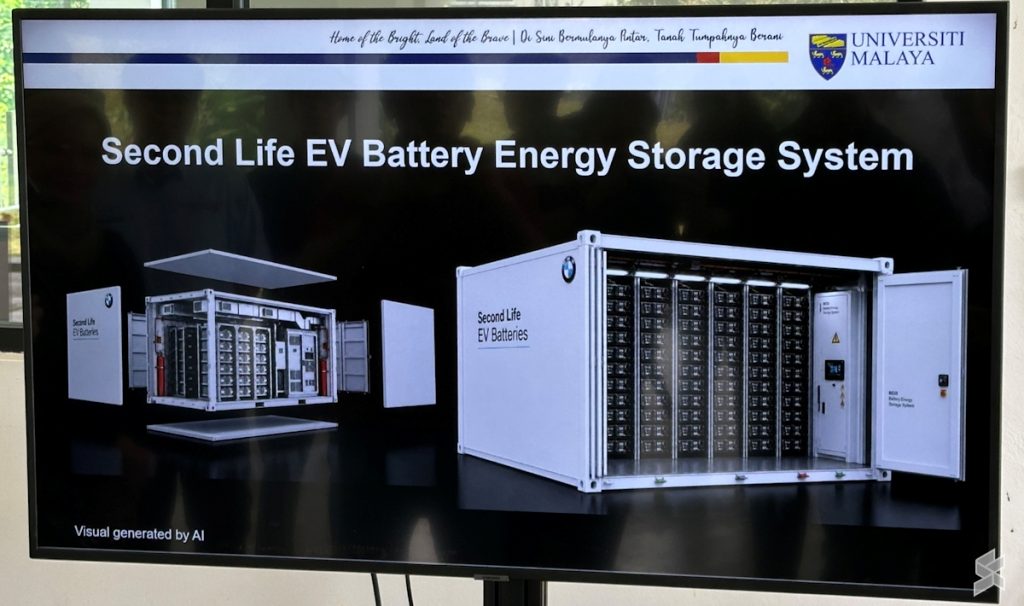
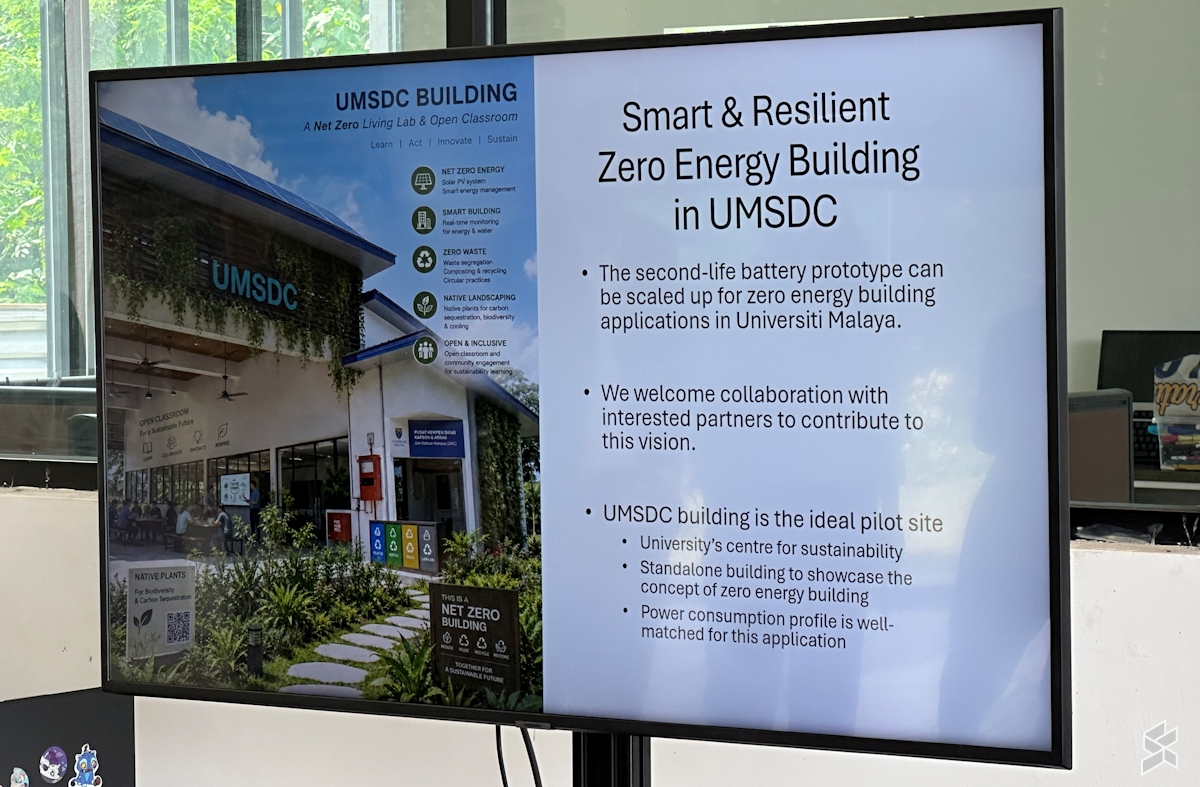
Meanwhile, the collaboration between BMW Malaysia and UM will not stop at these implementations. The team is already looking at potential ways to scale the BESS further, including possible applications for an autonomous Zero Energy Building (ZEB) at UMSDC.
That being said, they acknowledged that this will require a collective effort from more like-minded organisations and individuals. Hence, any interested parties wishing to support the project – whether through funding, expertise, or resources – are more than welcome to reach out to the team.
BMW Malaysia x UM Collaboration Media Briefing Image Gallery