• 中文版
  • BM
  • News
  • Deals
  • Reviews
    • First Impressions
    • Hands-on
    • Comparisons
  • Tech
    • Mobile
    • Computers
    • Cameras
    • Wearables
    • Audio
    • Drones
  • Telco
    • Celcom
    • Digi
    • Maxis
    • Time
    • Tune Talk
    • U Mobile
    • Unifi
    • Yes
  • Cars
  • Contribute
  • Jobs
Menu
  • 中文版
  • BM
  • News
  • Deals
  • Reviews
    • First Impressions
    • Hands-on
    • Comparisons
  • Tech
    • Mobile
    • Computers
    • Cameras
    • Wearables
    • Audio
    • Drones
  • Telco
    • Celcom
    • Digi
    • Maxis
    • Time
    • Tune Talk
    • U Mobile
    • Unifi
    • Yes
  • Cars
  • Contribute
  • Jobs
Search
  • Tech
    • News
    • Mobile
    • Computers
    • Cameras
    • Wearables
    • Audio
    • Drones
  • Telco
    • Celcom
    • Digi
    • Maxis
    • Time
    • U Mobile
    • Unifi
    • Yes
  • Reviews
    • First Impressions
    • Hands-on
    • Comparisons
  • Buyer’s Guide
  • Opinions
  • Digital Life
  • Video
  • Deals
  • How-To
  • Cars
  • Bahasa Melayu
  • EV
  • Contribute
  • Advertise
Menu
  • Tech
    • News
    • Mobile
    • Computers
    • Cameras
    • Wearables
    • Audio
    • Drones
  • Telco
    • Celcom
    • Digi
    • Maxis
    • Time
    • U Mobile
    • Unifi
    • Yes
  • Reviews
    • First Impressions
    • Hands-on
    • Comparisons
  • Buyer’s Guide
  • Opinions
  • Digital Life
  • Video
  • Deals
  • How-To
  • Cars
  • Bahasa Melayu
  • EV
  • Contribute
  • Advertise
Search
Close
Home Digital Life

NASA deliberately crashed a spaceship into an asteroid to change its direction. Did it work?

  • BY Dzamira Dzafri
  • 27 September 2022
  • 11:45 am
  • Comment
Share on FacebookShare on Twitter

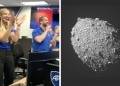
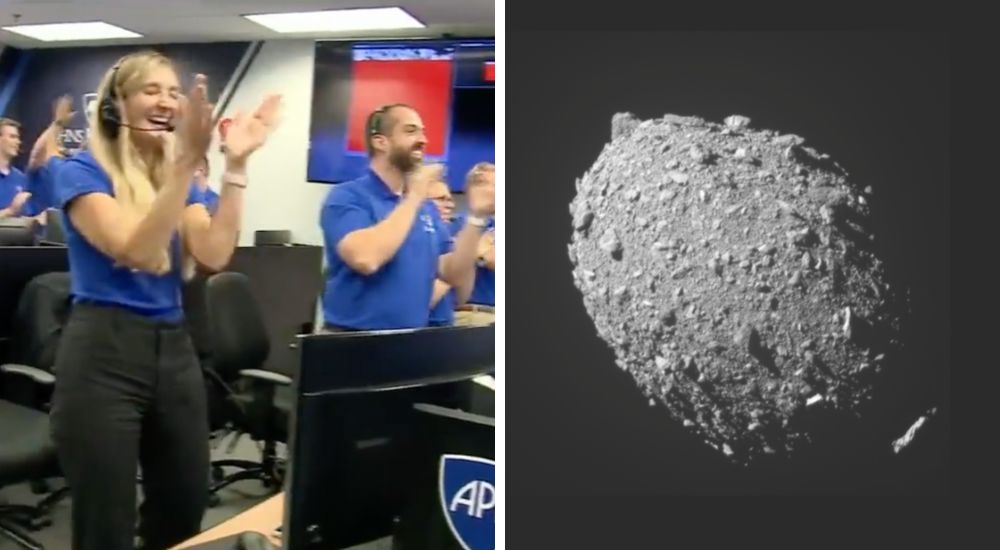
NASA announced that its Double Asteroid Redirection Test (DART) probe successfully smashed into an asteroid, destroying itself in the process. The collision, which you can view on Twitter, is intentional.

The Dimorphos asteroid, which is apparently the size of a football stadium, does not pose a threat to the Earth according to NASA. But the collision was designed to test if space rocks could be nudged safely out of the way if they might threaten Earth in the future.

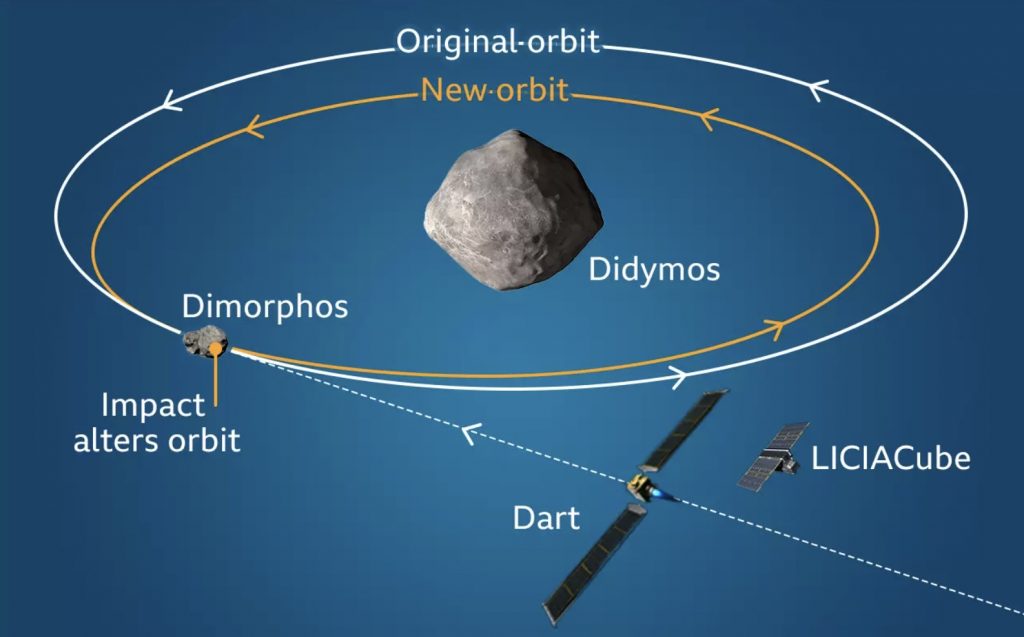
To collide with the Dimorphos, NASA used its DART—the world’s first planetary defense technology demonstration—after 10 months of flying it in space. You can watch the collision right before impact below, as DART’s camera returned an image per second, right up to the moment of impact with the target.

IMPACT SUCCESS! Watch from #DARTMIssion’s DRACO Camera, as the vending machine-sized spacecraft successfully collides with asteroid Dimorphos, which is the size of a football stadium and poses no threat to Earth. pic.twitter.com/7bXipPkjWD

— NASA (@NASA) September 26, 2022

“At its core, DART represents an unprecedented success for planetary defense, but it is also a mission of unity with a real benefit for all humanity. As NASA studies the cosmos and our home planet, we’re also working to protect that home, and this international collaboration turned science fiction into science fact, demonstrating one way to protect Earth,” said NASA Administrator Bill Nelson.
Source

The plan was to determine whether a spacecraft can alter the trajectory of an asteroid through sheer kinetic force, nudging it off course just enough to keep Earth out of harm’s way. Dimorphos was chosen as it was not on a path to intersect with Earth, and a small alteration in their orbital relationship will not have increased the risk. It, however, is still too early to know if the experiment worked.

“If this works, then we know we can use that same technology to deflect asteroids that might pose an actual threat further down the line,” Tanya Harrison, a fellow at the Outer Space Institute.

BBC reports that sky surveys have identified more than 95% of the monster asteroids that could initiate a global extinction were they to collide with Earth. They likely won’t, but now it seems like NASA is a little more prepared in case it happens.

[ SOURCE, IMAGE SOURCE, 2 ]

Tags: DARTDimorphosNASANASA asteroidNASA DARTNASA DART DimorphosNASA Dimorphos
Dzamira Dzafri

Dzamira Dzafri

POPULAR

NASA deliberately crashed a spaceship into an asteroid to change its direction. Did it work?

September 27, 2022
Rear view of the OPPO Find X9 Ultra in Tundra Umber standing vertically on a stone surface with a lush green bokeh background. The device features an eco-friendly vegan leather back with a classic stitching design , vertically oriented Hasselblad and OPPO logos , and a large circular Master Lens camera module with a bronze-toned knurled ring.

Clearing Every Expectation: How the OPPO Find X9 Ultra Redefines the Modern Flagship Experience

April 16, 2026

SoyaCincau x Dongfeng Pop Up EV Clinic: Track Edition 2026: Chase a podium or cruise with friends; we’re opening the grid to everyone

May 13, 2026

Volvo EX30 owners affected by recall told not to charge above 70% following two fire incidents in Thailand

May 19, 2026
BYD Inokom Visit - May 2026

BYD is here to stay in Malaysia: CKD with Sime Motors set to happen soon?

May 18, 2026

Sarawak’s Batang Lupar 1 Bridge: Malaysia’s longest river-crossing bridge opens today

May 21, 2026

Copyright © 2025 · SoyaCincau.com
Mind Blow Sdn Bhd (1076827-P)

  • ADVERTISE
  • DISCLAIMER

Copyright © 2026 · SoyaCincau.com – Mind Blow Sdn Bhd (1076827-P)

  • ADVERTISE
  • DISCLAIMER