Cybersecurity company Kaspersky revealed the results to their survey about “digital reputation”. One of the biggest reveals was that more than 3-in-10 users in Asia Pacific admitted to having a social media profile without their real names, photos, and personally identifiable information.
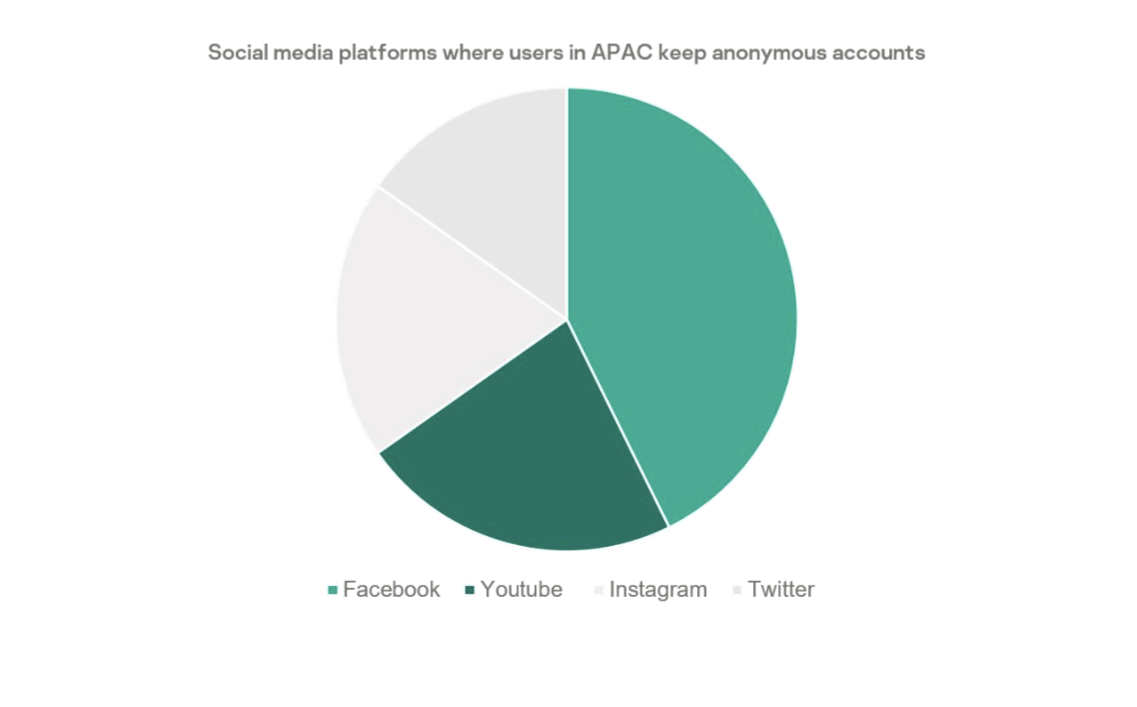
The survey was conducted last month among 1,240 respondents from the region. 35% of the respondents in South East Asia admitted to having identity-less accounts, followed by 28% in South Asia and 20% in Australia. These anonymous accounts are mostly created on Facebook (70%), YouTube (37%), Instagram (33%) and Twitter (25%).
“While it may be frowned upon at first glance, the use of ‘nameless and faceless profiles’ is two-pronged. Survey results unmasked how this reality allow individuals to chase their passions and to harness free speech but at the same time to conduct malicious and harmful activities,” said Kaspersky.
In fact, 34% of those surveyed use these accounts to be able to disagree with someone or a news piece online without using their real identities. 22% of them were also engaged in online stalking.
While almost half (49%) of those surveyed stated that they use anonymous accounts to “exercise their freedom of speech without affecting their reputation”. 48% wanted to indulge in their secret interests that they were not too keen on having their friends find out about.
However, it’s not just personal accounts that Kaspersky queried about. 49% of respondents will check the social media accounts of a brand or a company before purchasing their goods or services.
“Nearly 5 in 10 (48%) asserted that they avoid companies who were involved in a scandal or had received negative news coverage online,” continued Kaspersky.
To help consumers in defending their online reputations, Kaspersky shares five steps you can take to ensure that you are protected and secure online:
- Remember your digital reputation is also linked to your personal reputation. Everything that is posted on the internet remains on the internet, including harsh and radical judgments. These can lead to unpleasant explanations at the workplace or during hiring processes
- Only share only things that are necessary and needed. The more your share, the more appealing you are to an attacker who is looking to steal your personal data or even your identity
- Delete accounts and data that you barely use. Any one of them could leak your information
- If apps are asking for sensitive data, take a look at its privacy policy, which might openly state that your data will be passed to third-party companies. Don’t give apps more information than necessary
- Have a combined solution of security products like password managers and practical steps to minimise the threats and keep your data safe online
“From the initial purpose of finding and connecting with friends and families, social media has evolved and will continue to evolve in unprecedented ways. It has played a key role on how we socialise and identify with each other, but now, we have arrived at a fork in the road where virtual profiles of both individuals and companies are being used as a parameter for judgment,” sais Yeo Siang Tiong, General Manager for Southeast Asia at Kaspersky.
[ IMAGE SOURCE ]