Tesla has finally allowed non-Tesla EVs to charge at selected Tesla Superchargers in Malaysia. While this is something that the company has been doing in selected markets, starting with the Netherlands in 2021, the company has been specifically asked to do this by the Malaysian government as part of the Battery Electric Vehicle Global Leaders program, which allows Tesla to bring its vehicle to Malaysia without going through the usual Franchise AP route.
At the moment, only 4 Tesla Supercharger locations in Malaysia that can support non-Tesla EVs. All of them are located at Klang Valley, though:
For now, we have no knowledge whether Tesla is going to expand this list further or otherwise.
Which non-Tesla EVs can support Tesla Supercharger?
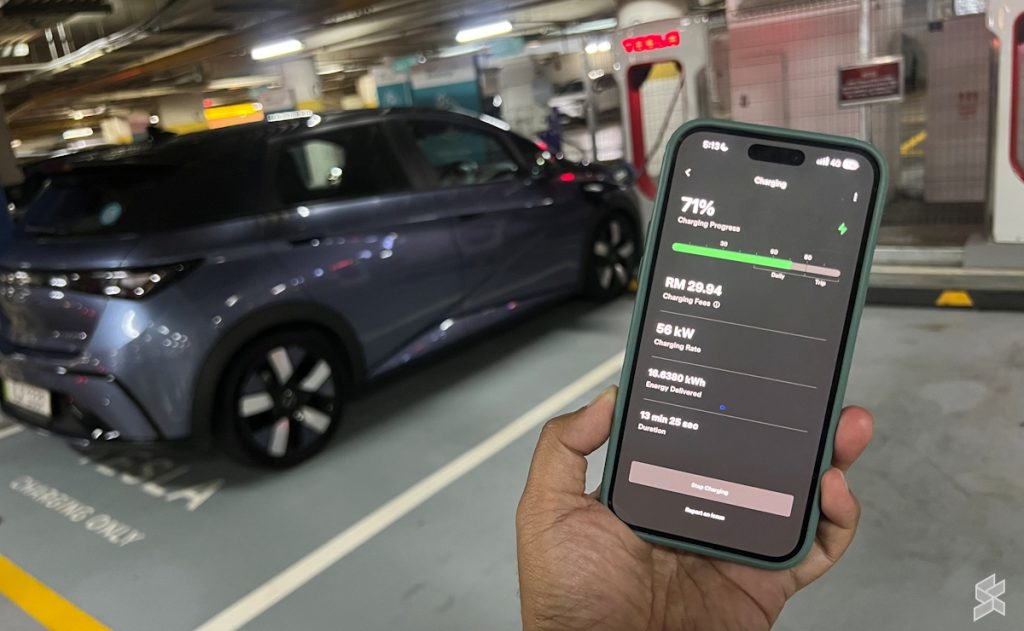
In general, you can charge your EV at these selected Tesla Superchargers as long as it has a CCS2 charging port.
That being said, it has been confirmed that Tesla Supercharger does not support the 2022/2023 pre-facelift BYD Atto 3, based on the testing done by owner Azlan Mahmud at Gamuda Cove. The incompatibility is in line with the report from Australia last year.
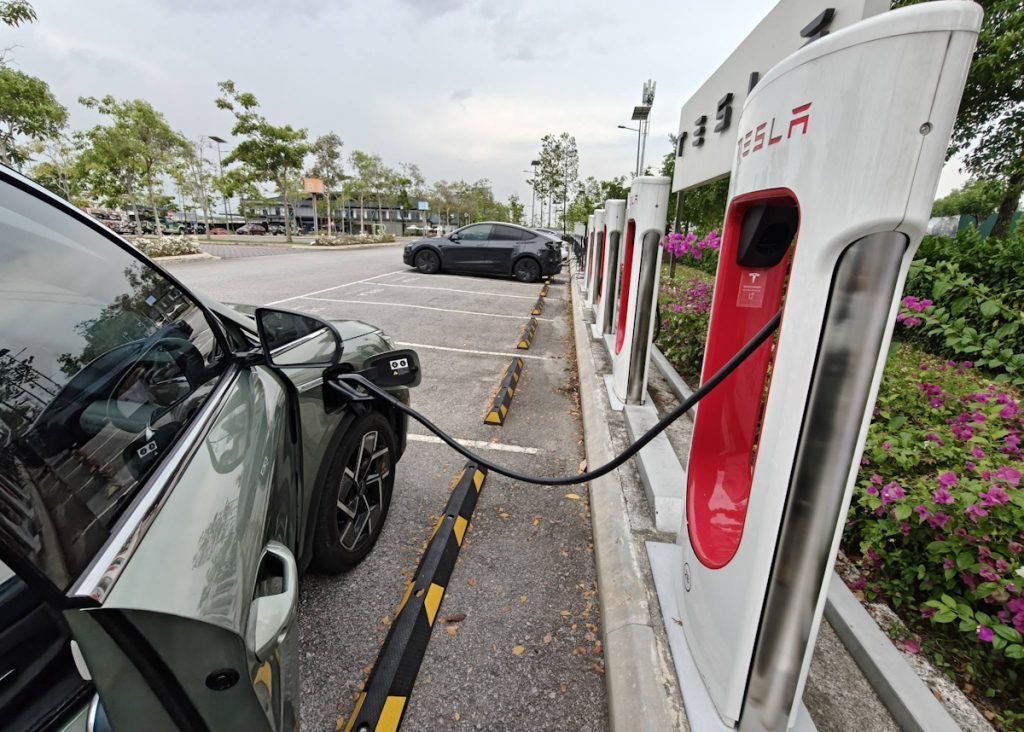
In case you are wondering if your Atto 3 is affected, you can identify the version that you have by the tyres that your Atto 3 came with. If it came with Atlas A51 Batman tyres, instead of the Continental EcoContact 6Q which was only supplied to the EV starting from September 2024 onwards, then your Atto 3 can’t be charged at a Tesla Supercharger.
Over in Australia, BYD has begun rolling out a fix for this issue. However, users have to fork out around AUD300 (~RM833) to AUD400 (~RM1,111) in order to implement the fix on their Atto 3, and it is not known for now whether BYD Malaysia or BYD Sime Motors will offer it in our market.
How much does it cost to charge non-Tesla EVs at a Tesla Supercharger?
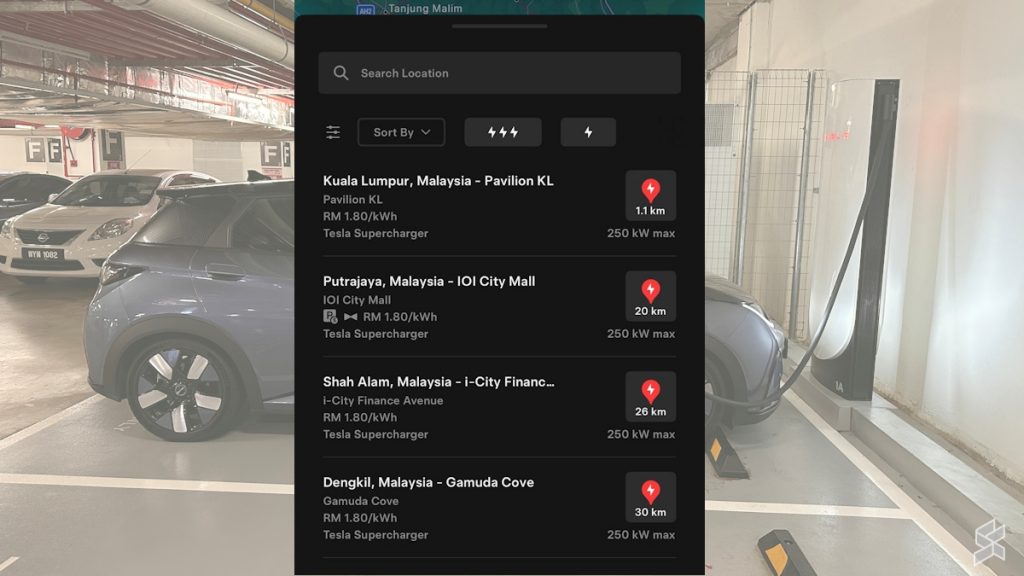
When it comes to the charging fee, it currently costs a rather hefty RM1.80 per kWh to charge your non-Tesla EVs at a Tesla Supercharger in Malaysia. As a comparison, Tesla owners can utilise Superchargers from as low as RM0.93 per kWh, depending on the timing.
In certain markets such as the United States, there is the Tesla Supercharging Membership monthly subscription package which offers significant discounts on Supercharger’s fee for non-Tesla EV owners. This package is not officially available in Malaysia, although some may have found a workaround to make it work over here.
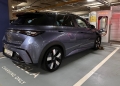
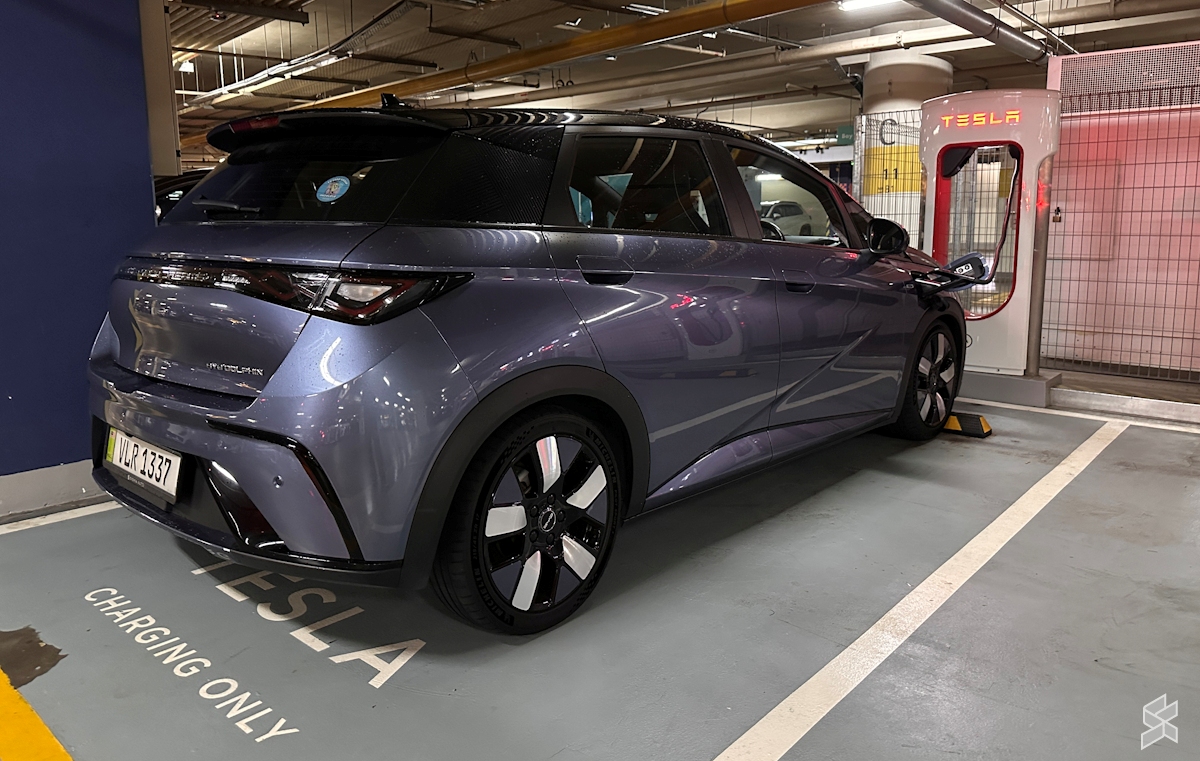
Meanwhile, the congestion fee of up to RM2.00 per minute applies to non-Tesla Evs as well. From our experience testing BYD Dolphin and Kia EV6 at Tesla Supercharger Pavilion KL earlier this week, we also noticed that there was a pre-authorised amount of RM80 when we activated our charging session.
How to activate Tesla Supercharger for non-Tesla EVs?
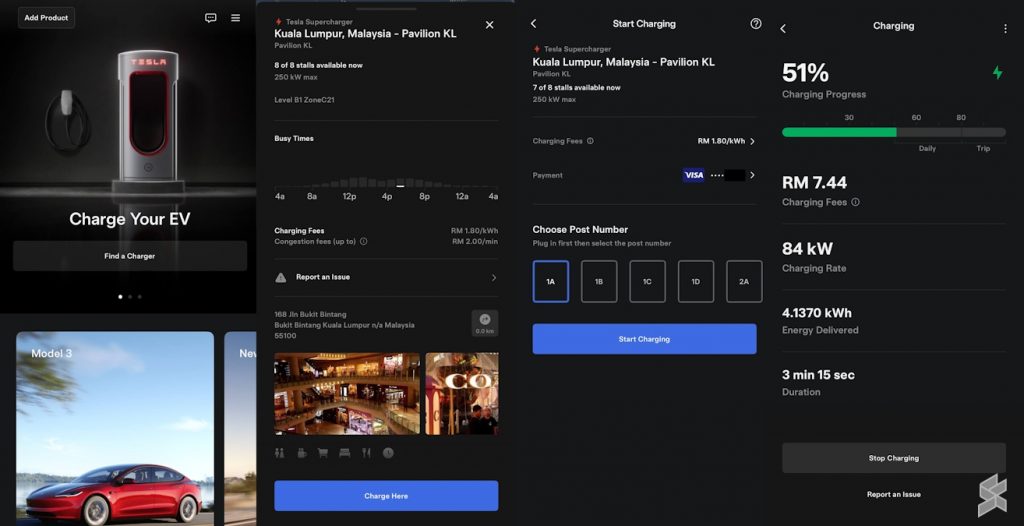
Non-Tesla EVs can utilise Tesla Supercharger through the Tesla mobile app. Before you can start charging your non-Tesla EVs there, make sure to create a Tesla account and set your payment settings in the app.
Here’s the step to activate the Tesla Supercharger for non-Tesla EVs:
- Tap on the Find a Charger button on the Charge Your EV banner on the home page
- Select the location and press Charge Here – if you are already in the location, chances are that the app will open up this page.
- Plug in the charging cable to your EV, select the post number, and press Start Charging
According to the Tesla app, it may take up to 2 minutes for the charging session to start. Once the charger and the EV are connected, the charging status screen will appear on the Tesla app, where you can check the charging progress, speed, and estimated fee.
Be aware of the short charging cable on Tesla Supercharger V3 posts
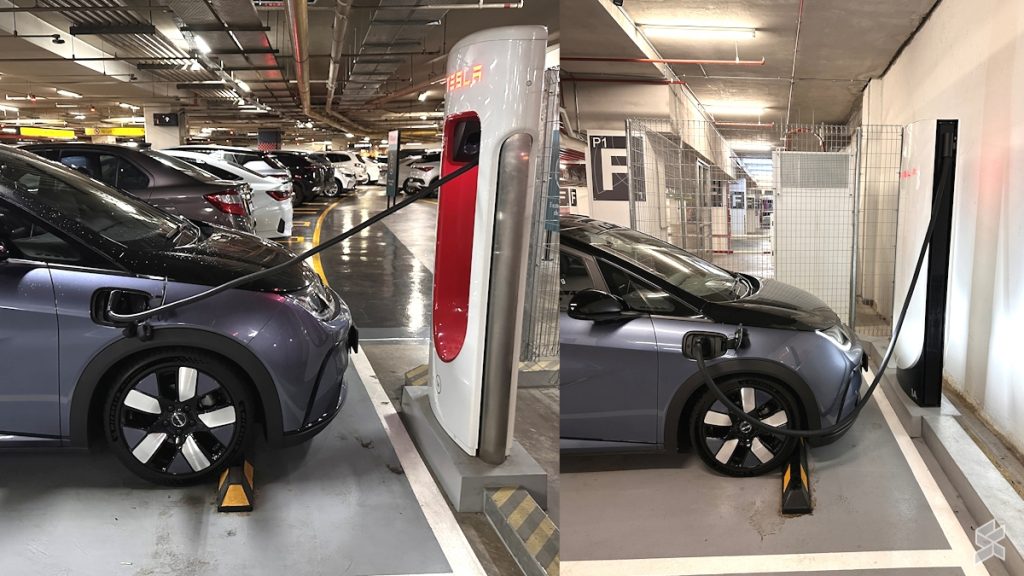
Out of the 4 Tesla Supercharger locations that support non-Tesla EVs, 2 of them (Pavilion KL and Gamuda Cove Dengkil) were equipped with Supercharger V3 posts. The cable on V3 posts might be too short for many non-Tesla EVs out there.
During our test with the Tesla Supercharger Pavilion KL, the V3 cable can barely reach my BYD Dolphin. There was no such issue when I brought the Dolphin to IOI City Mall, Putrajaya, which has Supercharger V4 posts.
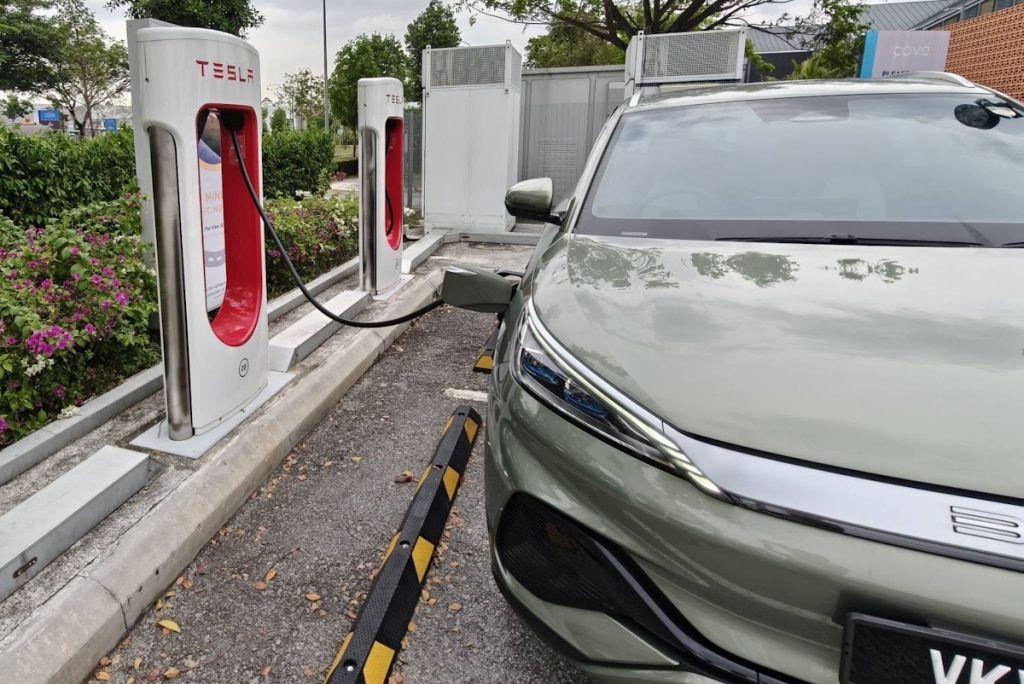
On the other hand, the V3 cable proved to be too short for BYD Atto 3, as demonstrated by owner Azlan at Gamuda Cove. He has to park the Atto 3 horizontally for the cable to reach the EV, which ended up occupying two charging bays.
Hence, if you want to charge your non-Tesla EVs, maybe it is better to do it at Supercharger V4 locations for the best compatibility.
Charging speed limitation for 800V-based EVs
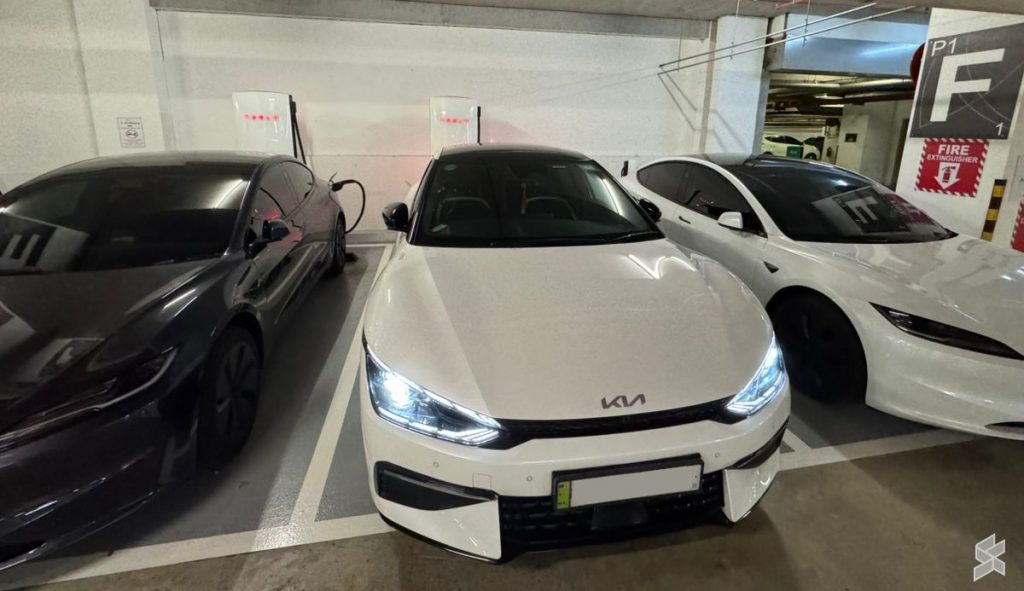
EVs with 800V architecture are known for their blazingly fast DC charging. For example, the Kia EV6 can support a DC charging speed of over 200kW.
While Superchargers in Malaysia can deliver DC charging speed of up to 250kW, it is not something that 800V EVs can take advantage of, though. This is because Tesla’s approach to high-speed charging is based on the fact that Tesla passenger vehicles are still based on 400V-based EVs.
Despite having a 400V architecture, Tesla EVs can achieve higher DC charging speed because they support a high current rating of over 500A at Tesla Superchargers, enabling peak DC charging speed of up to 250kW.
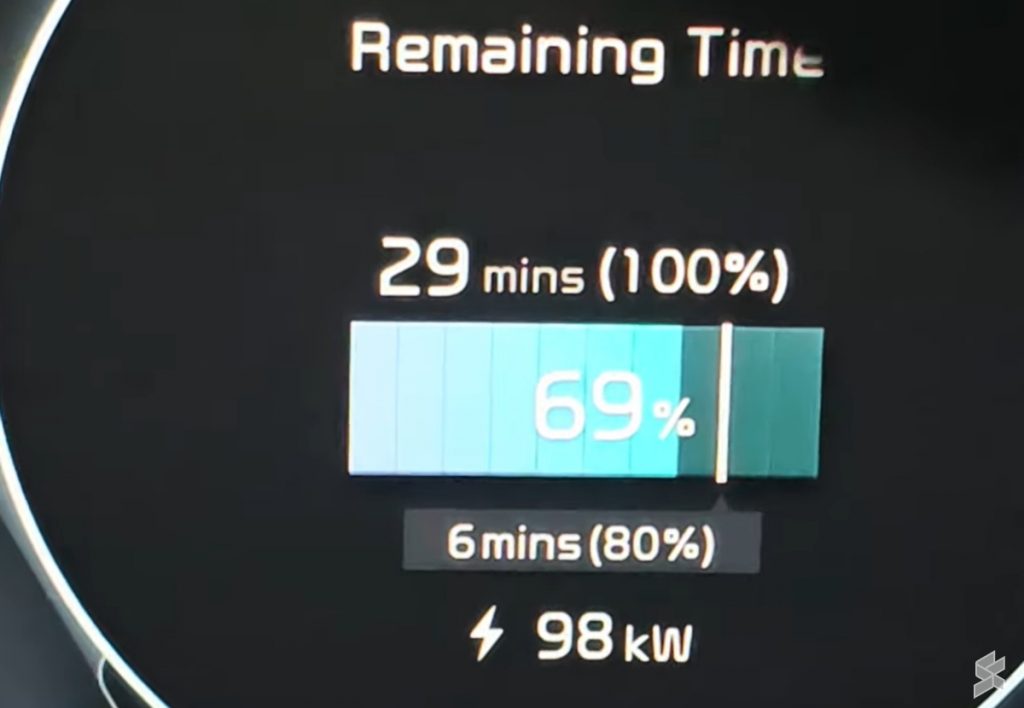
When Alex brought his Kia EV6 to the Tesla Supercharger Pavilion KL, the maximum charging speed he managed to get during our initial test was only 98kW. That’s because EV6 supports a maximum current rating of 300A.
All in all, the true capability of Tesla Supercharger can only be enjoyed by 400V-based EVs that can support high ampere ratings. In Malaysia, this does not only apply to Tesla vehicles but also to several other models, such as the BMW i5 and the Volvo EX90.