NASA announced that its Double Asteroid Redirection Test (DART) probe successfully smashed into an asteroid, destroying itself in the process. The collision, which you can view on Twitter, is intentional.
The Dimorphos asteroid, which is apparently the size of a football stadium, does not pose a threat to the Earth according to NASA. But the collision was designed to test if space rocks could be nudged safely out of the way if they might threaten Earth in the future.
To collide with the Dimorphos, NASA used its DART—the world’s first planetary defense technology demonstration—after 10 months of flying it in space. You can watch the collision right before impact below, as DART’s camera returned an image per second, right up to the moment of impact with the target.
“At its core, DART represents an unprecedented success for planetary defense, but it is also a mission of unity with a real benefit for all humanity. As NASA studies the cosmos and our home planet, we’re also working to protect that home, and this international collaboration turned science fiction into science fact, demonstrating one way to protect Earth,” said NASA Administrator Bill Nelson.
The plan was to determine whether a spacecraft can alter the trajectory of an asteroid through sheer kinetic force, nudging it off course just enough to keep Earth out of harm’s way. Dimorphos was chosen as it was not on a path to intersect with Earth, and a small alteration in their orbital relationship will not have increased the risk. It, however, is still too early to know if the experiment worked.
“If this works, then we know we can use that same technology to deflect asteroids that might pose an actual threat further down the line,” Tanya Harrison, a fellow at the Outer Space Institute.
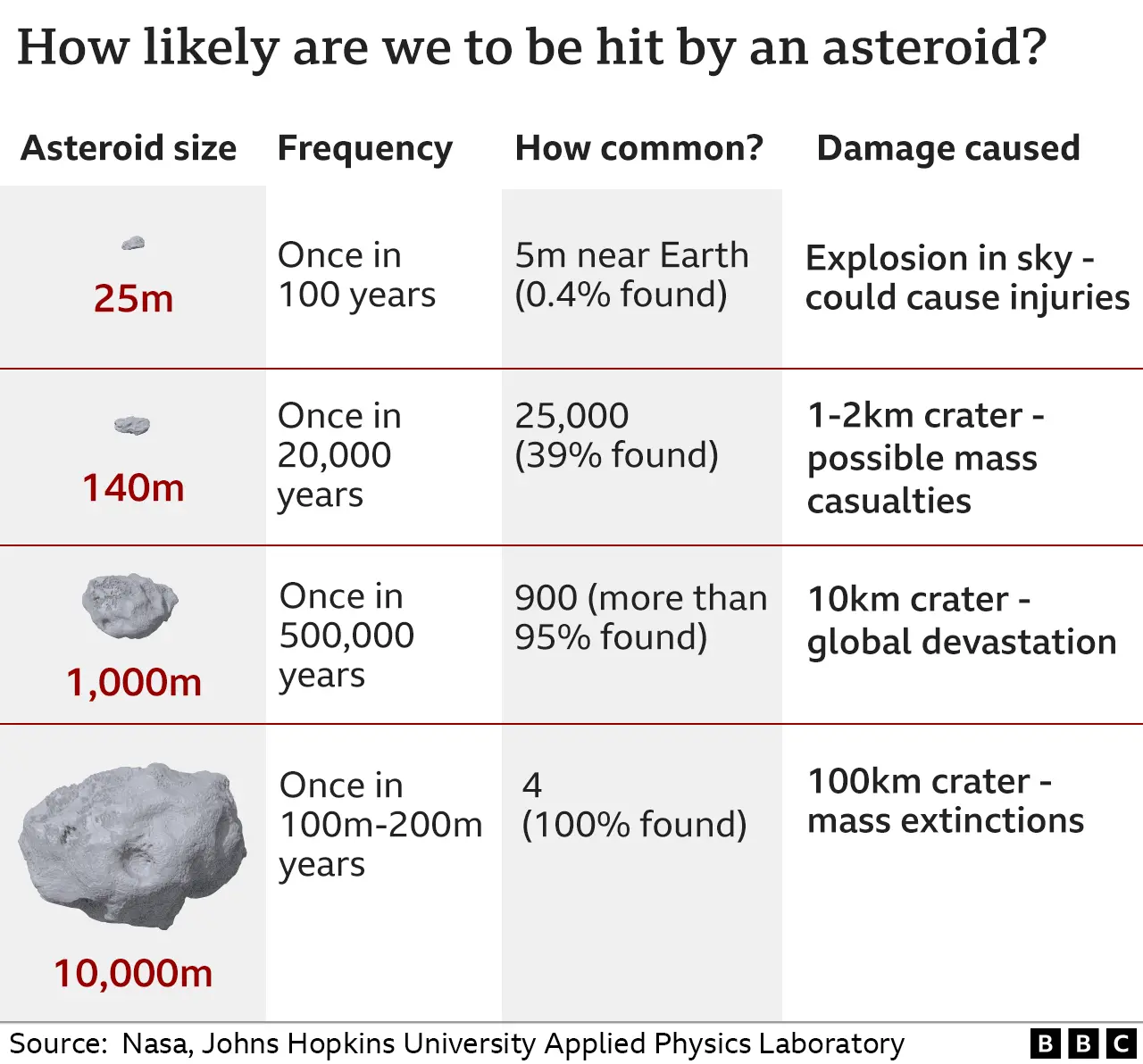
BBC reports that sky surveys have identified more than 95% of the monster asteroids that could initiate a global extinction were they to collide with Earth. They likely won’t, but now it seems like NASA is a little more prepared in case it happens.
[ SOURCE, IMAGE SOURCE, 2 ]
At its regional showcase in Hanoi, Vietnam, Samsung’s consumer appliance narrative made one thing clear:…
A total of 8,878 units were affected by the 2nd recall for the Chery Omoda…
Oppo has officially announced ColorOS 17, confirming that the new OS will debut on the…
JomCharge has announced that its 1.4MW EV Charging Hub at Sepang Motorsport Park is now…
MediaTek has showcased its latest Dimensity 9600 series of flagship mobile processors in Malaysia, highlighting…
Originally offered for Malaysia Day, the RM10,000 rebate for the Perodua QV-E has now been…
This website uses cookies.