• 中文版
  • BM
  • News
  • Deals
  • Reviews
    • First Impressions
    • Hands-on
    • Comparisons
  • Tech
    • Mobile
    • Computers
    • Cameras
    • Wearables
    • Audio
    • Drones
  • Telco
    • Celcom
    • Digi
    • Maxis
    • Time
    • Tune Talk
    • U Mobile
    • Unifi
    • Yes
  • Cars
  • Contribute
  • Jobs
Menu
  • 中文版
  • BM
  • News
  • Deals
  • Reviews
    • First Impressions
    • Hands-on
    • Comparisons
  • Tech
    • Mobile
    • Computers
    • Cameras
    • Wearables
    • Audio
    • Drones
  • Telco
    • Celcom
    • Digi
    • Maxis
    • Time
    • Tune Talk
    • U Mobile
    • Unifi
    • Yes
  • Cars
  • Contribute
  • Jobs
Search
  • Tech
    • News
    • Mobile
    • Computers
    • Cameras
    • Wearables
    • Audio
    • Drones
  • Telco
    • Celcom
    • Digi
    • Maxis
    • Time
    • U Mobile
    • Unifi
    • Yes
  • Reviews
    • First Impressions
    • Hands-on
    • Comparisons
  • Buyer’s Guide
  • Opinions
  • Digital Life
  • Video
  • Deals
  • How-To
  • Cars
  • Bahasa Melayu
  • EV
  • Contribute
  • Advertise
Menu
  • Tech
    • News
    • Mobile
    • Computers
    • Cameras
    • Wearables
    • Audio
    • Drones
  • Telco
    • Celcom
    • Digi
    • Maxis
    • Time
    • U Mobile
    • Unifi
    • Yes
  • Reviews
    • First Impressions
    • Hands-on
    • Comparisons
  • Buyer’s Guide
  • Opinions
  • Digital Life
  • Video
  • Deals
  • How-To
  • Cars
  • Bahasa Melayu
  • EV
  • Contribute
  • Advertise
Search
Close
Home News

Are Apple lightning cables initially designed without reversibility in mind? Here’s what we think

  • BY Dzamira Dzafri
  • 21 February 2021
  • 9:40 pm
  • Comment
Share on FacebookShare on Twitter

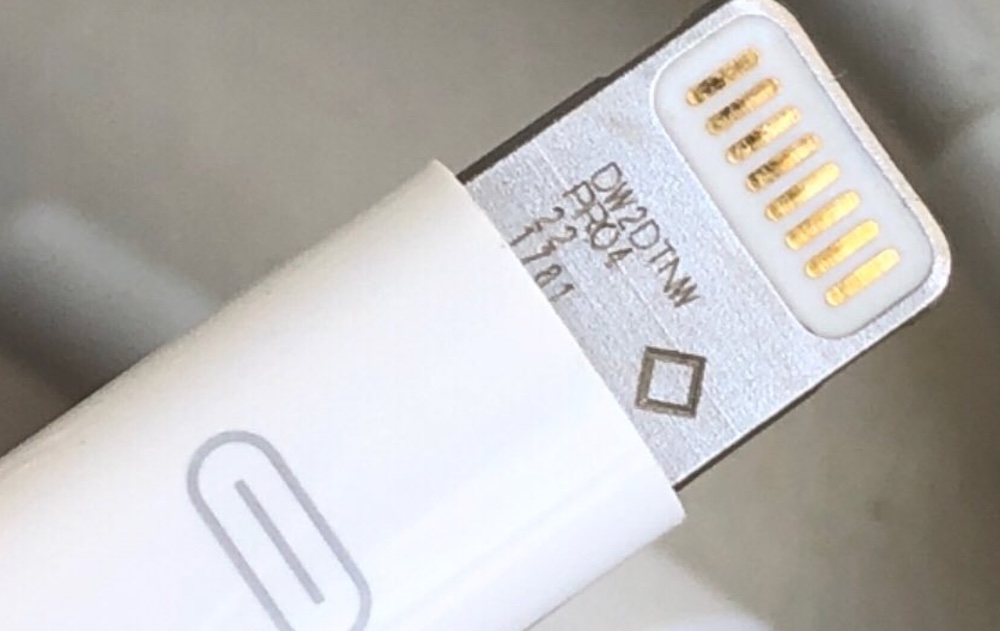
Twitter account AppleDemoYT shared a some never-before-seen photos of prototype lightning cables. According to the tweet, the prototypes were “very similar to 30 pin cables“—which have a symbol to indicate the correct side up.

Prototype Apple Lightning Cables (PROTO4) with a symbol engraved that’s very similar to 30 pin cables (that indicates the corrrect side up). #appleinternal pic.twitter.com/ORWuoPDmcm

— Apple Demo (@AppleDemoYT) February 19, 2021

The prototypes show that Apple has an icon which guides the user on which is the right side up to plug it into their iPhone—different from the current lightning cables. It’s a little odd, as both sides of the lightning cable prototypes look the same.

9to5Mac speculated that this could be a sign that Apple wasn’t planning a reversible design. Looking at the photos, the prototype cables have the same connector heads as the current lightning cables in the market—the only difference is just the extra icon on the head.

From what we can tell, the prototype cable connector was designed to be used in either orientation. Unlike the previous cable, there’s no sign that it couldn’t be plugged-in upside down.

The additional marking is probably to maintain design consistency with its older cables. Since the lightning cable works in reverse, Apple probably decided that there wasn’t any point to add a “right side up” indicator in the final product. Another reason is that the icon could be mistaken for USB-C and Apple doesn’t want their users to force the wrong cable into the iPhone.

The lightning cable was introduced with the iPhone 5 in 2012 and it’s still being used on the latest iPhone 12 series. It was considered a “major improvement” over the iPod’s 30-pin connector, as it is received well because of its reversibility.

It’s also used on the iPad, but Apple is slowly transitioning to USB-C as seen on the latest iPad Pro and iPad Air models. The lightning connector is almost a decade old, and Apple is also already in the direction of MagSafe as the preferred method of charging your iPhone.

What do you think of the lightning port? Should Apple continue to keep it or is it time to move on to USB-C?

[ SOURCE, IMAGE SOURCE ]

Related reading

Apple to EU: Killing the lightning cable will harm consumers
Tags: AppleApple Lightning cable
Dzamira Dzafri

Dzamira Dzafri

POPULAR

Malaysia’s first 5g advanced Broadband: What You Get for RM68/month

January 14, 2026

Nissan Finally Gives the Serena a Real Hybrid Powertrain in Malaysia. Estimated from RM160k to RM180k

January 16, 2026

Neta V now available for only RM40k, but with a limited 6-month warranty

January 31, 2026

Are Apple lightning cables initially designed without reversibility in mind? Here’s what we think

February 21, 2021

Perodua QV-E only costs RM1.4k to maintain for 5 years, cheaper than Axia

January 30, 2026

CelcomDigi updates 5G prepaid plan for 2026, no more 28 day validity for “unlimited” options

January 28, 2026

Copyright © 2025 · SoyaCincau.com
Mind Blow Sdn Bhd (1076827-P)

  • ADVERTISE
  • DISCLAIMER

Copyright © 2026 · SoyaCincau.com – Mind Blow Sdn Bhd (1076827-P)

  • ADVERTISE
  • DISCLAIMER