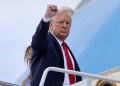

In case you missed it, U.S. President Donald Trump was recently involved in a tiff of sorts with social media giants, Twitter. The basis of the issue stemmed from Twitter’s move to label two of the president’s Tweets as “potentially misleading”, with Trump responding angrily in a series of Tweets on his account, which has 80.4 million followers.
Having promised that the “stifling” of “FREE SPEECH” isn’t something that he will allow, the president has now signed an executive order that could remove legal immunity granted to social media platforms in certain situations.
In a statement to CNN, Trump argued that the order aims to defend free speech:
“A small handful of social media monopolies controls a vast portion of all public and private communications in the United States. They’ve had unchecked power to censor, restrict, edit, shape, hide, alter, virtually any form of communication between private citizens and large public audiences.”
What the executive order means, from a legal POV
First, let’s talk about the legislation in question: the Communications Decency Act. Specifically, Section 230 of the law, which provides legal protection for companies such as Twitter and Facebook for user-posted content:
“No provider or user of an interactive computer service shall be treated as the publisher or speaker of any information provided by another information content provider”
If you’re so inclined, you can read the Act in its full glory here. But that’s the gist of it, basically. However, the new executive order argues that the immunity shouldn’t apply if the social media company edits the content in any way, calling for an amendment to Section 230.
Marco Rubio, a U.S. Senator who also hails from the Republican party, supported this point by saying that the law should not protect social media companies in such situations:
“If they have now decided to exercise an editorial role like a publisher, then they should no longer be shielded from liability and treated as publishers under the law.”
According to CNN, the order says that a “limited number of online platforms” should not be allowed to curate the content that are accessed by Americans online:
“This practice is fundamentally un-American and anti-democratic. When large, powerful social media companies censor opinions with which they disagree, they exercise a dangerous power.”
What does everyone else think?
The response has been expectedly mixed. Facebook and Google have already issued statements that claim that the order will affect billions of people and organisations.
Speaking to CNN, a spokesperson for Facebook iterated that removal of the immunity could result in the censorship of content, with Google saying that such platforms have given people “a voice”.
At the moment, the order won’t come into effect just yet. Government agencies will have to review the law first, and voting will have to take place. Experts have also said that the order will probably face challenges in court, so we’ll just have to wait and see.
[ SOURCE , 2 , IMAGE SOURCE ]