Autonomous driving is all the rage. Tesla put that idea into everyone’s minds and now it’s a race to see who’s going to be first to achieve the dream of full autonomy. While many manufacturers are creating purpose-built autonomous cars, Huawei believes they can do it with just a smartphone.
Being able to robotically drive a car isn’t particularly difficult. The difficulty when building fully autonomous vehicles is getting them to “see” like we do. Recognise objects. Recognise road signs. Recognise the lines on a road and what to do when those lines disappear like they often do in countries like Malaysia.
Huawei says that most autonomous cars currently in development rely on the computing power of whatever chip automakers put in their vehicles from “third-party technology providers” to process everything the radars and sensors see.
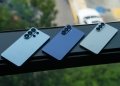
But Huawei doesn’t believe you need that. They think they can do so with their “AI-powered” smartphone, the Huawei Mate 10 Pro. You see, when Huawei launched the Mate 10 and Mate 10 Pro, they talked a lot about using object recognition to improve their smartphone’s photo taking capabilities. And it’s pretty good at recognising things most of the time, being able to distinguish between cats and dogs, plants and scenery, food and a whole bunch more.
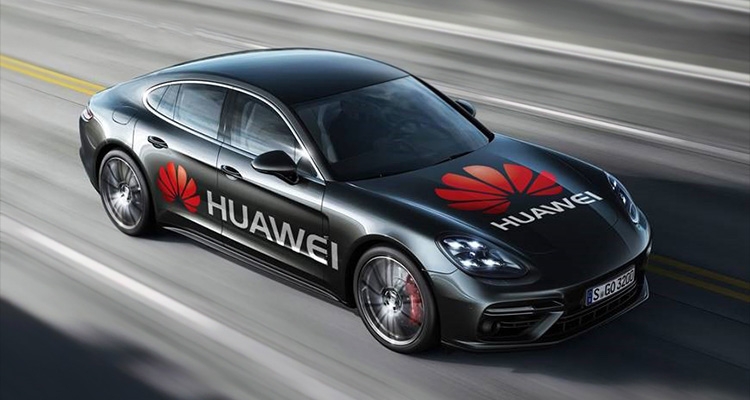
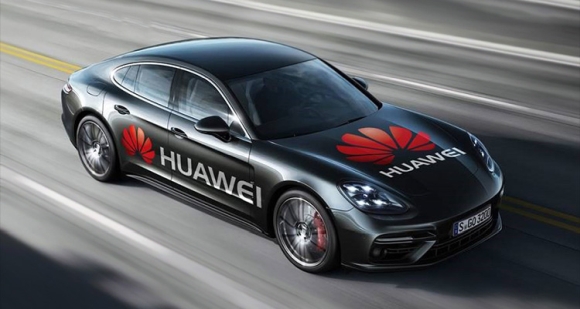
So, by harnessing this object recognition, Huawei thinks it can use it to drive a Porsche Panamera — that has been modified so it can be driven robotically — which has been fitted with a specific communication method that connects the phone to the car. The idea is that the phone will drive the car, and when it sees something it needs to avoid, it’ll tell the car to avoid it.
Not much is shown in what looks like a “teaser trailer” for Huawei’s phone-driving-car project, dubbed Project RoadReader. But, they will be showcasing the technology in a two-day event at the Mobile World Congress (MWC) in Barcelona this year.
For now, this whole thing raises more questions than it answers. In the YouTube video title, it seems to imply that Huawei has already done it, but in their press materials it says they have only unveiled the car.
Adding to that, what do they mean by driving? In the video, it only looks like a simple obstacle avoidance situation in which the Panamera takes a very wide turn around a dog. I don’t know about you, but driving is more complicated than just avoiding an object on an empty road/runway.
Next, Huawei doesn’t specify what modifications they’ve retrofitted to the Porsche in question. How does the car see? Modern semi-autonomous cars have a incredible array of sensors and radars to be able to detect objects. Does this Porsche have those? Or is it using the Mate 10 Pro’s camera? Is that even possible?
There’s really nothing concrete about this Project RoadReader and everything’s rather vague. But, we will be heading to MWC this year so we’ll definitely try to find out all we can about this project.
In the meantime, we’d love to hear your thoughts. Do you think Huawei’s vision is feasible? Let us know in the comments below.