


Launched earlier this year, Kelas Sekejap is an AI-powered language app built for Malaysians to practise and build confidence in their English speaking skills.
Reading and writing English is easy enough, but speaking out loud takes real confidence. Many Malaysians avoid speaking English out of fear of being judged or making mistakes. While formal situations call for Standard English, everyday life in Malaysia thrives on casual phrasing and Manglish.
Kelas Sekejap was built to eliminate this fear of judgment by offering a low-pressure digital space to practise speaking.
I tested the app myself to see what it is like building conversational ability from a local perspective. In this review, I answer three main questions: is the app easy to use, how does it compare to Duolingo, and would I recommend it?
First impressions: Is Kelas Sekejap easy to use?
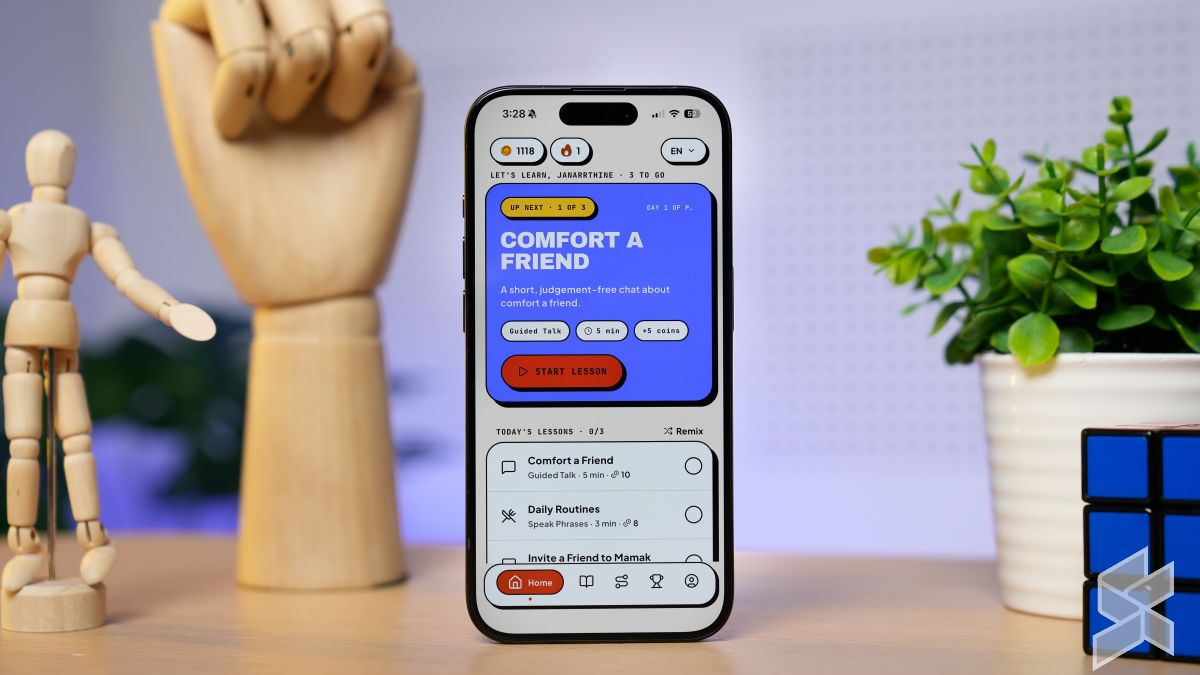
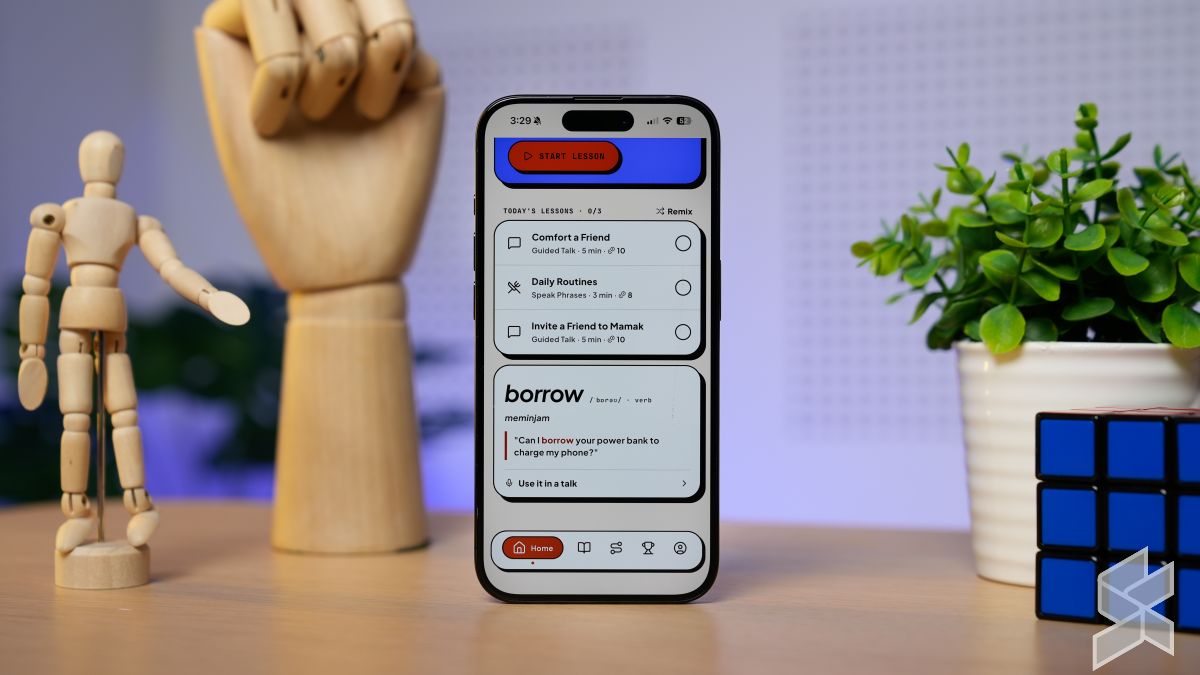
The app uses a playful design with bold typography, high-contrast colours, thick outlines, and offset shadows. It feels modern, clean, and casual to navigate through.
At the top of the homepage, a straightforward prompt lets you tap “Start Lesson” to jump straight into learning or pick up where you left off. At the bottom, a dedicated section features a new vocabulary word every day to help expand your wordbank.
Navigation is simple, making it easy to access lessons without feeling overwhelmed by options.
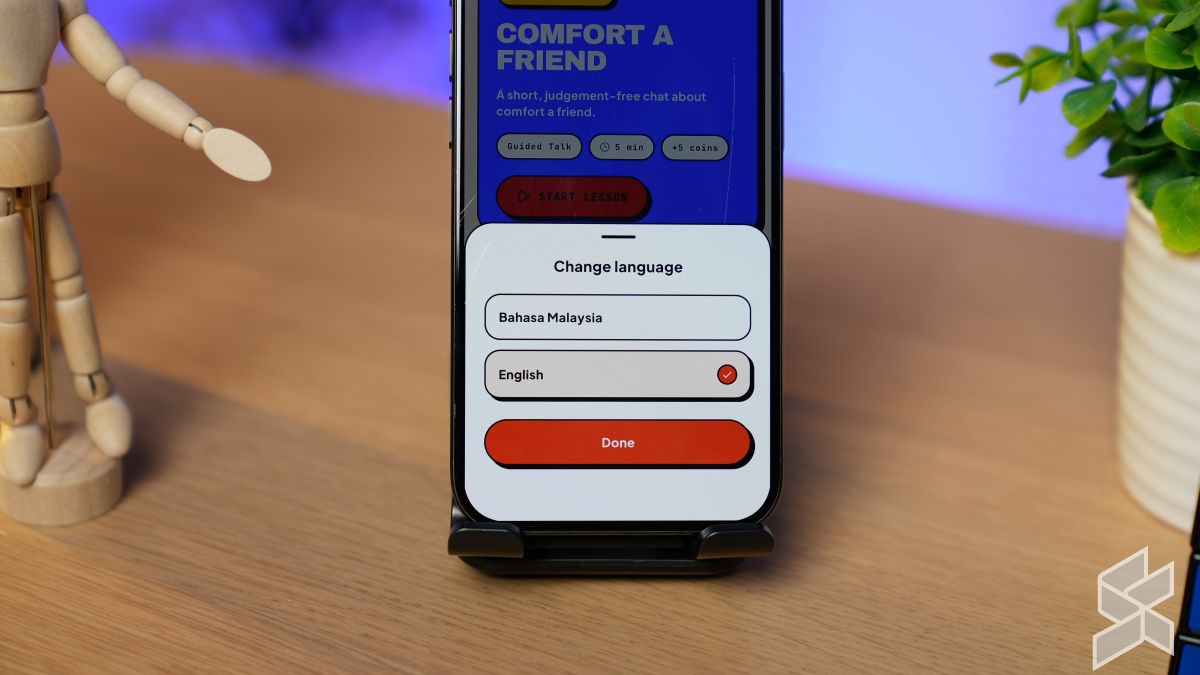
If you prefer navigating in Bahasa Malaysia instead of English, you can toggle the app language easily with a single button in the settings.
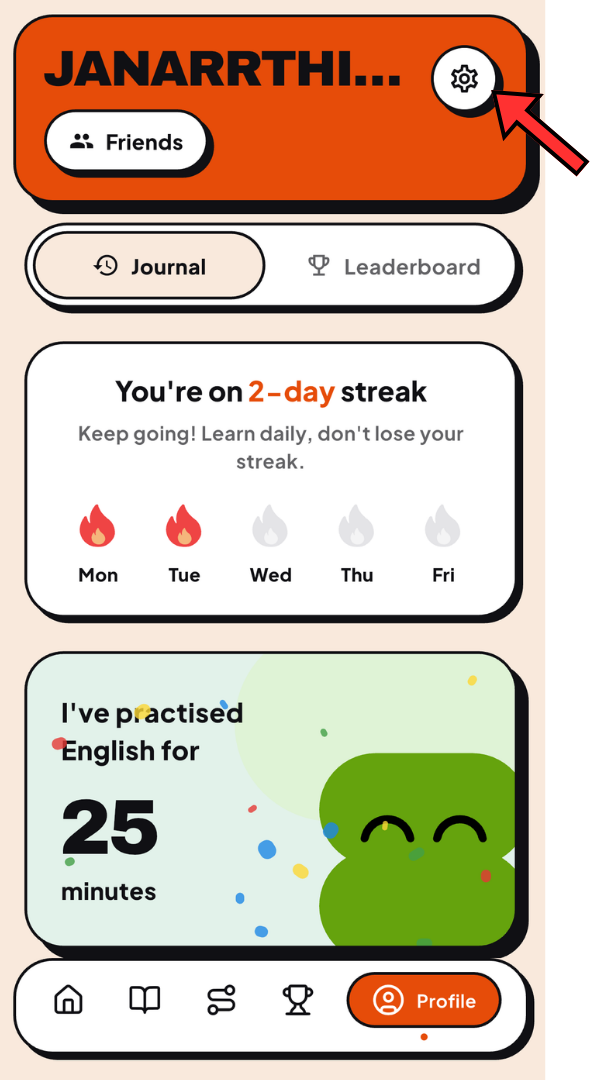
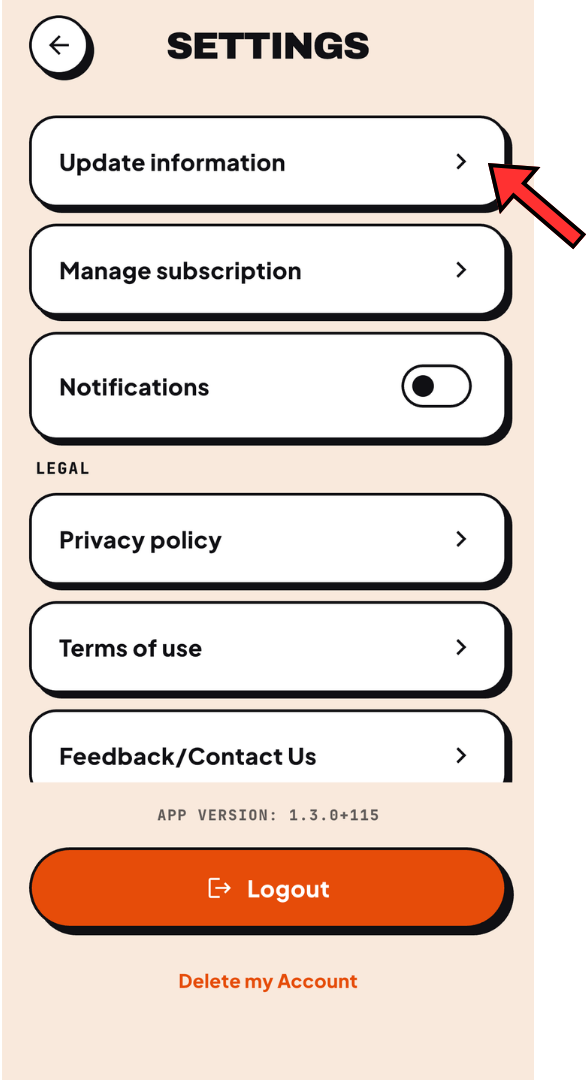
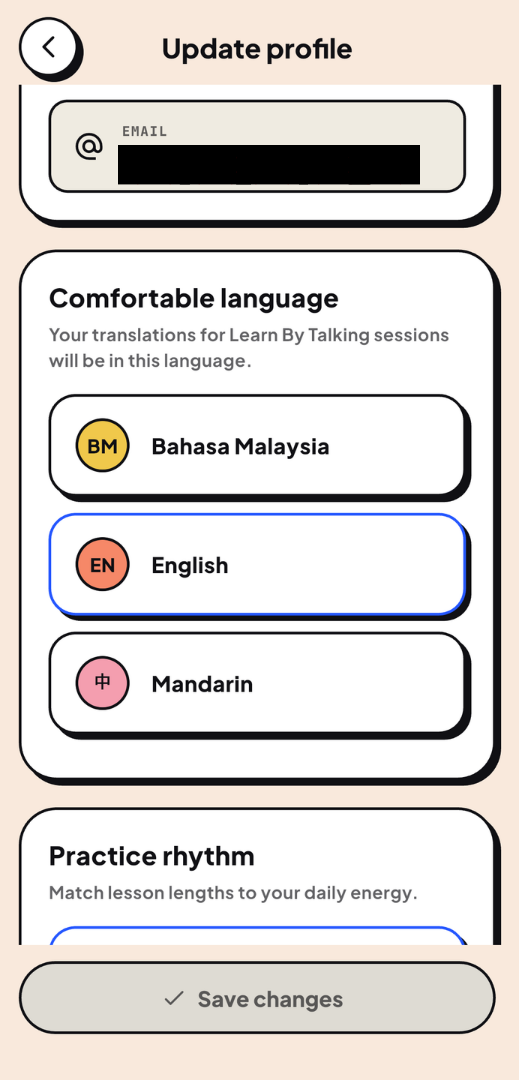
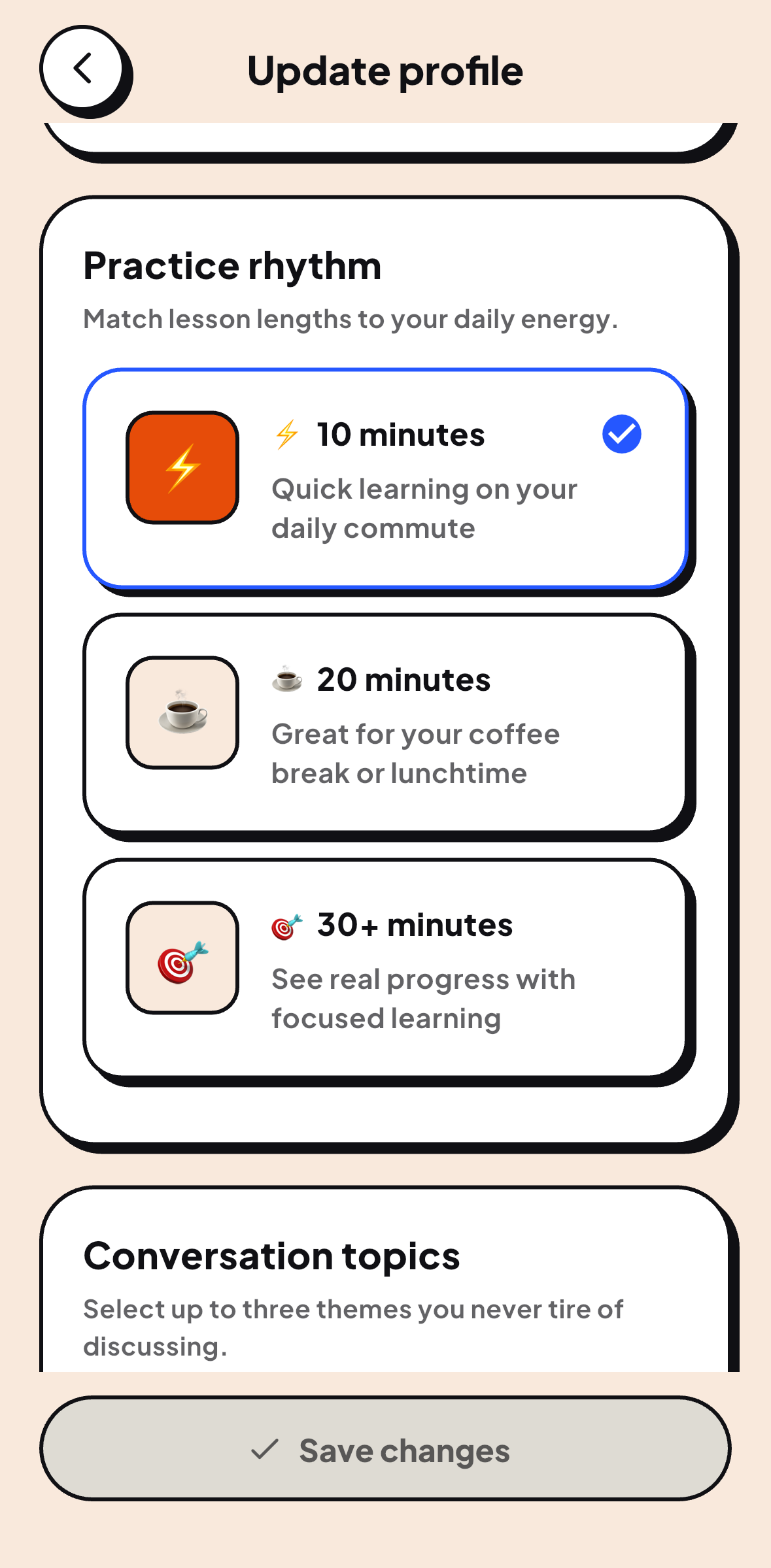
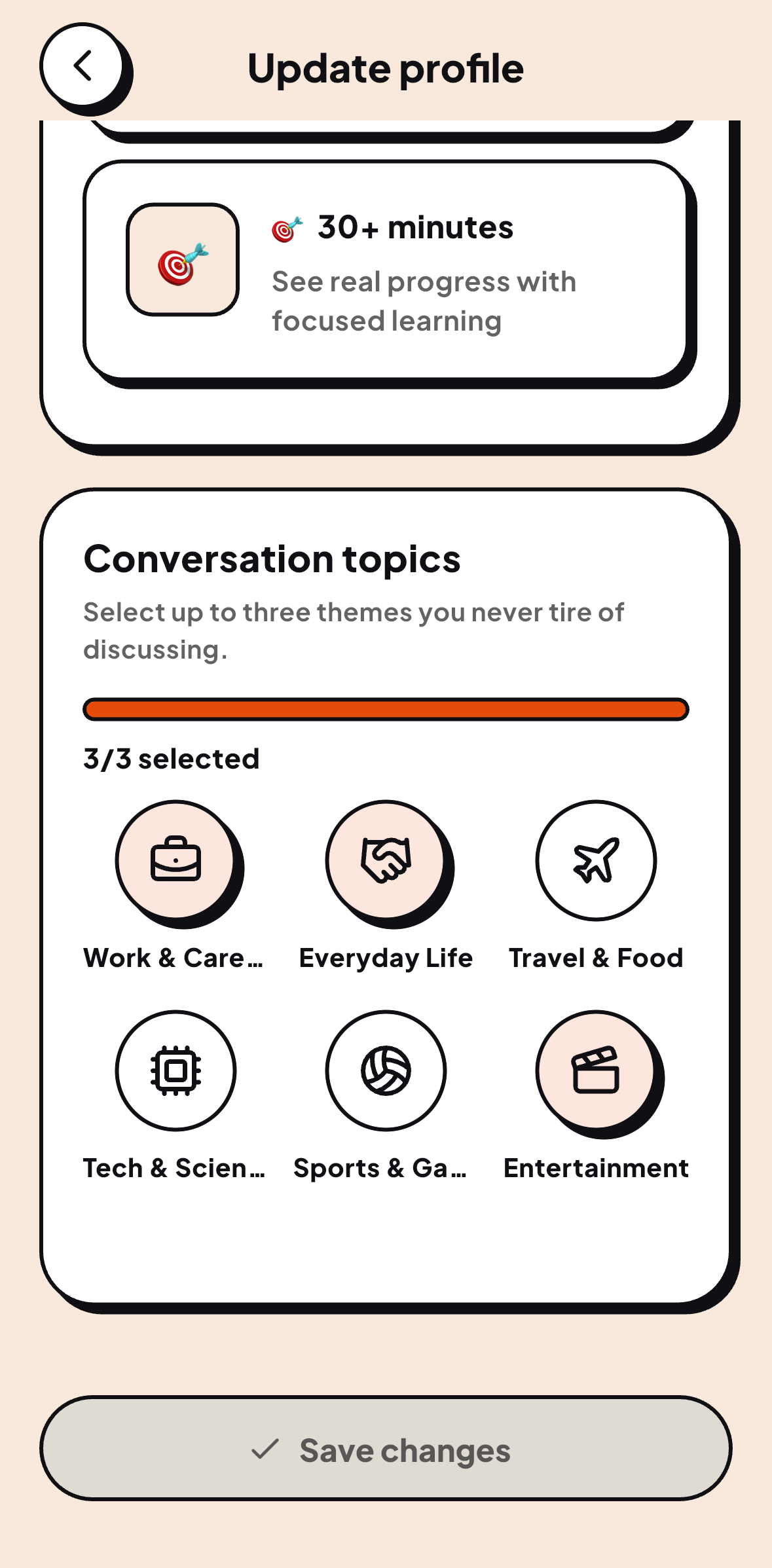
From your profile page, you can adjust your practice rhythm, set personal learning goals, and pick comfortable topics you are happy to talk about.
How it feels to use and test the app
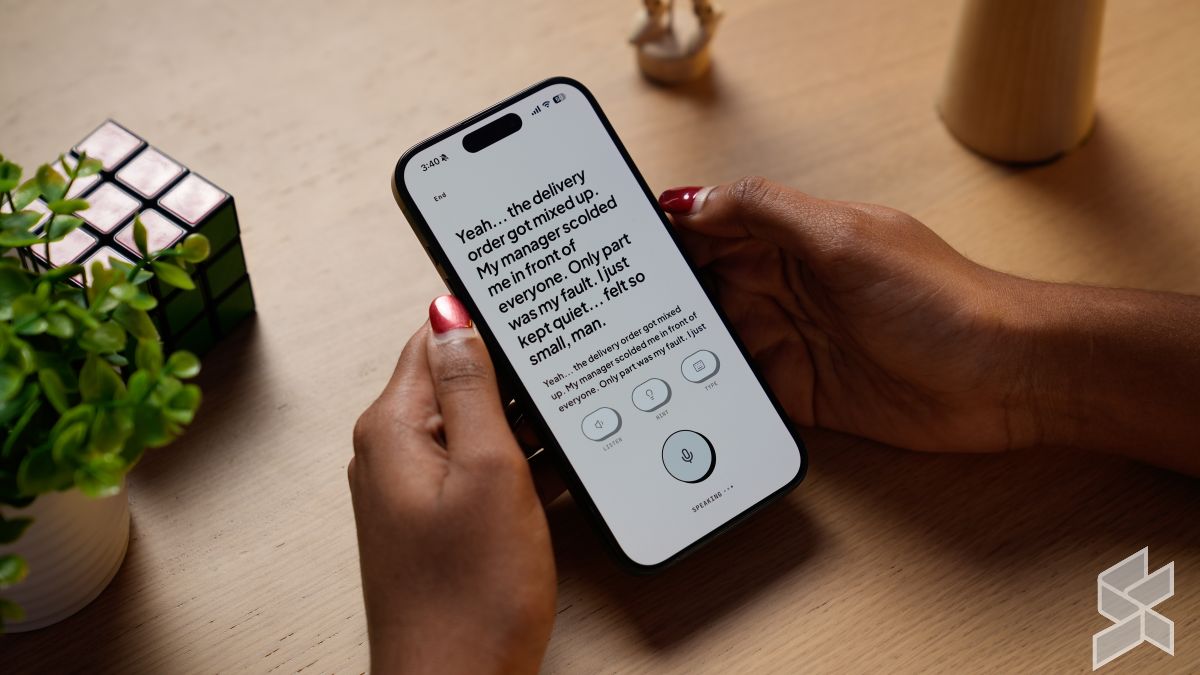
Tapping into the daily vocabulary word takes you directly into a dedicated lesson where you can practise using that specific word in a practical scenario.

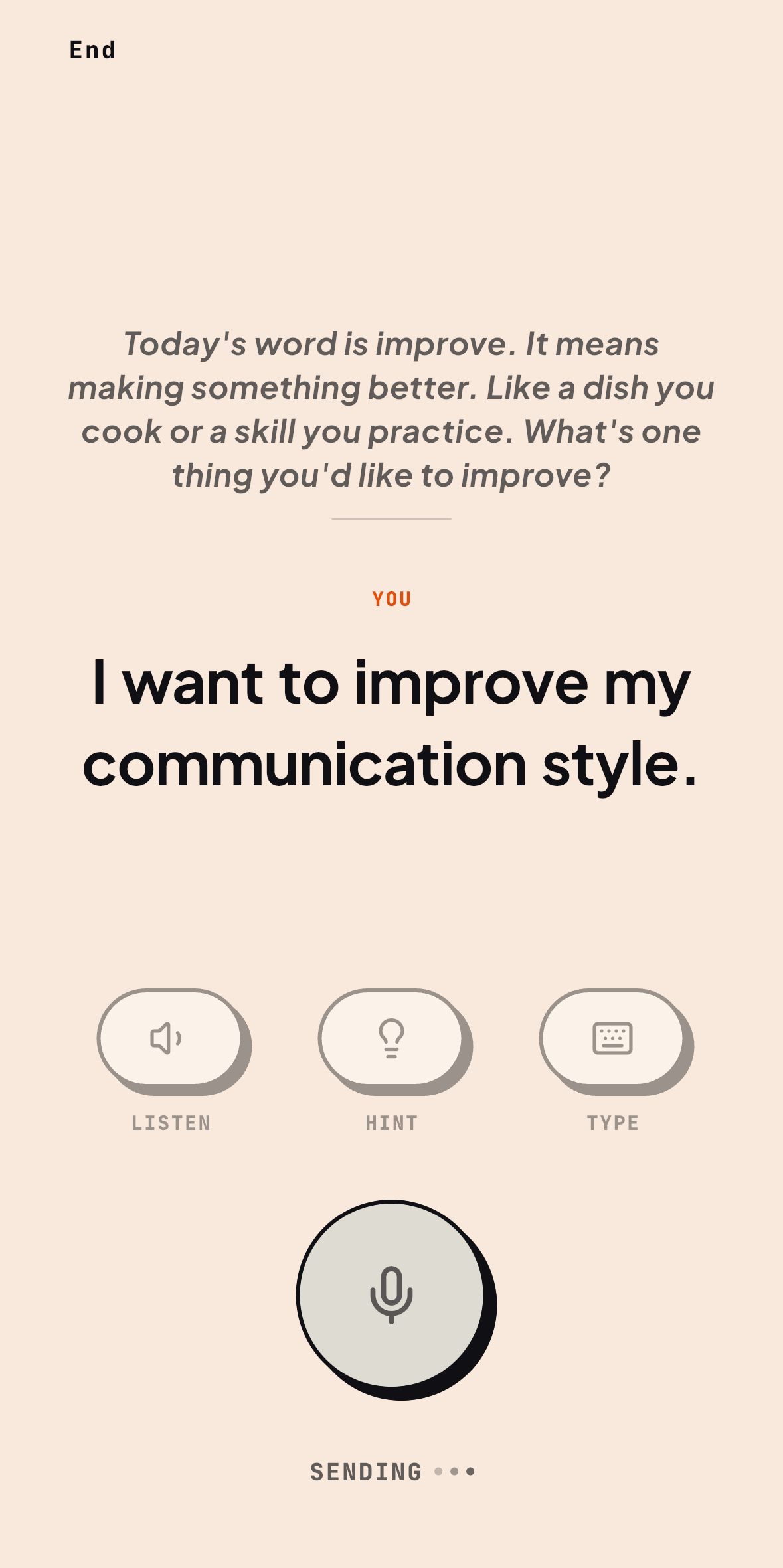
Testing the actual lessons brings out some very useful features alongside clear technical flaws. The voice recognition engine is remarkably accurate, picking up spoken words almost perfectly while capturing stutters, hesitations, and pauses.
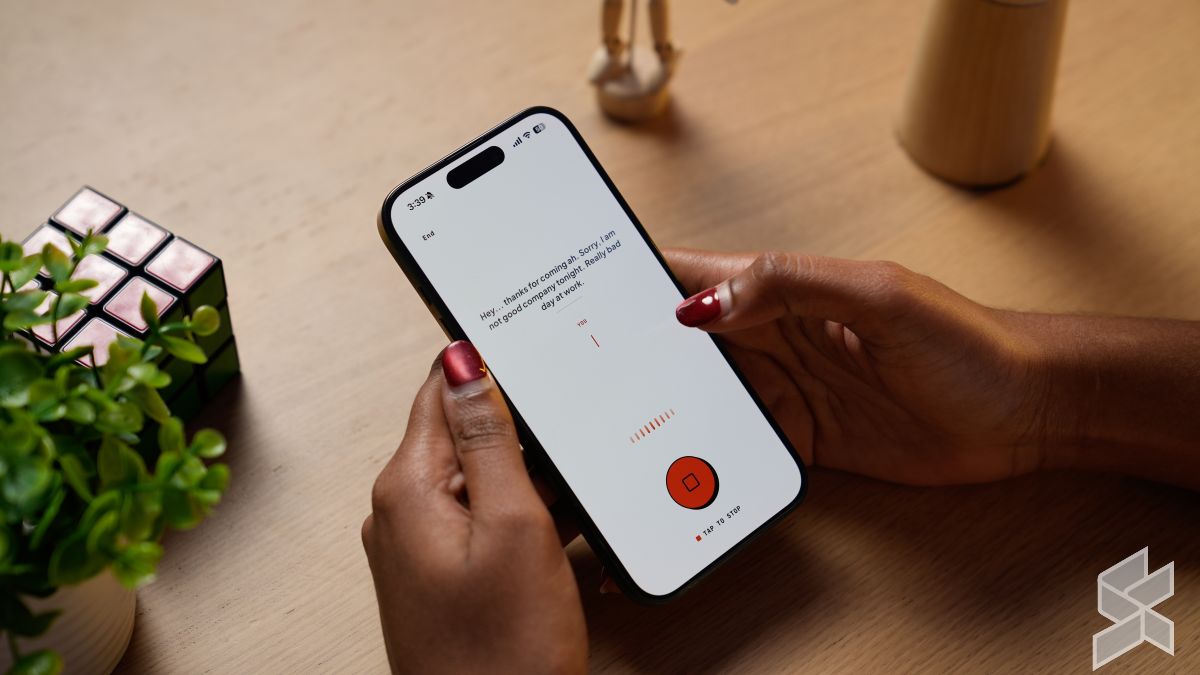
A handy goal prompt pops up occasionally during lessons to keep conversations structured, which keeps practice focused.
However, you need to keep your answers clear and simple. The lesson engine struggles with complex or multi-layered replies. Whenever I offered longer answers or brought up controversial takes, the AI got confused and started talking in circles.
For example, when I asked the AI what activities we should do at the beach, it struggled to make a decision and suggested ideas for me to pick instead. When I probed further on what to do after our time at the beach, it kept circling back to the original plan rather than offering flexibility.
This gives the impression that the AI struggles with fluid, open-ended conversations and prefers sticking strictly to the lesson’s predefined prompt.
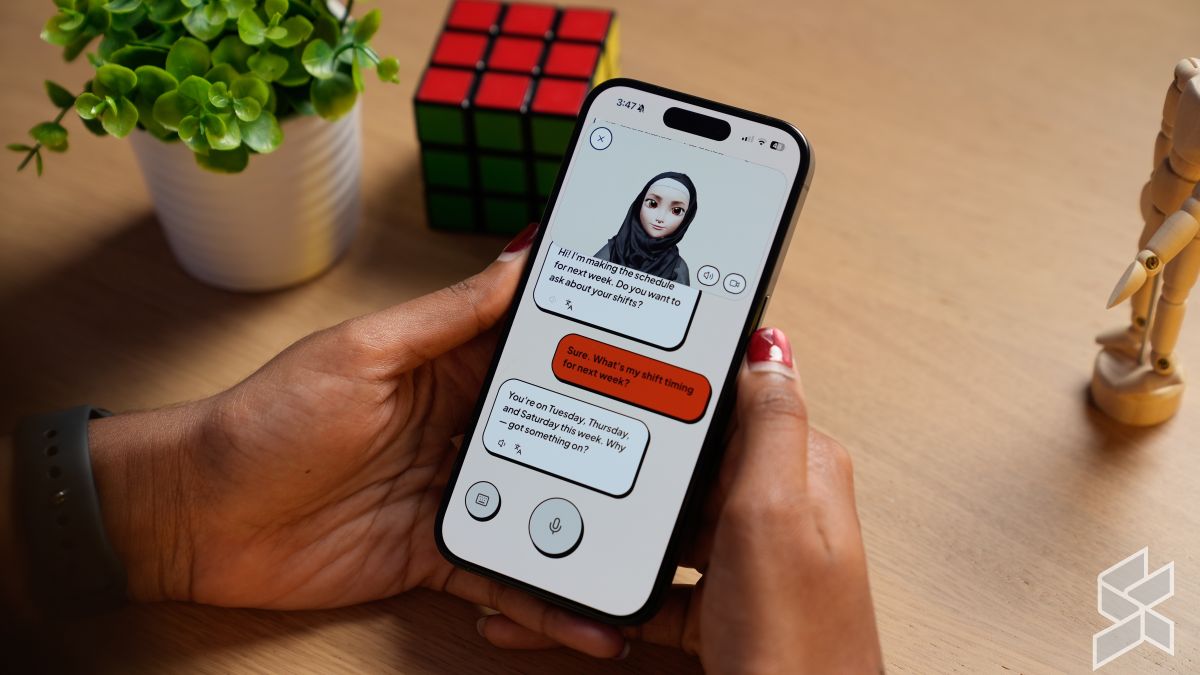
On the positive side, the AI speaker uses a natural Malaysian accent rather than a formal Western accent, making lessons feel approachable and realistic for local learners.
Despite the friendly tone, the AI voice engine still feels robotic at times and makes noticeable errors. It occasionally mispronounces basic words, turning “can” into “chaan” or “stove” into “sto-veh“.
The speech rhythm also gets awkward around punctuation, where the voice abruptly pauses mid-sentence as if caught off guard by a comma or full stop. Given the AI model’s unpredictability, capturing these exact audio glitches on command was tricky, but these inconsistencies matter. Teaching incorrect pronunciations or unnatural pauses risks setting learners up with bad habits.
Streaks, Quests, and Leaderboards: How does it compare to Duolingo?
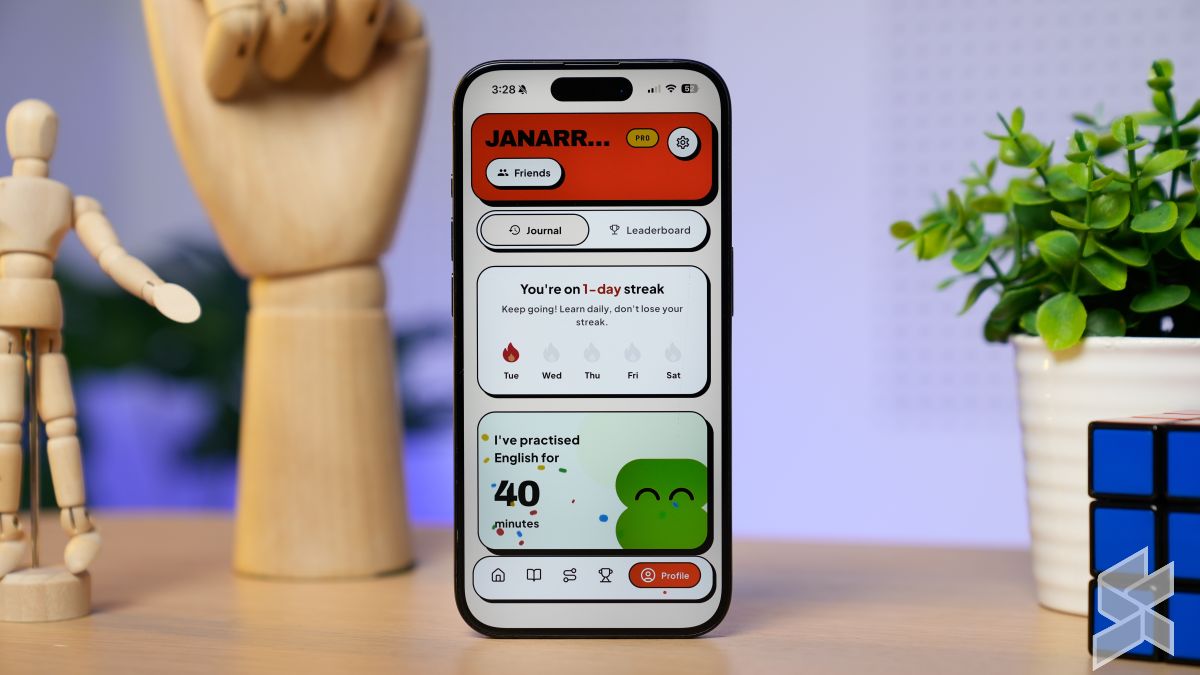
When comparing Kelas Sekejap to Duolingo, the two apps take completely different approaches.
Duolingo relies on repetitive text matching, grammar drills, and passive-aggressive guilt-trip notifications (from that psychopathic green owl holding your family hostage until you complete your daily tasks).
Kelas Sekejap focuses almost entirely on real spoken dialogue and listening, creating a much more practical experience for those who want to build actual speaking confidence.
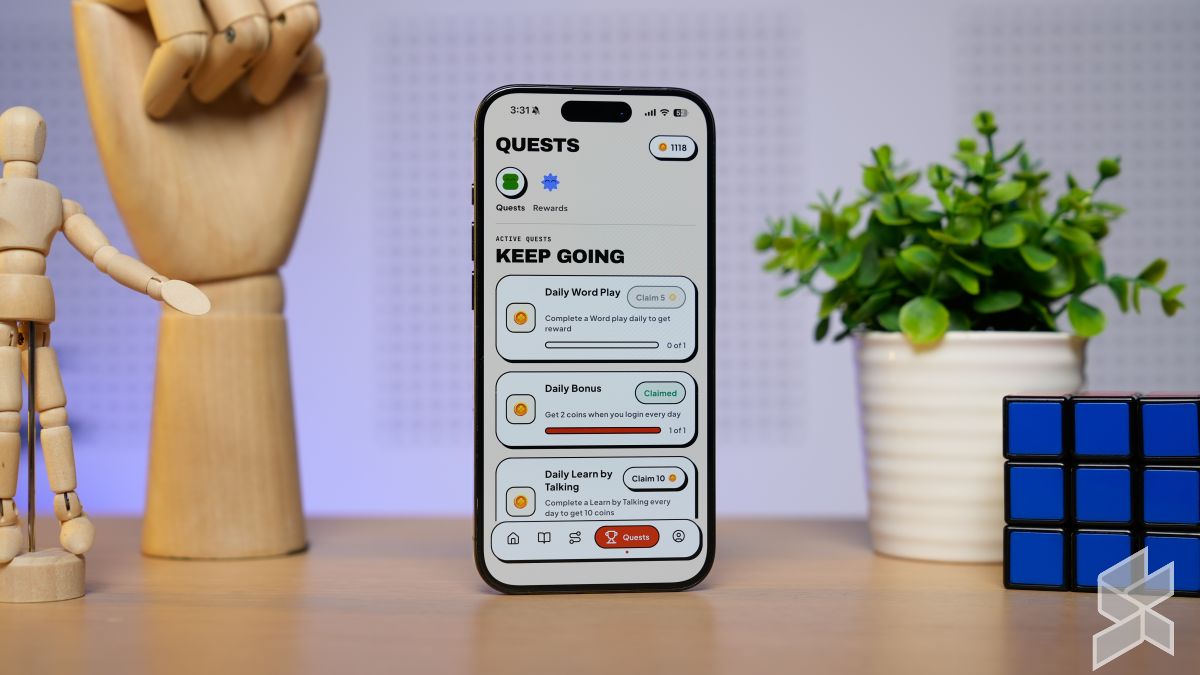
The gamification mechanics in Kelas Sekejap keep you motivated without feeling overwhelming. The daily streak feature gives you a gentle nudge to complete your daily tasks.
You can also earn extra coins by completing simple daily tasks in the Quests section.
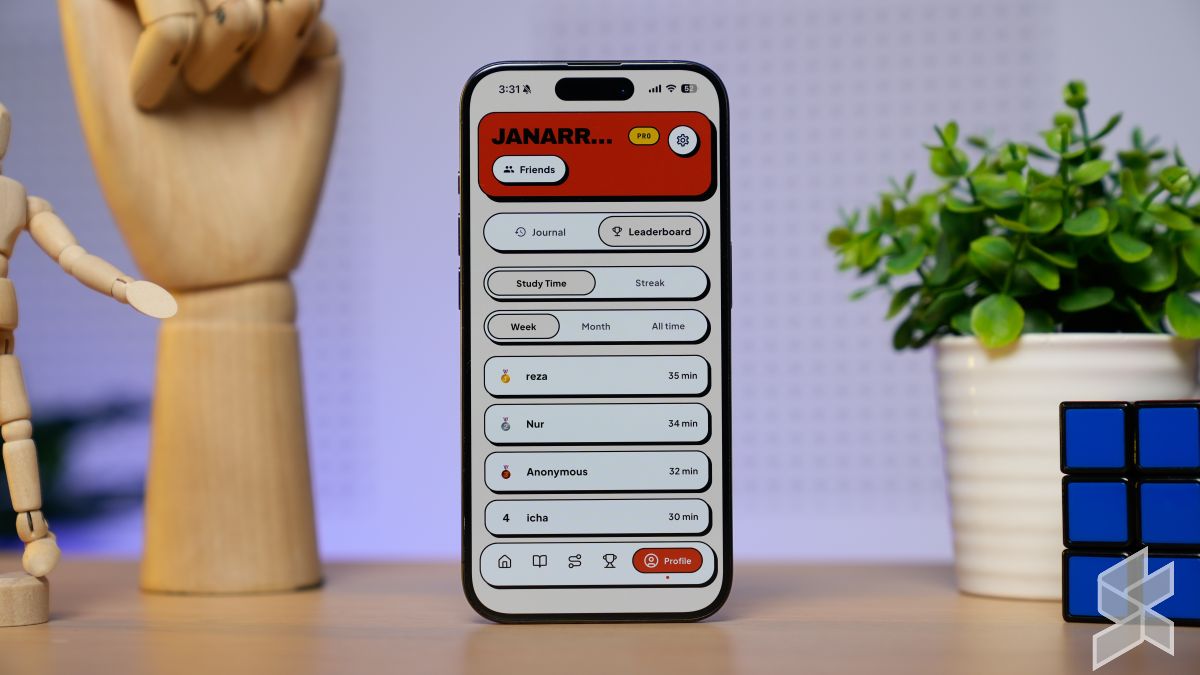
Over on your profile, a tracker logs your total study time in hours and minutes. Competitive leaweqrners can check the Leaderboard to see how they rank against others across weekly, monthly, and all-time categories, alongside streak records.
Daily voice notes from KJ and Shahril Hamdan
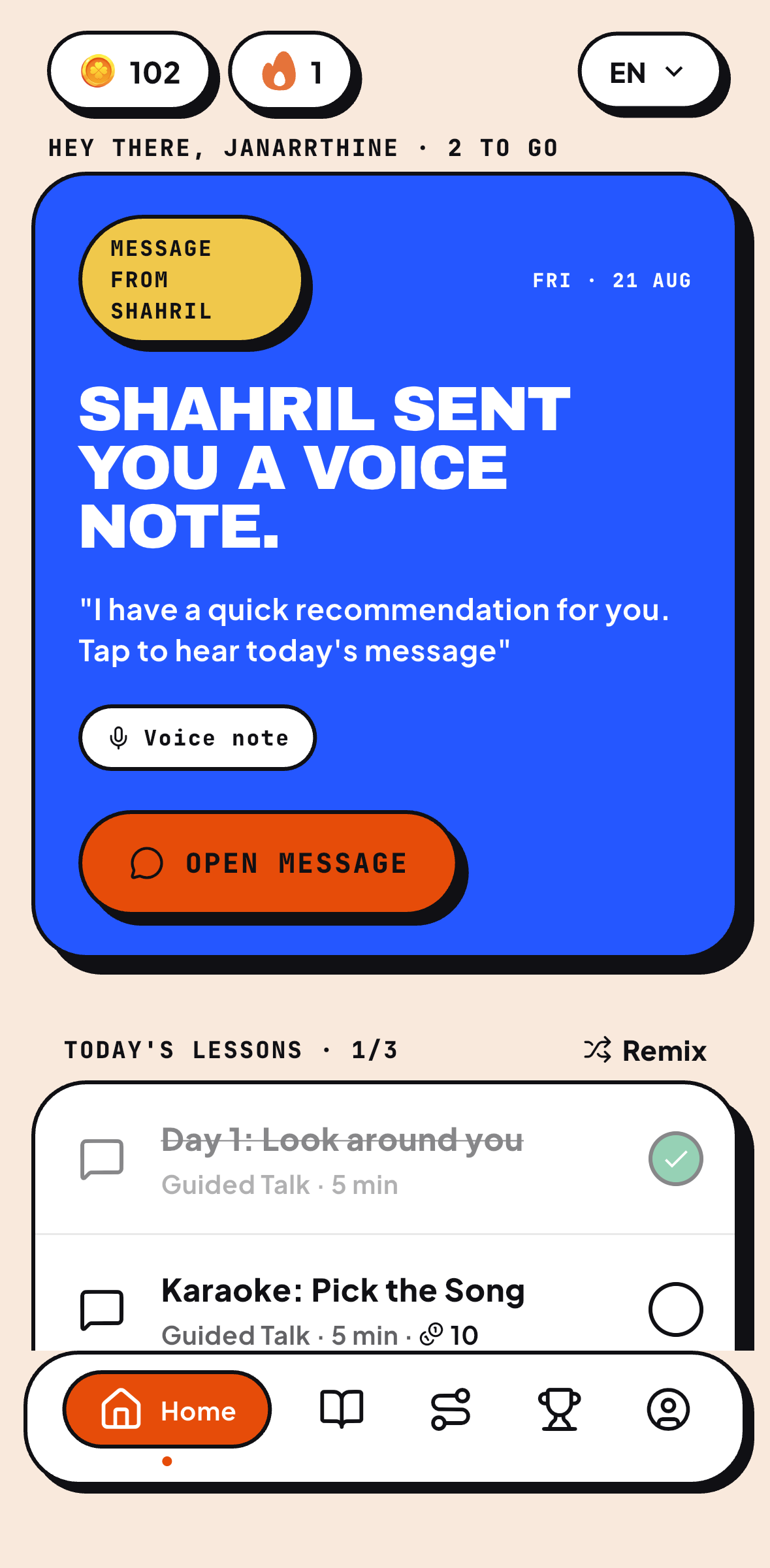
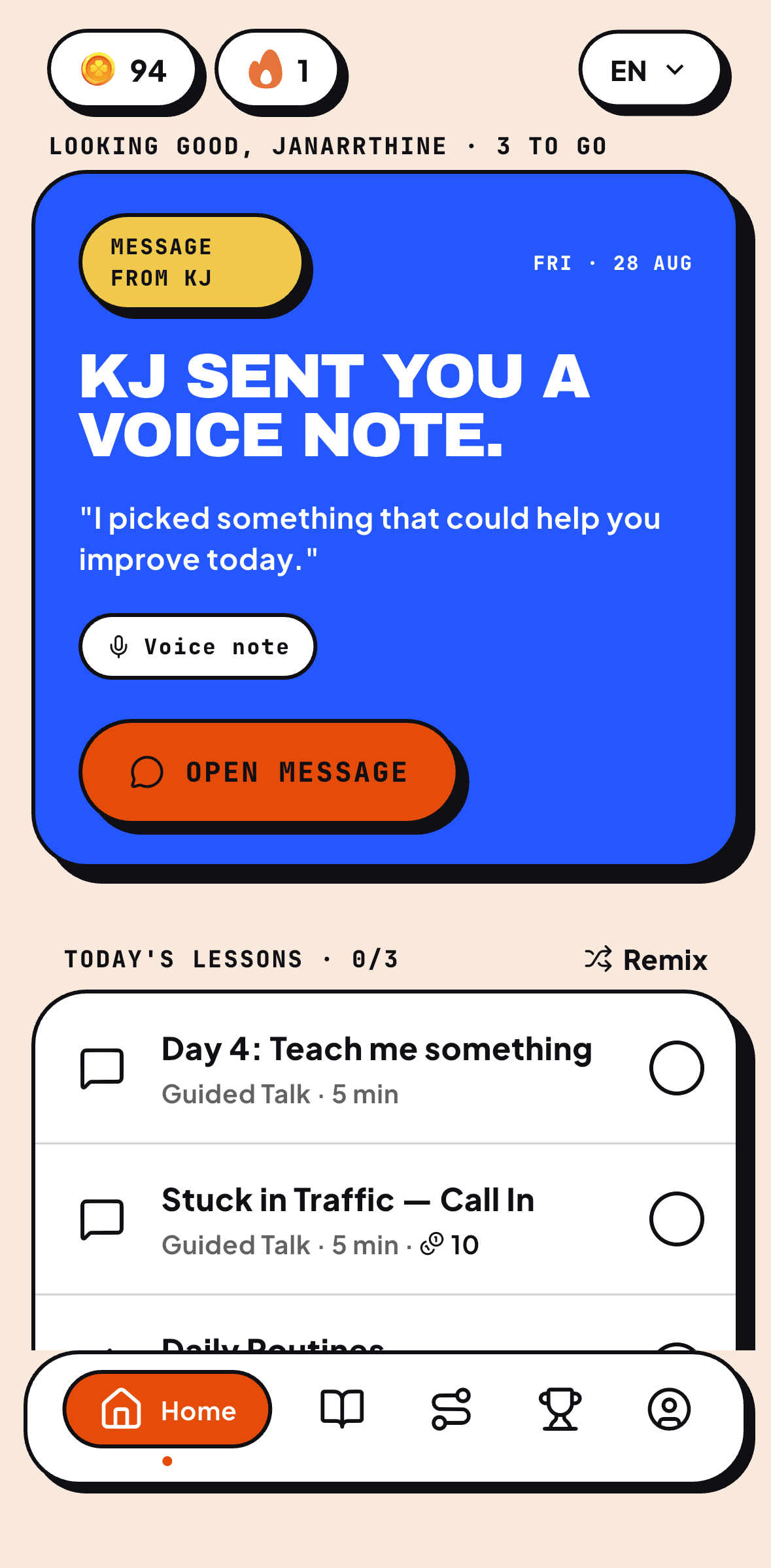
When you open the app, a prompt might appear stating “Shahril sent you a voice note”. Tapping it opens an audio message from co-founder Shahril Hamdan outlining your tasks for the day, with former minister Khairy Jamaluddin (KJ) providing audio check-ins as well.
It is worth noting that this feature is not available every day, as these audio check-ins from Shahril and KJ arrive on alternating days.
Mandarin modules and topic hubs
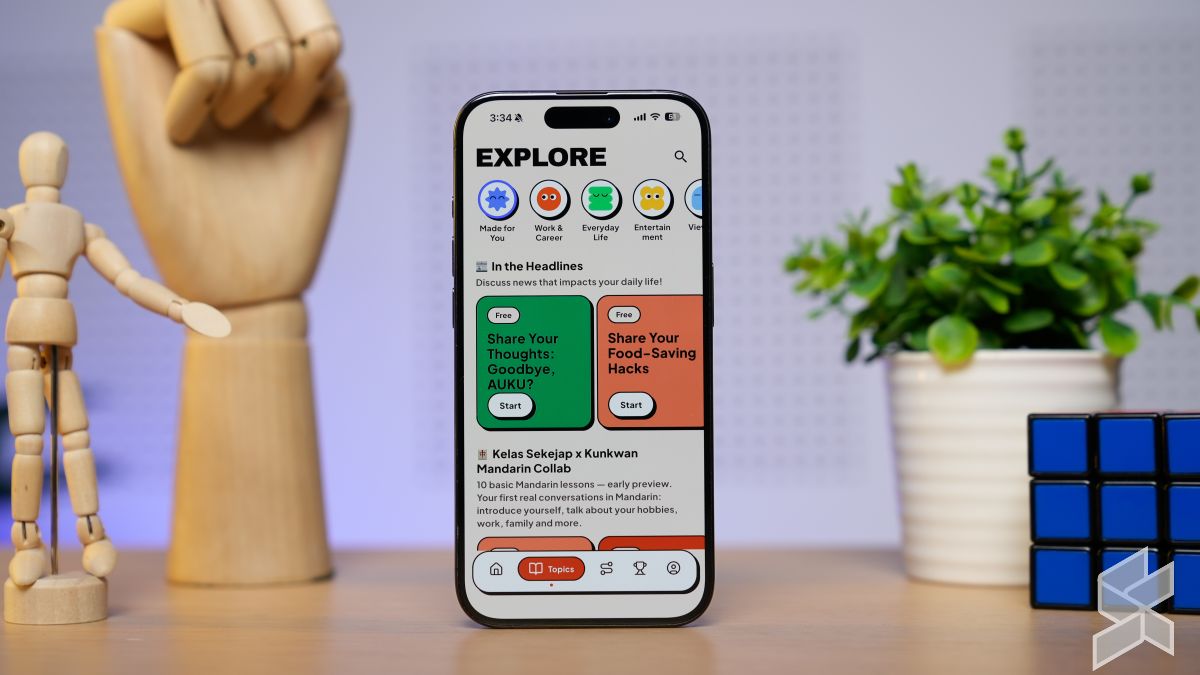
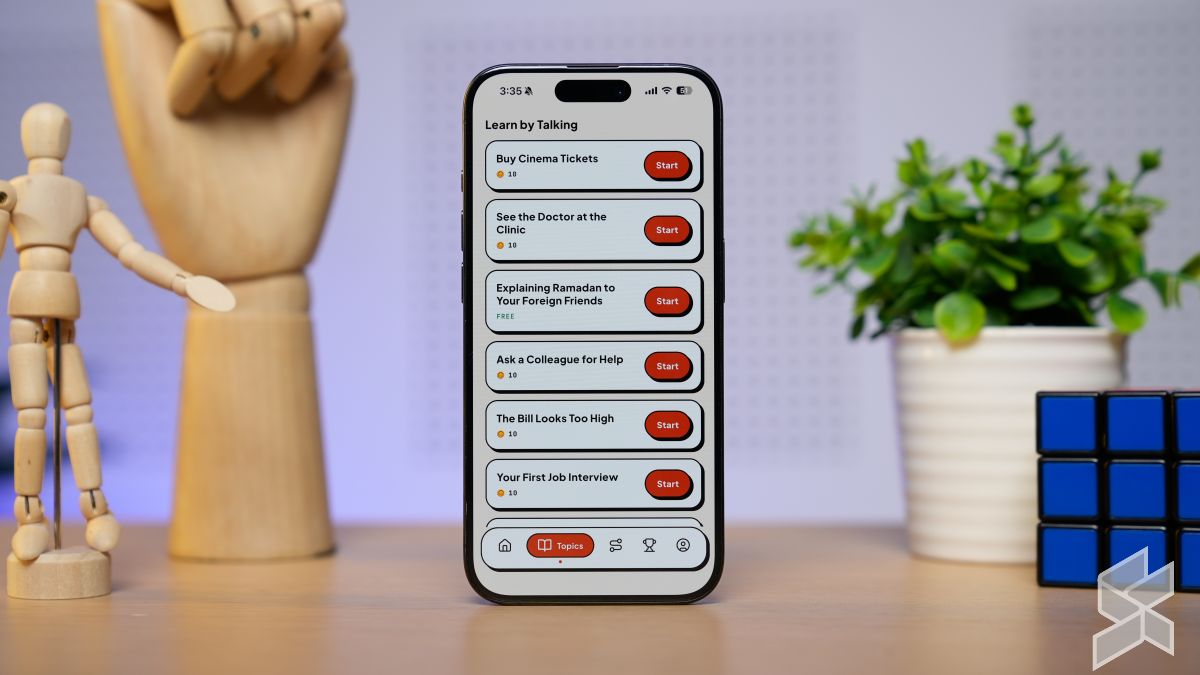
Beyond core English modules, topic hubs cover Work, Everyday Life, and Entertainment.
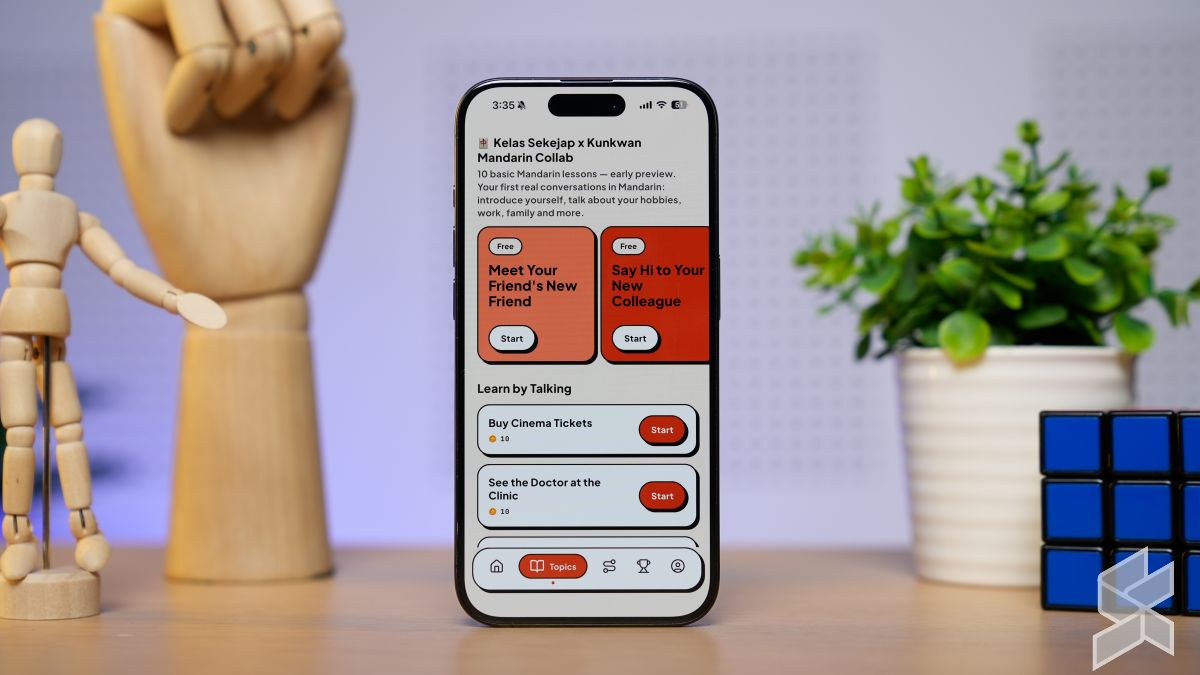
There is also a special Kelas Sekejap x Kunkwan collaboration offering 10 basic Mandarin lessons inside the Explore section, expanding the platform beyond English to support multi-language learning for Malaysians.
This aligns with the app’s plans to expand beyond English and Bahasa Malaysia, though Mandarin is currently limited to basic introductory modules.
Pricing and Kelas Sekejap Pro
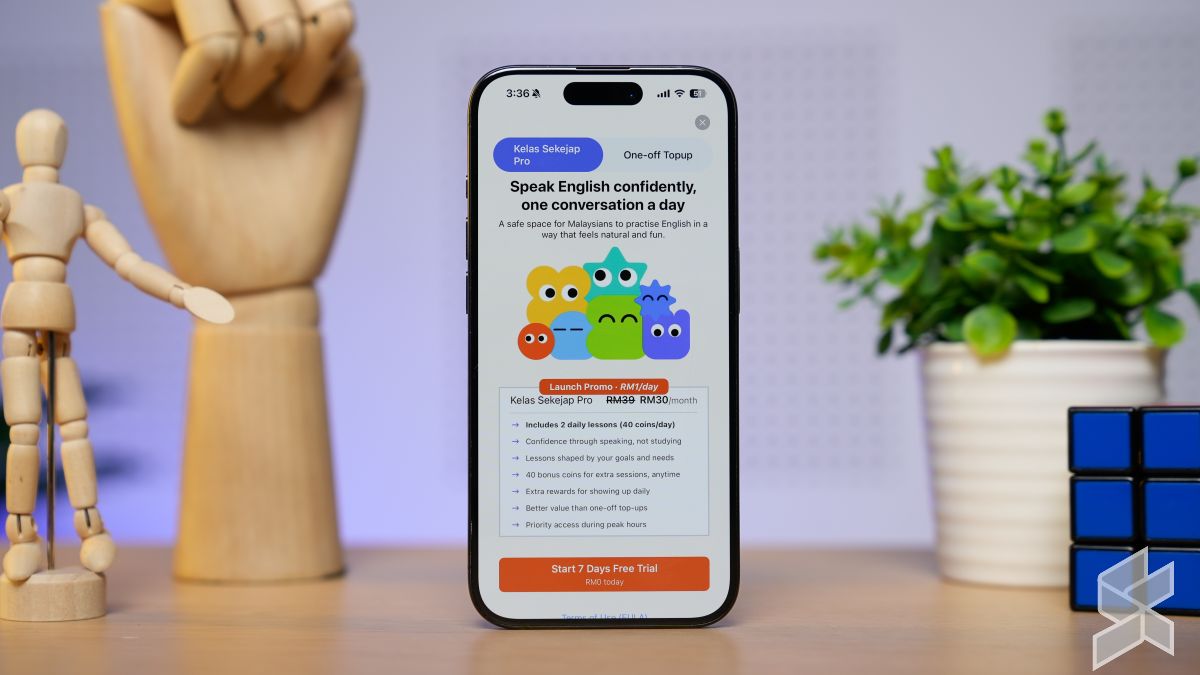
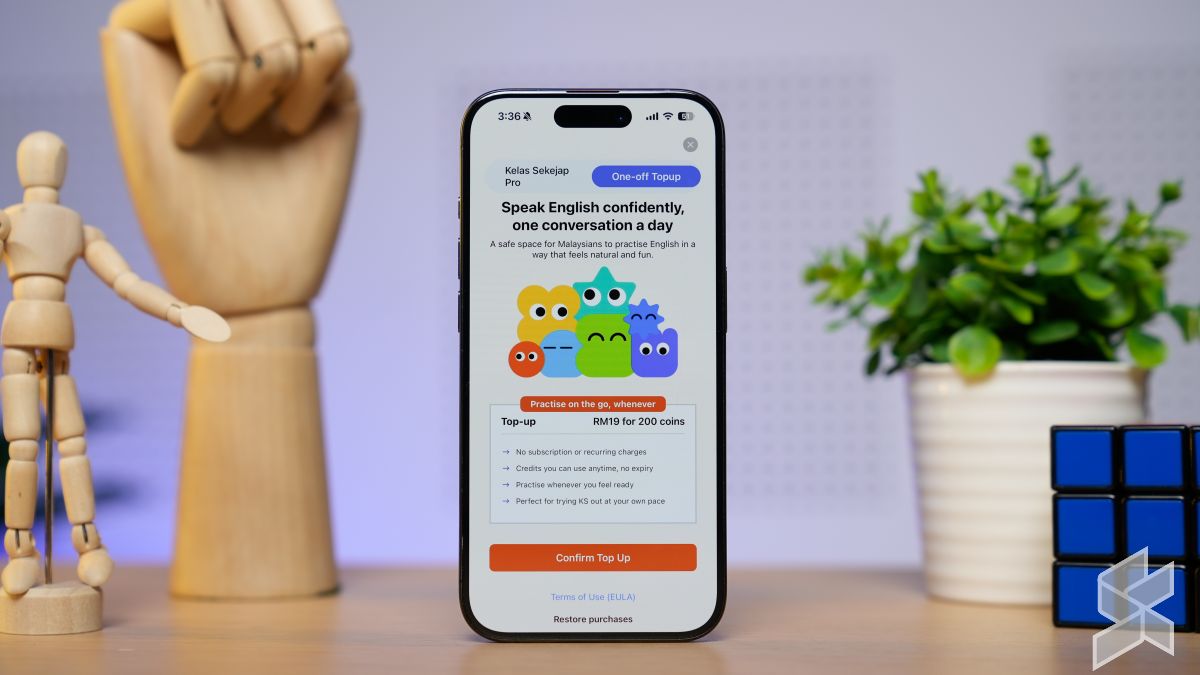
While basic lessons are free, higher-tier topic modules require in-app coins.
You can top up 200 coins for RM19 as a one-off purchase. If you run out of coins, you will need to purchase pack again for RM19.
Meanwhile, Kelas Sekejap Pro is a monthly subscription that normally costs RM39 per month, though a launch promo currently drops the price to RM30 per month (working out to RM1 per day). It remains unclear when this launch promo will end and revert to its standard rate.
Upgrading to Pro unlocks two daily coin-required lessons (note that two out of the three daily lessons require coins), grants 40 bonus coins every first-login day (yes, you read that right!), promises “better in-app rewards”, and gives you priority server access during peak hours.
I cannot imagine who would spend this much money just to bypass “peak hours” (whatever those are), but if you are determined to fast-track your conversational English skills, no judgment here for subscribing to Pro.
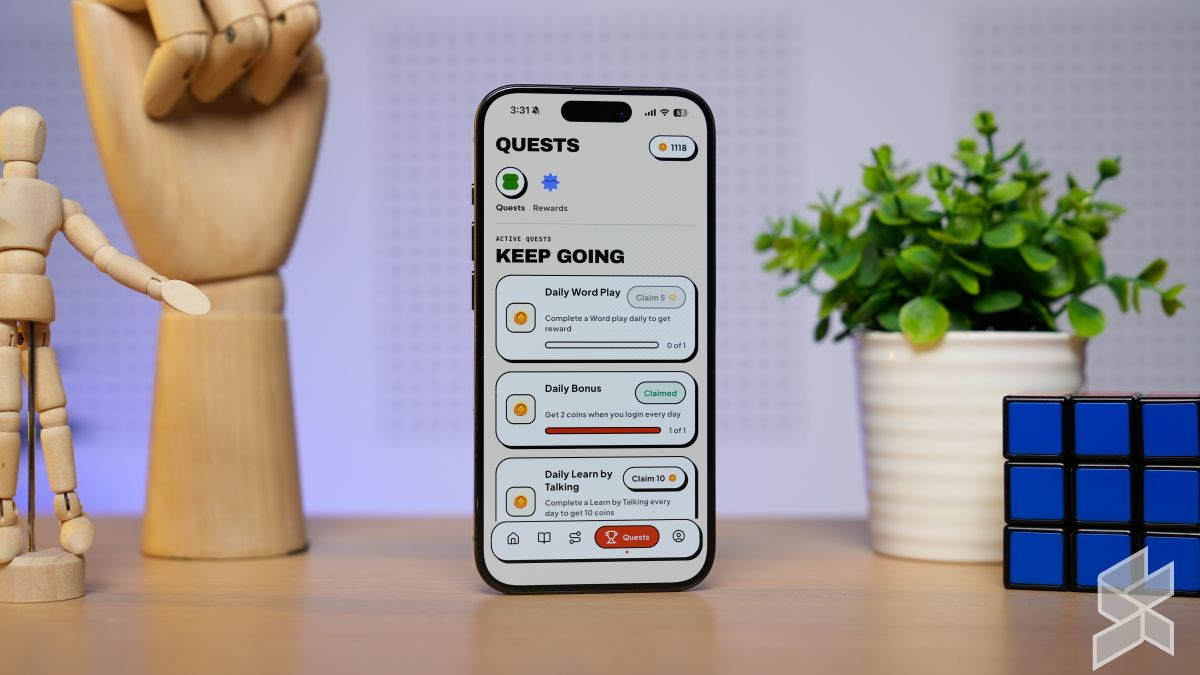
As for those “better in-app rewards”, the package details didn’t explain what they actually consist of. While the developers advertised brand vouchers as rewards, I didn’t receive any even after subscribing to Pro and finishing all three daily lessons.
Final verdict: Would I recommend it?
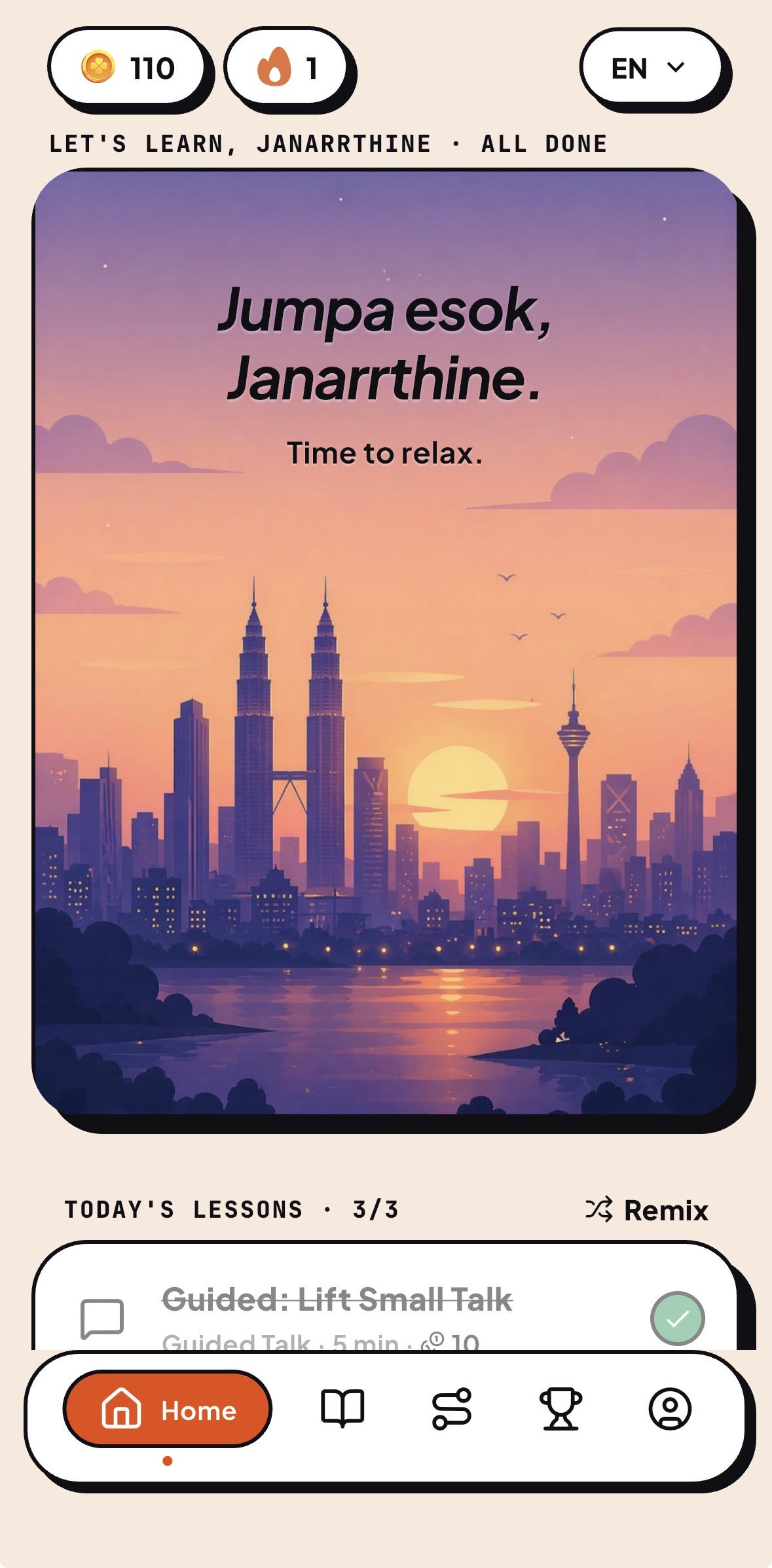
Kelas Sekejap does a solid job bridging the gap for Malaysians who want to speak better English. Its design and local accent choice target the main hurdle local learners face: the fear of speaking out loud. By offering a judgment-free space paired with familiar cultural touches, it gives users a practical way to build confidence.
After trying out this app, I recommend Kelas Sekejap specifically for beginners and schoolchildren who want to build confidence in speaking simple, conversational English. Keyword: beginners.
This app is meant for practising basic, everyday conversations, making it school-child friendly and a solid opportunity for young learners to improve their speaking skills.
That being said, this app is not suited for those who want to practise advanced English or complex conversations applicable in corporate, F&B, and other formal settings. The app covers casual Malaysian English rather than Standard English, and Manglish is non-applicable in formal settings (and if you speak Manglish during a corporate meeting, minus aura points for you).
Given my experience using the app, I recommend parents, guardians, or teachers of schoolchildren to be on standby while children learn through this app.
In this way, the adults can step in to correct glitches like mispronunciations and interrupted speech rhythm immediately, preventing children from internalising these errors into their learning habits.
Once the developers resolve these technical speech bugs, Kelas Sekejap will be an even stronger tool for local beginners.