
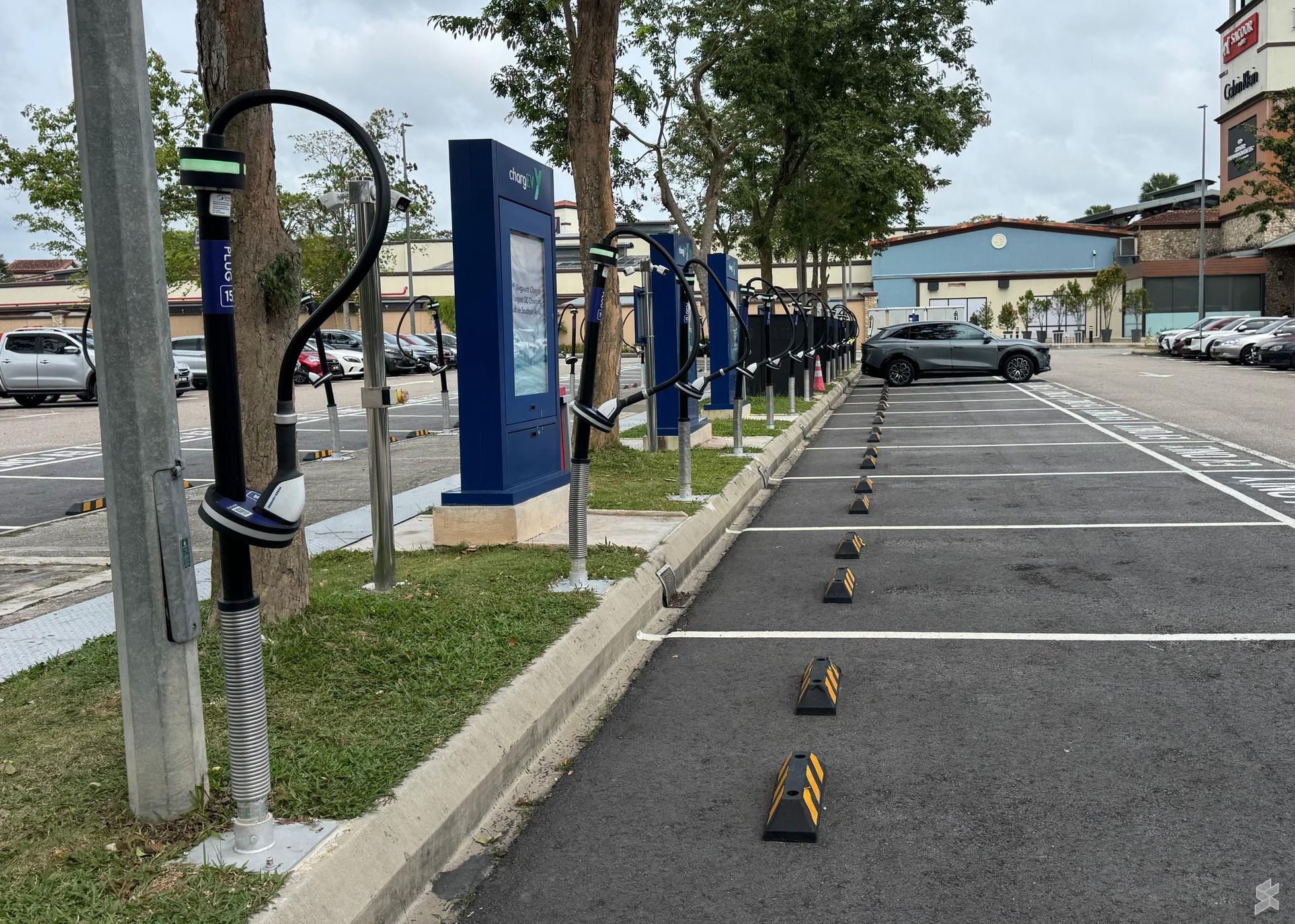
Malaysia’s EV charging network needs to grow faster. There’s no argument about that as EV registrations continue to double year over year.
However, the government’s proposal to impose a levy on every EV sold to fund public charging infrastructure is honestly the wrong solution to the wrong problem.
Speaking in the Dewan Negara, Investment, Trade and Industry Minister Johari Ghani said the government is considering imposing a levy on every EV sold because it can’t rely solely on vehicle manufacturers and distributors to invest in charging infrastructure.
He also pointed out that Malaysia had forgone RM3.3 billion in tax revenue through EV tax exemptions over the past four years.
The problem isn’t a lack of investment
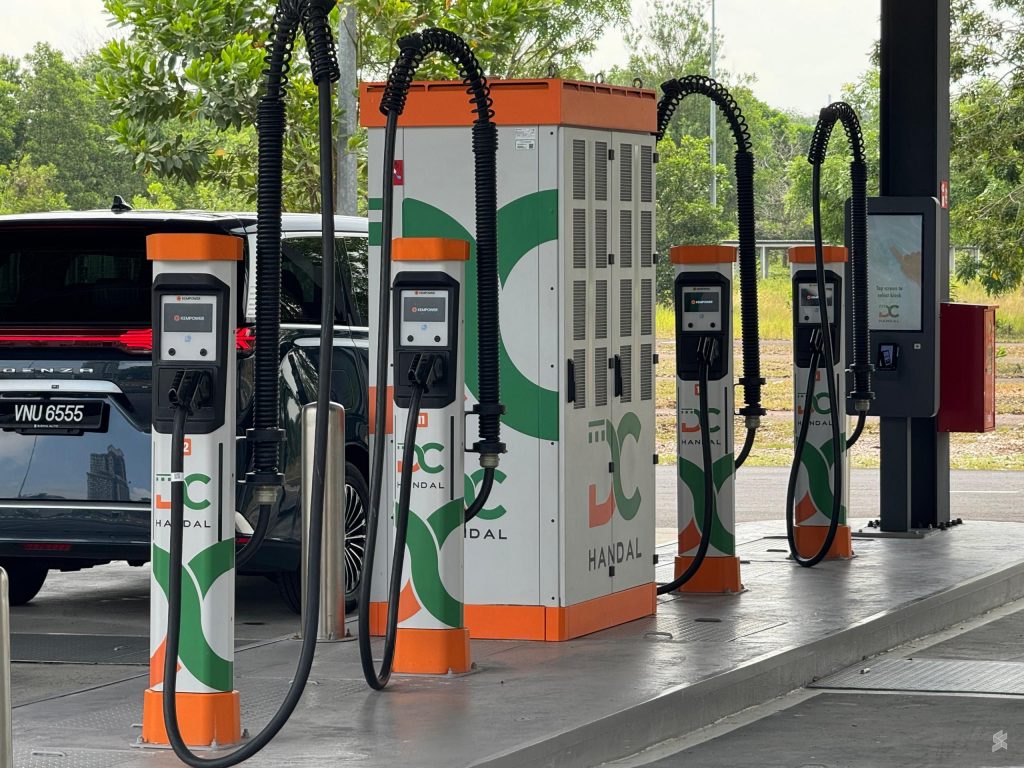
One thing we’ve observed over the past few years is that Malaysia doesn’t have a shortage of companies willing to invest in EV charging.
Just look at the number of Charge Point Operators (CPOs) today. ChargEV, Gentari, JomCharge, Charge+, ChargeSini, DC Handal, TNB Electron, Tesla and several others continue expanding their charging networks despite the challenges faced.
Building public charging infrastructure is already a commercial business. Operators deploy chargers where it makes commercial sense, just like petrol stations.
In fact, some CPOs even doubled down by investing in battery energy storage systems (BESS) as a temporary solution to deliver DC fast charging in areas without sufficient grid supply.
The issue isn’t that nobody wants to invest. The real issue is how difficult it is to get chargers deployed at the right locations and turning them on.
EV charger deployment shouldn’t be this hard
As much as CPOs want to invest in EV chargers where users need the most, they continue to face an uphill battle in getting the necessary approvals.
Industry stakeholders have shared that deploying DC chargers along highways in countries like Thailand and Indonesia typically takes around three to four months.
In Malaysia, however, the average timeline is approximately 14 months.
The long wait is largely due to multiple layers of approvals involving regulators, local councils (PBT), utilities, landlords and various agencies before a charger can finally go live.
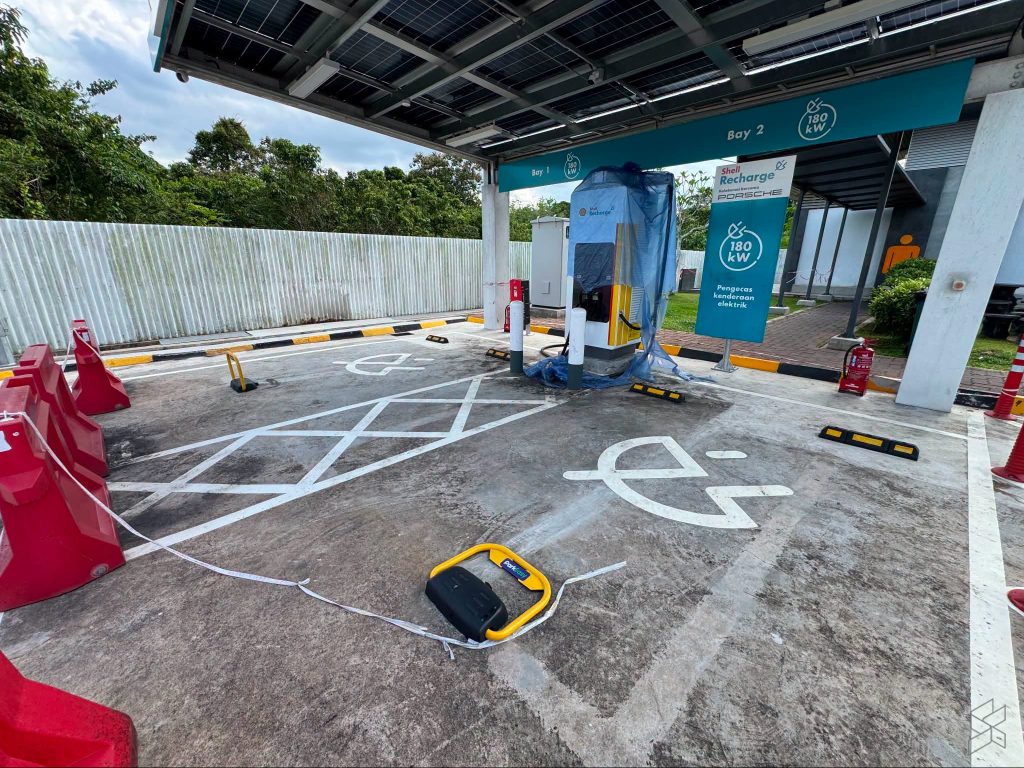
We’ve personally seen EV chargers that were installed more than two years ago but are still not operational such as Shell Recharge at Temerloh R&R Westbound as shown above.
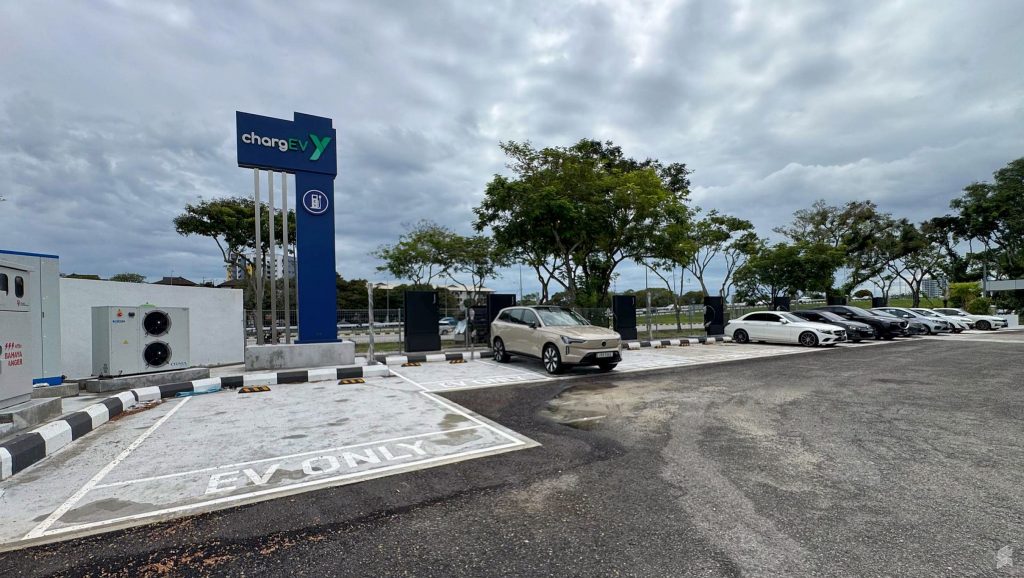
There are also large charging hubs with more than a dozen charging bays that have been physically completed for over a year, yet are still not turned on.
Even Tesla isn’t spared. They have several Supercharger sites have been completed but still not turned on.
On WCE Highway, we’ve seen R&Rs with designated EV charging bays ready with roof and trunking completed, but chargers have yet to be installed.
This shows that many stakeholders are ready and Investment isn’t the biggest bottleneck. Time taken to deploy is the main challenge.
Instead of taxing EV buyers, remove the roadblocks
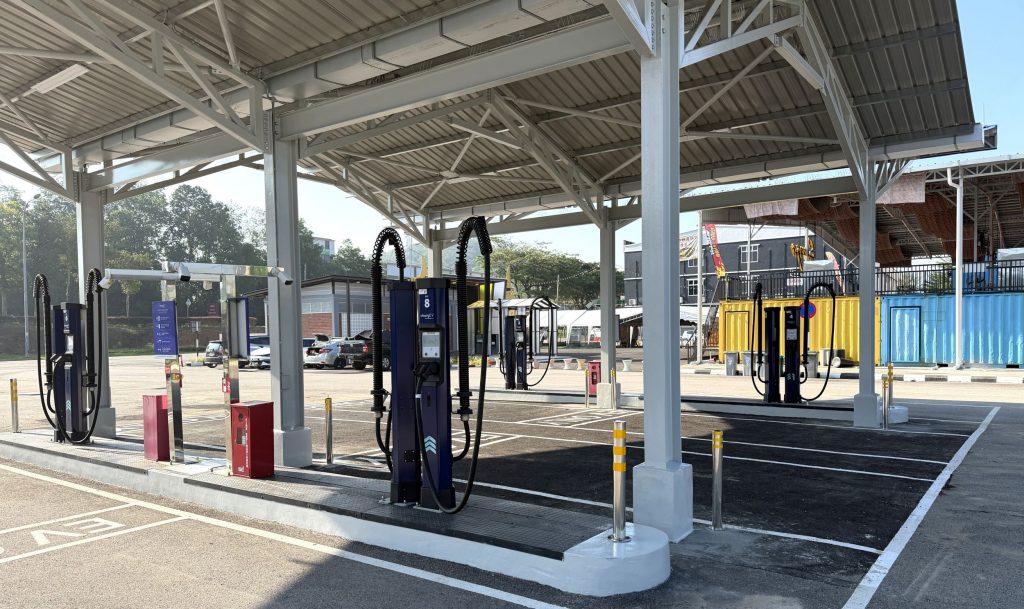
If the government wants to accelerate charging infrastructure, it should focus on making deployment easier.
That means streamlining approvals, reducing bureaucracy, getting all relevant agencies aligned and ensuring TNB can perform grid upgrades at strategic locations without unnecessary delays.
If Malaysia can cut deployment timelines from 14 months to something closer to what neighbouring countries are achieving, we’ll likely see chargers appearing much faster without introducing another tax.
The commercial model also needs government support
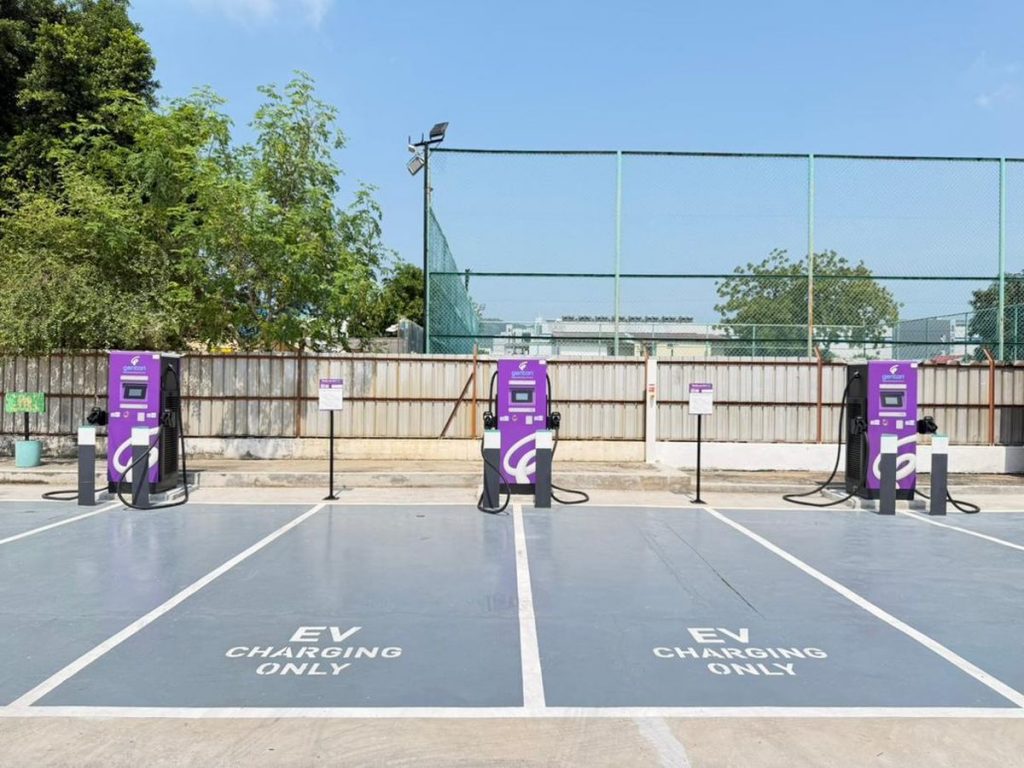
From the get go, Malaysia chose to let the private sector build the public charging network without providing subsidies.
Naturally, operators will prioritise locations where chargers are likely to see sufficient utilisation and ultimately with fewer barriers. That’s one of the reasons why we are seeing more EV chargers being deployed off highways.
But expecting companies to invest heavily in underserved or rural areas without any form of support isn’t realistic either.
Instead of introducing an EV levy, perhaps the government should consider matching grants or targeted incentives for operators willing to build charging infrastructure where commercial returns are lower.
One area that the government could help is to secure or provide reasonable land lease for CPOs to deploy chargers and to fund grid and substation upgrades to strategic spots for large scale EV charging hubs especially along interstate routes.
This allows the government to stretch public funds while encouraging private investment instead of replacing it.
The government could also look at special electricity tariffs or incentives that make public charging more viable, especially if operators integrate renewable energy into their charging sites.
In Thailand, the government has set special tariffs for EV charging as part of its initiative to boost adoption. As a result, their public DC fast chargers are priced cheaper (typically below RM0.90 per kWh) than public AC charging in Malaysia (typically RM1.00 per kWh).
RM3.3 billion in tax exemptions doesn’t tell the whole story
The minister has repeatedly emphasised RM3.3 billion in tax revenue forgone through EV incentives for fully imported as well as locally assembled EVs.
What’s missing in this picture is the government’s fuel subsidy bill.
With the current Middle East conflict, Malaysia is expected to spend more than RM40 billion on fuel subsidies this year.
Let’s not forget that every Malaysian who switches from a petrol or diesel vehicle to an EV reduces reliance on subsidised fuel.
Therefore, the long-term conversation shouldn’t just be about tax revenue forgone but how much the government stands to save from reduced fuel subsidies over time, while also considering the broader economic benefits of attracting EV investments into Malaysia.
We don’t expect carmakers to build petrol stations
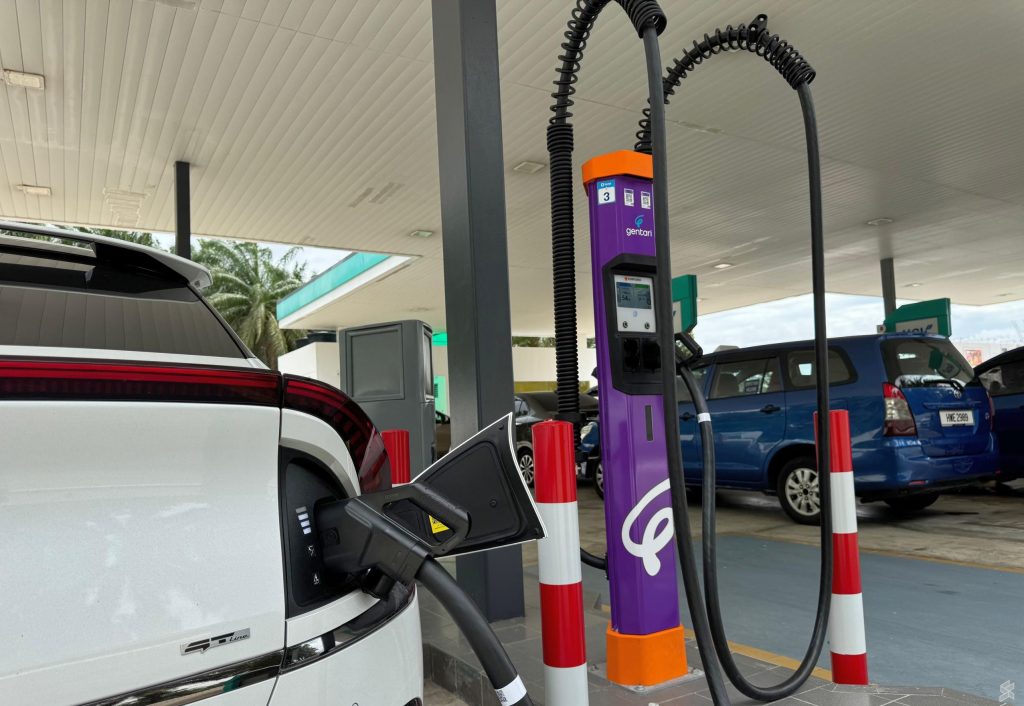
The minister said the government can’t rely solely on vehicle manufacturers and distributors to build charging infrastructure.
That’s fair. But we’ve never expected ICE vehicle manufacturers to build petrol stations either. Likewise, we don’t expect smartphone makers to build mobile towers.
Governments create the right policies and regulatory environment, while private companies invest where it makes business sense.
If we look at the telecommunications sector, Malaysia already has a working model. Through the Universal Service Provision (USP) fund managed by the MCMC, licensed telcos contribute 6% of their weighted net revenue once they exceed a defined threshold. The fund is then used to improve connectivity in underserved and rural areas where commercial deployment isn’t financially viable.
Perhaps Malaysia could explore a similar industry-wide funding model for EV charging in the future, especially to support deployment in locations where commercial returns are low.
But before we start talking about new levies or industry funds, let’s get the fundamentals right. Streamline approvals, reduce bureaucratic red tape, speed up grid upgrades and make it easier for operators to deploy and switch on chargers. Solving those bottlenecks will deliver far greater impact than introducing another charge on EV buyers today.
Malaysia wants to achieve 30,000 charge points by 2030
After missing its initial 10,000 EV Charge Point target by 2025, Malaysia recently has set a new 30,000 charge point target by 2030.
If we do the math, CPOs in Malaysia would need to deploy over 400 charge points per month. Installing DC chargers can be done quickly in a matter of weeks but if it is going to take more than a year to turn them on, CPOs would be hesitant to invest and we would risk missing that target again.
As a reference, Singapore already has over 30,000 charge points currently and they are now aiming 60,000 by 2030.
If we want to see more chargers, the obvious answer is to make it easier for CPOs to deploy.