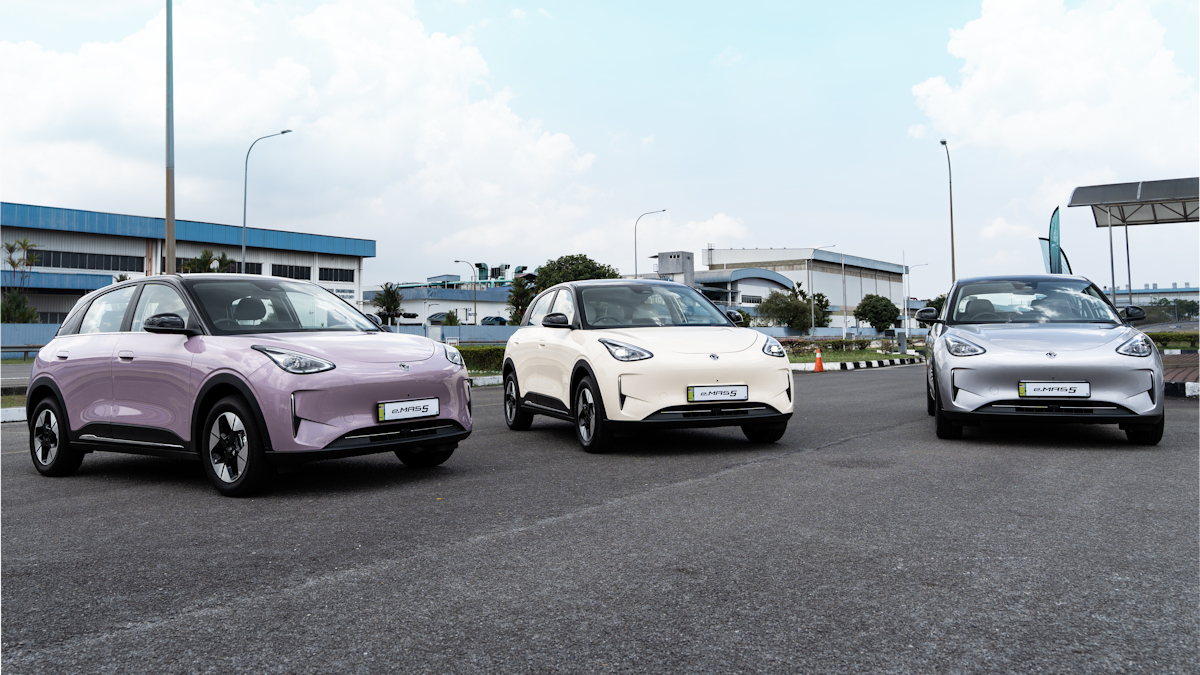
Pro-Net is starting 2026 with a bang, delivering a record-high 3,276 EVs in January 2026. That’s nearly triple the number of EVs it delivered in the previous month, and it is the highest monthly EV deliveries we’ve seen from a single brand in Malaysia.
This follows the start of Proton e.MAS 5 deliveries in December and precedes the e.MAS 7 PHEV launch that’s happening on 4th February.
If this momentum continues, Proton e.MAS is set to be the #1 EV brand in Malaysia this year.
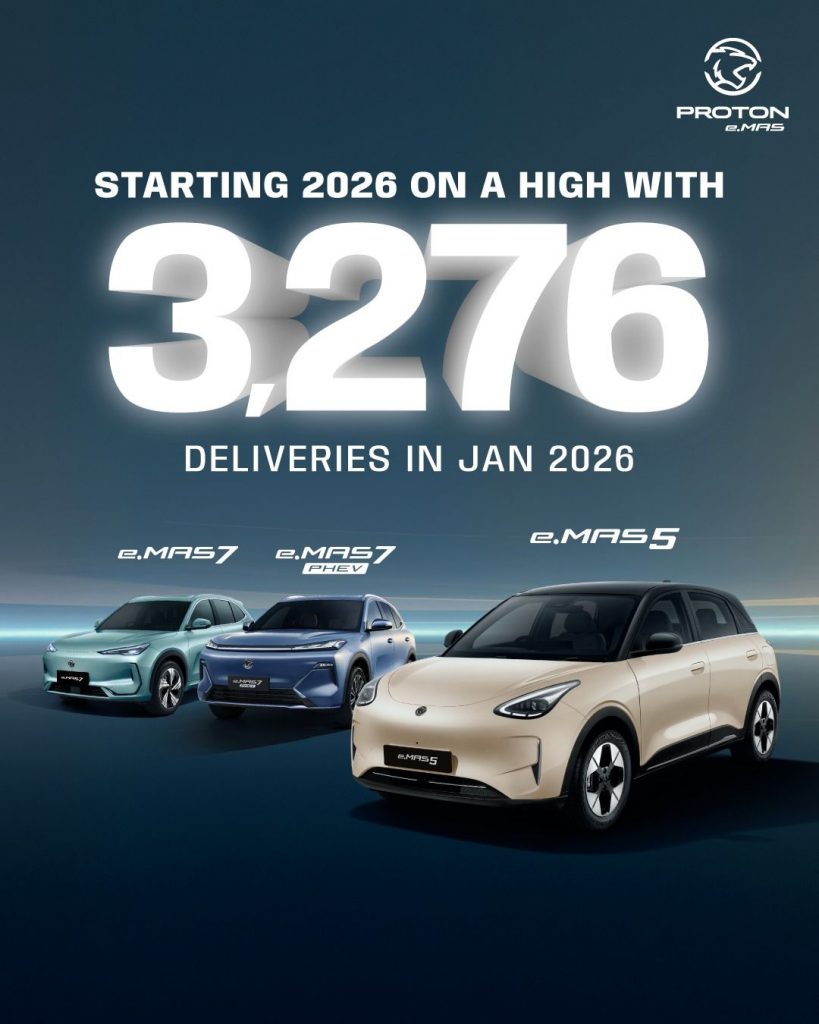
While Pro-Net didn’t reveal the actual breakdown, we can only assume that bulk of the deliveries are coming from the Proton e.MAS 5 which has raked in close to 15,000 bookings in early January. The Proton e.MAS 7 continues to be a top seller as it was the #1 EV model for 2025.
On top of that, Pro-Net has recently announced the locally assembled Proton e.MAS 7 2026 which offers additional features while having a slightly lower price tag that now starts from RM99,800.
To recap, there were a total of 8,890 Proton EVs registered last year which consists of 8,677 e.MAS 7 and 213 e.MAS 5. Meanwhile, BYD was the overall #1 EV Brand in Malaysia last year with a total of 14,407 units registered. BYD has a wider portfolio of models, and its local registrations are driven mostly by the BYD Sealion 7 (4,454), Atto 3 (4,069) and Atto 2 (1,779).
Despite the end of the EV tax holiday for fully imported EVs, we expect EV growth to continue in 2026, driven by locally assembled EVs priced under RM100,000. Several brands still hold surplus of “tax-free” stock from 2025 which should be sufficient to drive continued sales before they start CKD operations.
Meanwhile, Tesla has confirmed that it will continue to maintain its Model 3 and Model Y pricing in Malaysia. In addition, they have announced more affordable EV variants which include the “Rahmah” Model 3 Standard RWD which is priced from RM147,600 and a new Model Y Long Range RWD which boasts up to 661km WLTP-rated range.
Despite the increasing growth and adoption of EVs, there’s still lacking of strong mandates, incentives and policies to increase availability of EV charging network which is a concern. Malaysia still lags behind its peers when it comes to EV charging infrastructure due to bureaucratic challenges, lack of “right to charge” for high rise residents and the lack of mandates to ensure Malaysian highways are EV friendly.
Despite the challenges, Charge Point Operators have done a phenomenal job in deploying high-powered DC chargers across underserved major towns and interstate routes.
[ SOURCE ]