
• 中文版
  • BM
  • News
  • Deals
  • Reviews
    • First Impressions
    • Hands-on
    • Comparisons
  • Tech
    • Mobile
    • Computers
    • Cameras
    • Wearables
    • Audio
    • Drones
  • Telco
    • Celcom
    • Digi
    • Maxis
    • Time
    • Tune Talk
    • U Mobile
    • Unifi
    • Yes
  • Cars
  • Contribute
  • Jobs
Menu
  • 中文版
  • BM
  • News
  • Deals
  • Reviews
    • First Impressions
    • Hands-on
    • Comparisons
  • Tech
    • Mobile
    • Computers
    • Cameras
    • Wearables
    • Audio
    • Drones
  • Telco
    • Celcom
    • Digi
    • Maxis
    • Time
    • Tune Talk
    • U Mobile
    • Unifi
    • Yes
  • Cars
  • Contribute
  • Jobs
Search
  • Tech
    • News
    • Mobile
    • Computers
    • Cameras
    • Wearables
    • Audio
    • Drones
  • Telco
    • Celcom
    • Digi
    • Maxis
    • Time
    • U Mobile
    • Unifi
    • Yes
  • Reviews
    • First Impressions
    • Hands-on
    • Comparisons
  • Buyer’s Guide
  • Opinions
  • Digital Life
  • Video
  • Deals
  • How-To
  • Cars
  • Bahasa Melayu
  • EV
  • Contribute
  • Advertise
Menu
  • Tech
    • News
    • Mobile
    • Computers
    • Cameras
    • Wearables
    • Audio
    • Drones
  • Telco
    • Celcom
    • Digi
    • Maxis
    • Time
    • U Mobile
    • Unifi
    • Yes
  • Reviews
    • First Impressions
    • Hands-on
    • Comparisons
  • Buyer’s Guide
  • Opinions
  • Digital Life
  • Video
  • Deals
  • How-To
  • Cars
  • Bahasa Melayu
  • EV
  • Contribute
  • Advertise
Search
Close
Home News

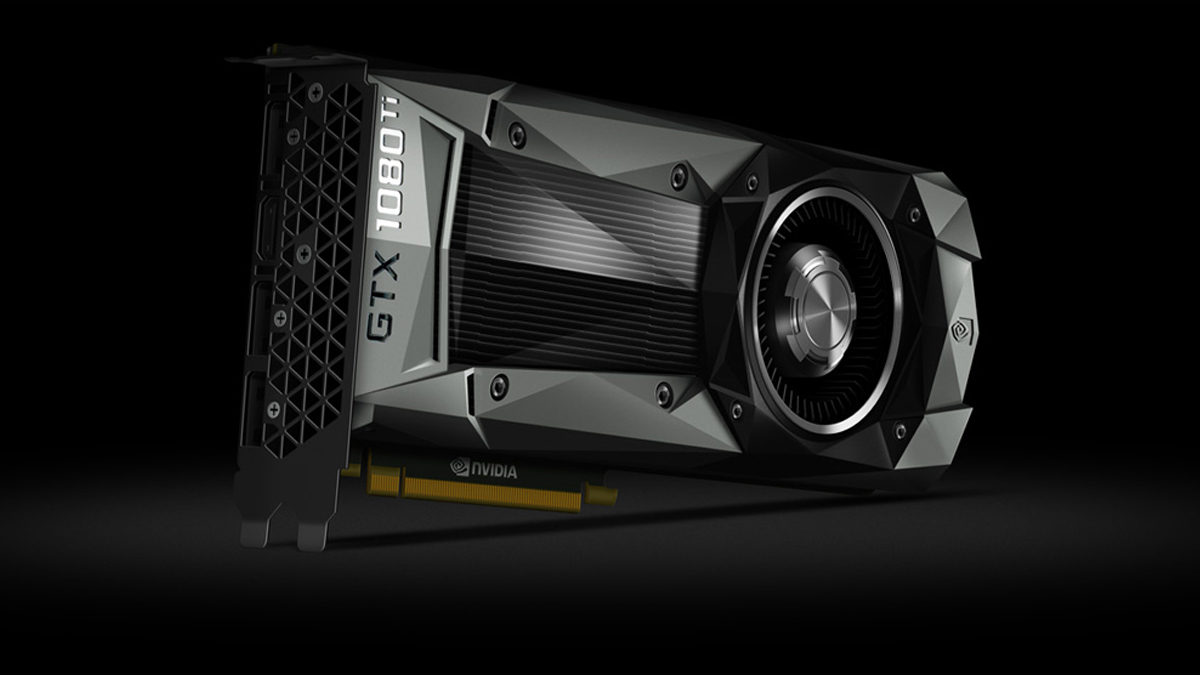
This invisible AI-powered keyboard used an NVIDIA GTX 1080 Ti to help you type faster on a smartphone

  • BY Raymond Saw
  • 15 September 2021
  • 1:11 pm
  • Comment
Share on FacebookShare on Twitter

In the midst of one of the world’s worst silicon shortages, you might be wishing you had a spare NVIDIA GTX 1080 Ti GPU just laying around for you to use in gaming PC. But a group of South Korean researchers have instead used it to train an AI keyboard to make typing on a smartphone faster than ever. How? By eliminating the on-screen keyboard itself.

Sahng-Min Yoo and his team at the Korea Advanced Institute of Science and Technology have recently unveiled the Invisible Mobile Keyboard, or IMK for short. It’s an AI-powered keyboard that lets you type away anywhere on your smartphone display, and it’ll key in exactly what you meant to type with astonishing accuracy, without ever showing you an actual keyboard layout. Because most people will already know roughly how a keyboard’s layout is, IMK can work out what you typed in in relation to the position of what you’ve pressed.
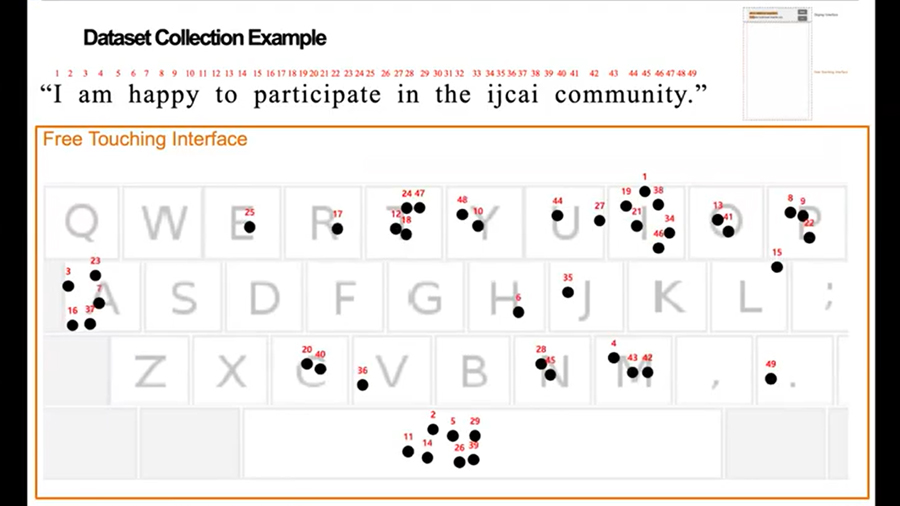
An example of how the IMK takes touch input and determines the letter to key in

Powering the IMK is the Self-Attention Neural Character Decoder, which itself has two separate parts to it. The first part is a geometric decoder that takes in all the touch input the user is giving the IMK. It then converts the touch input sequence into a character sequence based on the where the user touched the invisible keyboard. The second part is a semantic decoder, which corrects the errors from the first decoder by actually attempting to figure out what those touch inputs could possible mean in the language of choice.

Yoo and co have done this by training the AI decoder using the One Billion Word Benchmark that was created by Google, Cambridge University and the University of Edinburgh back in 2014. This was done via the open-source PyTorch 1.4.0 library on an NVIDIA GTX 1080 Ti GPU and a Linux-based workstation computer.

As for why they’ve come up with the IMK, well according to their research paper, the on-screen keyboards tend to lead to a high rate of typos, take up a large chunk of the screen and forces users to change their typing methods to fit the on-screen keyboard better. The IMK would in turn let users type anywhere on screen, and it’ll learn the typing habits of the user to accurately give you what you’ve ‘keyed’ in. Tests have so far shown that IMK users were able to type up to 157.5% faster compared to the typical on-screen keyboards found on smartphones, with speeds of up to 51.6 words per minute.

If you’d like to read more about Yoo’s work in more detail, you can check out their video demonstration or click here to read their research paper.


[ SOURCE, VIA ]

Tags: graphics cardinvisible mobile keyboardNVIDIA
Raymond Saw

Raymond Saw

POPULAR

Nissan Finally Gives the Serena a Real Hybrid Powertrain in Malaysia. Estimated from RM160k to RM180k

January 16, 2026

Neta V now available for only RM40k, but with a limited 6-month warranty

January 31, 2026

This invisible AI-powered keyboard used an NVIDIA GTX 1080 Ti to help you type faster on a smartphone

September 15, 2021

Tired of cracked screens or short battery life? The REDMI Note 15 Series take a durability-first approach

January 15, 2026

Is your TNG eWallet suspended? Here’s what you should do

January 27, 2026
BYD Atto 3 Ultra

BYD Atto 3 Ultra now available for as low as RM106k

January 27, 2026

Copyright © 2025 · SoyaCincau.com
Mind Blow Sdn Bhd (1076827-P)

  • ADVERTISE
  • DISCLAIMER

Copyright © 2026 · SoyaCincau.com – Mind Blow Sdn Bhd (1076827-P)

  • ADVERTISE
  • DISCLAIMER