• 中文版
  • BM
  • News
  • Deals
  • Reviews
    • First Impressions
    • Hands-on
    • Comparisons
  • Tech
    • Mobile
    • Computers
    • Cameras
    • Wearables
    • Audio
    • Drones
  • Telco
    • Celcom
    • Digi
    • Maxis
    • Time
    • Tune Talk
    • U Mobile
    • Unifi
    • Yes
  • Cars
  • Contribute
  • Jobs
Menu
  • 中文版
  • BM
  • News
  • Deals
  • Reviews
    • First Impressions
    • Hands-on
    • Comparisons
  • Tech
    • Mobile
    • Computers
    • Cameras
    • Wearables
    • Audio
    • Drones
  • Telco
    • Celcom
    • Digi
    • Maxis
    • Time
    • Tune Talk
    • U Mobile
    • Unifi
    • Yes
  • Cars
  • Contribute
  • Jobs
Search
  • Tech
    • News
    • Mobile
    • Computers
    • Cameras
    • Wearables
    • Audio
    • Drones
  • Telco
    • Celcom
    • Digi
    • Maxis
    • Time
    • U Mobile
    • Unifi
    • Yes
  • Reviews
    • First Impressions
    • Hands-on
    • Comparisons
  • Buyer’s Guide
  • Opinions
  • Digital Life
  • Video
  • Deals
  • How-To
  • Cars
  • Bahasa Melayu
  • EV
  • Contribute
  • Advertise
Menu
  • Tech
    • News
    • Mobile
    • Computers
    • Cameras
    • Wearables
    • Audio
    • Drones
  • Telco
    • Celcom
    • Digi
    • Maxis
    • Time
    • U Mobile
    • Unifi
    • Yes
  • Reviews
    • First Impressions
    • Hands-on
    • Comparisons
  • Buyer’s Guide
  • Opinions
  • Digital Life
  • Video
  • Deals
  • How-To
  • Cars
  • Bahasa Melayu
  • EV
  • Contribute
  • Advertise
Search
Close
Home News

NVIDIA GPUs are now being used by researchers to detect early signs of Alzheimer’s disease

  • BY Raymond Saw
  • 10 September 2021
  • 5:31 pm
  • Comment
Share on FacebookShare on Twitter

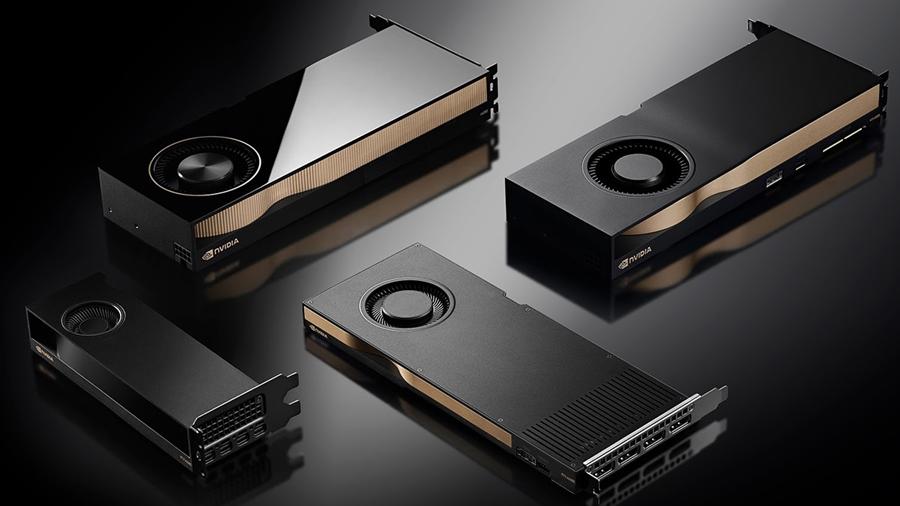
Graphics cards are perhaps most well known for being the thing that runs your video games and what not, but some of you might’ve also heard of GPUs being used for deep learning with AI. In fact, one group of researchers have just used NVIDIA GPUs to develop a way of detecting and predicting the possible onset of Alzheimer’s disease with incredible accuracy.

So first, some context. If you’re unfamiliar with the whole concept of training a computer chip for deep learning, it’s basically the idea of getting AI-based neural networks to simulate human brain behaviour by learning from a bunch of data and then getting it to make accurate predictions. GPUs are preferred over CPUs because while CPUs are general-purpose processors, GPUs are designed to go through a bunch of complex math to create your 3D polygons in game. The ability of GPUs to do so much math quickly is then repurposed to become ‘neurons’ in an AI neural network.

As for how these in turn help with detecting Alzheimer’s disease, well that’s where Rytis Maskeliūnas and his team of researchers at the Kaunas University of Technology in Lithuania come in. Maskeliūnas had set up a deep learning model using the ResNet 18 neural network on NVIDIA GPUs and trained it with fMRI scans from 138 patients. They had then successfully got their model to detect and classify signs of mild cognitive impairment (MCI)—the first sign of Alzheimer’s disease—at an amazing 99% accuracy. Their deep learning model was also capable of distinguishing between early MCI, late MCI and Alzheimer’s disease itself.

Rytis Maskeliūnas

“Although this was not the first attempt to diagnose the early onset of Alzheimer’s from similar data, our main breakthrough is the accuracy of the algorithm. Such high numbers are not indicators of true, real-life performance, but we’re working with medical institutions to get more data,” – Maskeliūnas, as quoted by NVIDIA

Right now, doctors check for the MCI and other early signs of Alzheimer’s disease via fMRI scans. However, going through the scanned images of patients and determining whether or not there are signs of Alzheimer’s not only requires doctors to know exactly what and where to look for, but takes time as well to sift through the numerous scans to properly spot it. With deep learning models helping them out, it would speed up the process significantly, allowing doctors to focus on providing medical help as soon as possible.

For more information about Maskeliūnas’ work, you can check out his full research here on the MDPI journal.


[ SOURCE 2 ]

Tags: deep learningHealthNVIDIA
Raymond Saw

Raymond Saw

POPULAR

Upgraded To a New Phone? Cool. But When Was the Last Time you Upgraded your Shaver?

November 10, 2025

5 Reasons Every Home Should Have a Smart Security System

November 11, 2025

Solar ATAP: The new solar programme for consumers will only start in 2026

December 2, 2025

NVIDIA GPUs are now being used by researchers to detect early signs of Alzheimer’s disease

September 10, 2021
Perodua QV-E EV

Perodua QV-E is now official: Electric sportback with 201hp, 445km NEDC range, priced at RM80k not inclusive of battery subscription

December 1, 2025

GrabRewards is now GrabCoins: Now with even more ways to earn and save

November 17, 2025

Copyright © 2025 · SoyaCincau.com
Mind Blow Sdn Bhd (1076827-P)

  • ADVERTISE
  • DISCLAIMER

Copyright © 2025 · SoyaCincau.com – Mind Blow Sdn Bhd (1076827-P)

  • ADVERTISE
  • DISCLAIMER