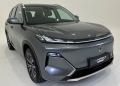
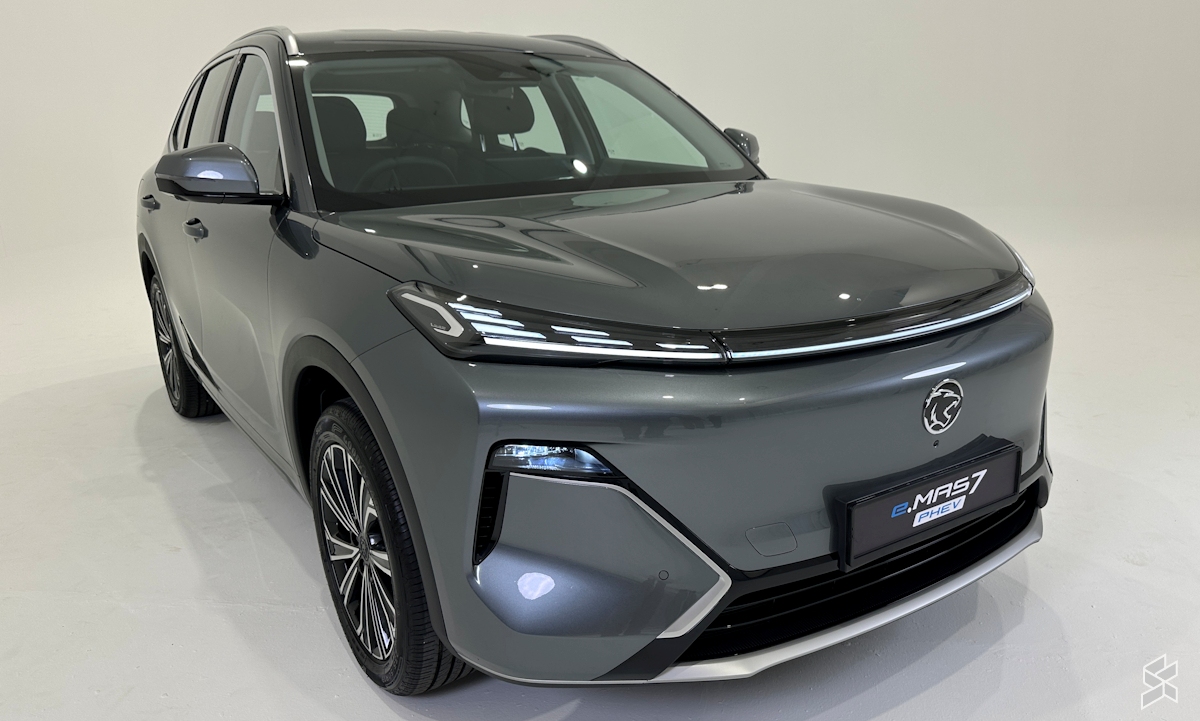
Proton e.MAS 7 PHEV is now officially available for booking. According to Pro-Net, the national automaker’s division that is responsible for New Energy Vehicle (NEV) models, the tentative pricing for the e.MAS 7 PHEV is RM110,000 to RM130,000 and it will be launched into the market in February 2026.
The new model made its first official public appearance at the Proton Tech Showcase last December. Just slightly over a month after that, Pro-Net then announced the technical specifications for the e.MAS 7 PHEV last weekend before showing it off without the camouflage wrapping today – unlike previous e.MAS models, which took months to hit these milestones.
Proton e.MAS 7 PHEV Early Bird Package, Colourways
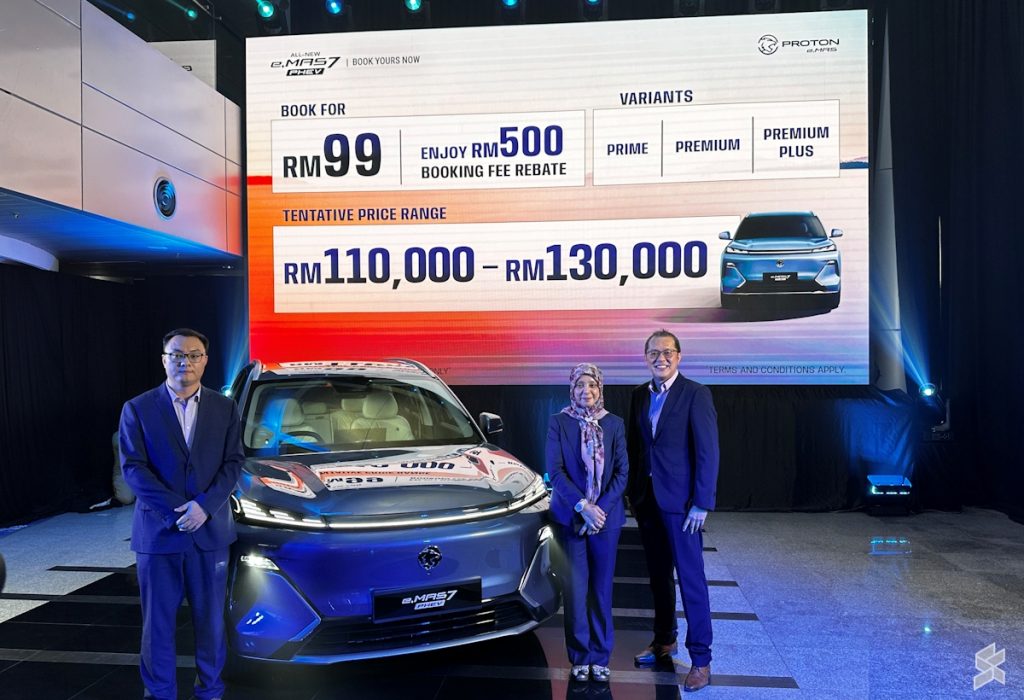
For the first 5,000 customers, they are able to book the new e.MAS 7 PHEV for only RM99. At the same time, they will also be provided with RM500 rebate for their booking fee.
The new model can be obtained in 5 colourways including Obsidian Black, Lithium White, Mercury Silver, Galena Grey, and Aquamarine Blue. There are also two interior colour options: Alabaster White and Onyx Black.
Proton e.MAS 7 PHEV Quick Specs
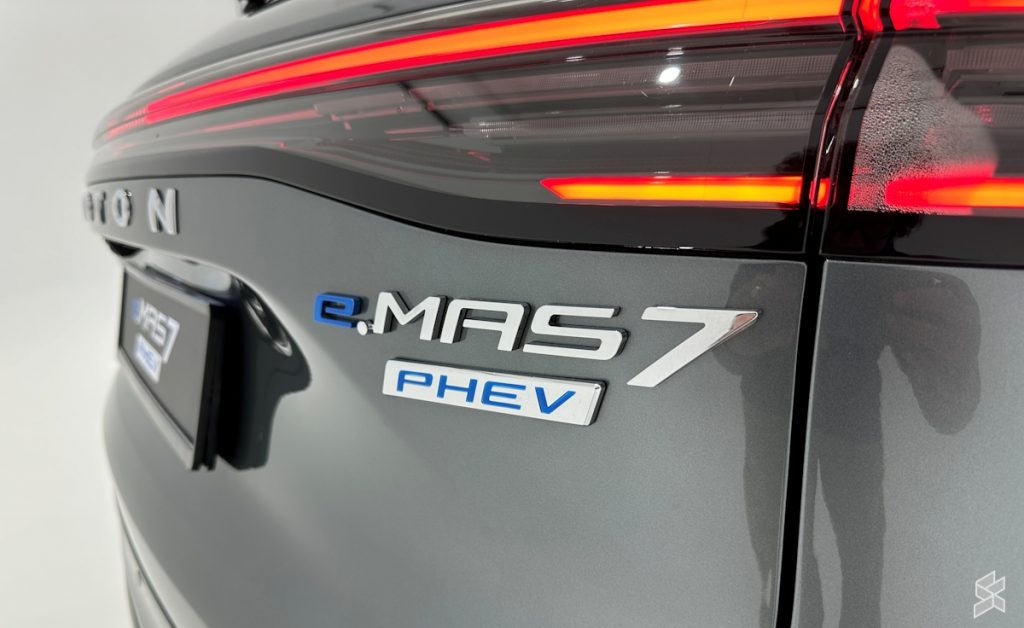
The e.MAS 7 PHEV is part of Proton’s NEV-specific Global Modular Architecture (GMA) family. Codenamed GMA03, the e.MAS 7 PHEV is the third product under e.MAS Phase 1 rollout, which includes e.MAS 7 (GMA01) and e.MAS 5 (GMA02).
The PHEV has also been released in the international markets as the Geely Starray EM-i, EX5 EM-I, and E5 EM-i. Unlike the version released in these markets, Proton’s version comes with a larger battery capacity, which allows the PHEV SUV to deliver a greater range.
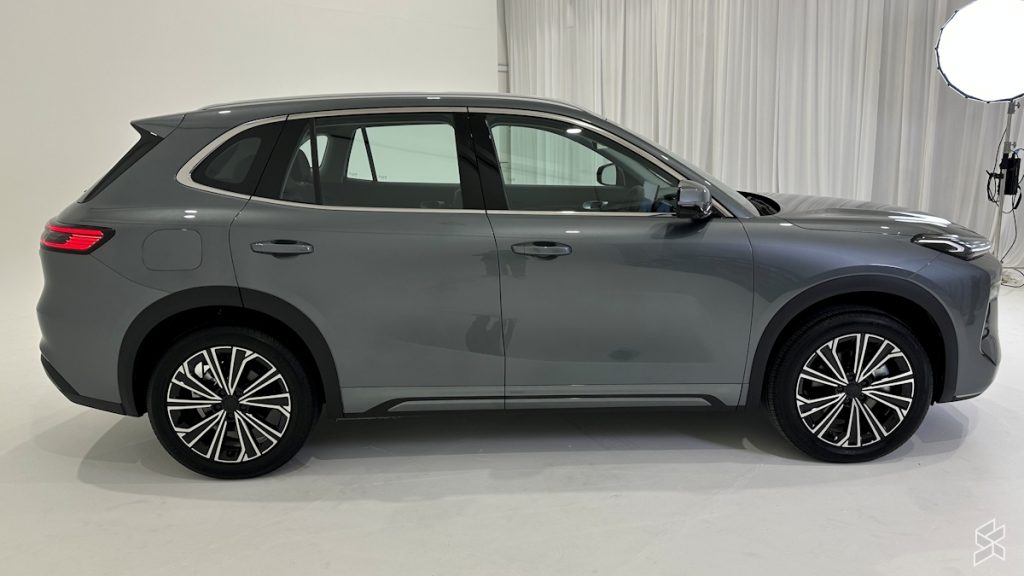
Specifically, the e.MAS 7 PHEV Premium+ is equipped with a 29.8 kWh Geely Aegis Short Blade LFP battery that enables NEDC-rated pure electric range of up to 170km or 146km according to WLTP standards. As for the combined range, the NEDC-rated range for the Premium+ version is 1,065km while its WLTP range is 996km.
The DC charging speed on the Premium+ variant is also two times faster than the Prime and Premium at 60kW. Not to forget, the Premium+ is the only e.MAS 7 PHEV variant to be offered with panoramic sunroof.
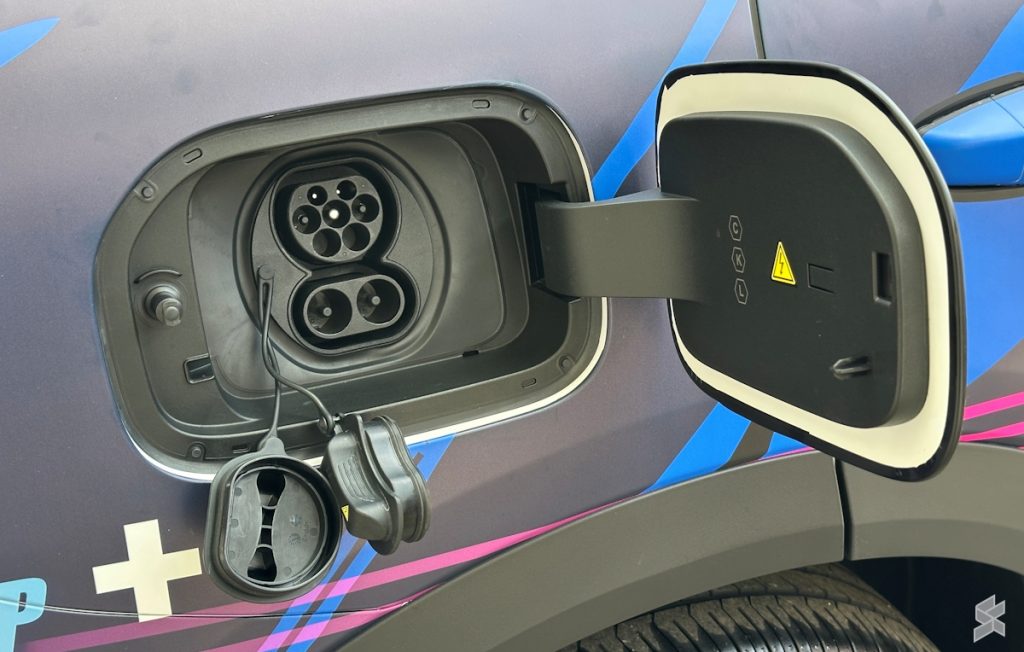
Meanwhile, the e.MAS 7 PHEV Prime and Premium features an LFP battery from CATL with a capacity of 18.4kWh – similar to their Geely global counterparts. This is why they also share the same range rating:
- Pure EV range: 105km (NEDC) / 83km (WLTP)
- Combined range: 1,000km (NEDC) / 943km (WLTP)
Despite the differences in battery capacity and DC charging speed, all three e.MAS 7 PHEV variants come with the same powertrain as their twins for the global market. It consists of a 73kW (98hp) 1.5L naturally-aspirated 4-cylinder engine with 125Nm of torque, that is paired with a 160kW (215hp) electric motor that also produces 262Nm of torque.
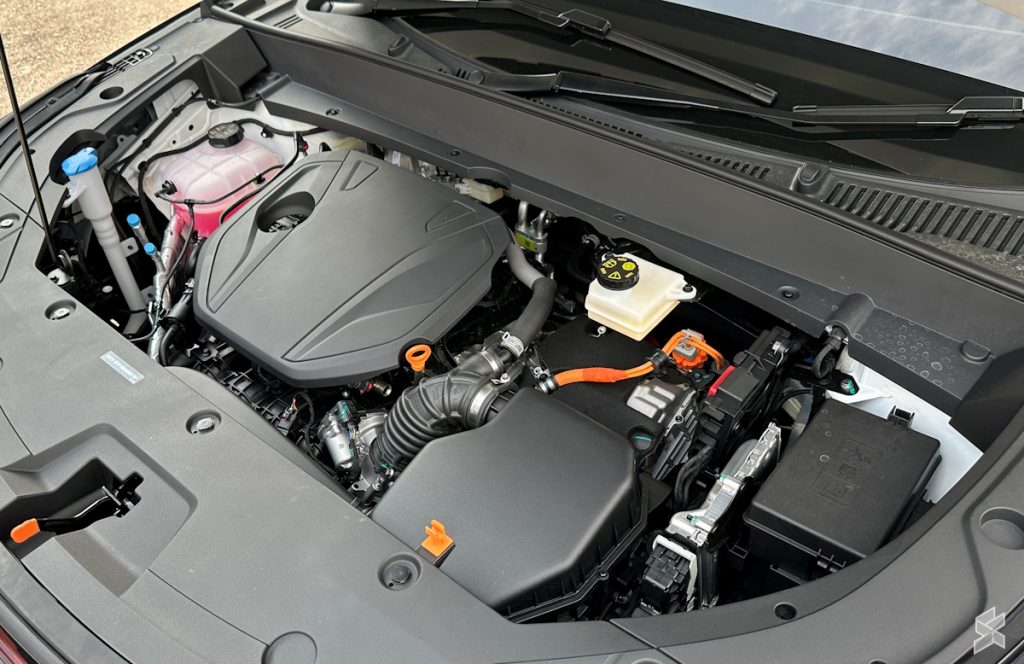
The powertrain provides e.MAS 7 PHEV with a maximum output of 193kW (259hp) alongside a maximum torque of 262Nm. Also comes with a 51L fuel tank, Pro-Net listed the SUV’s fuel consumption as 4.3L per 100km for Prime and Premium variant while Premium+ is slightly different at 4.4L per 100km.
Performance-wise, the e.MAS 7 PHEV has a 0-100km/h timing of 8.0s to 8.2s depending on the variant. The SUV’s maximum speed is electronically limited to 170km/h.
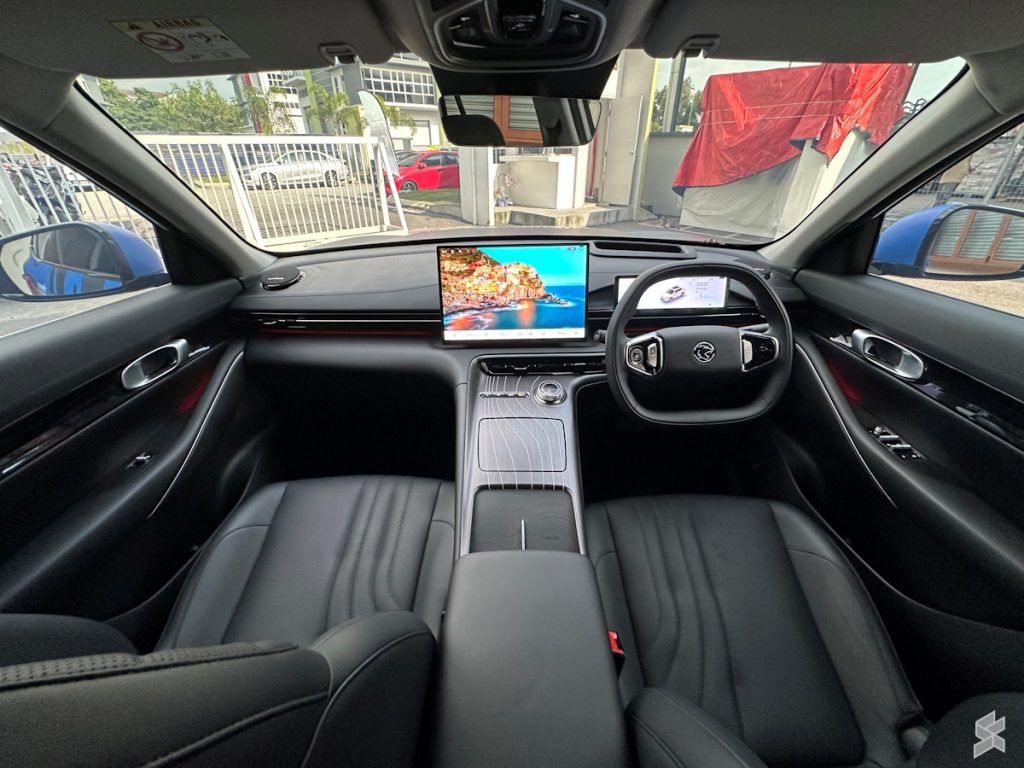
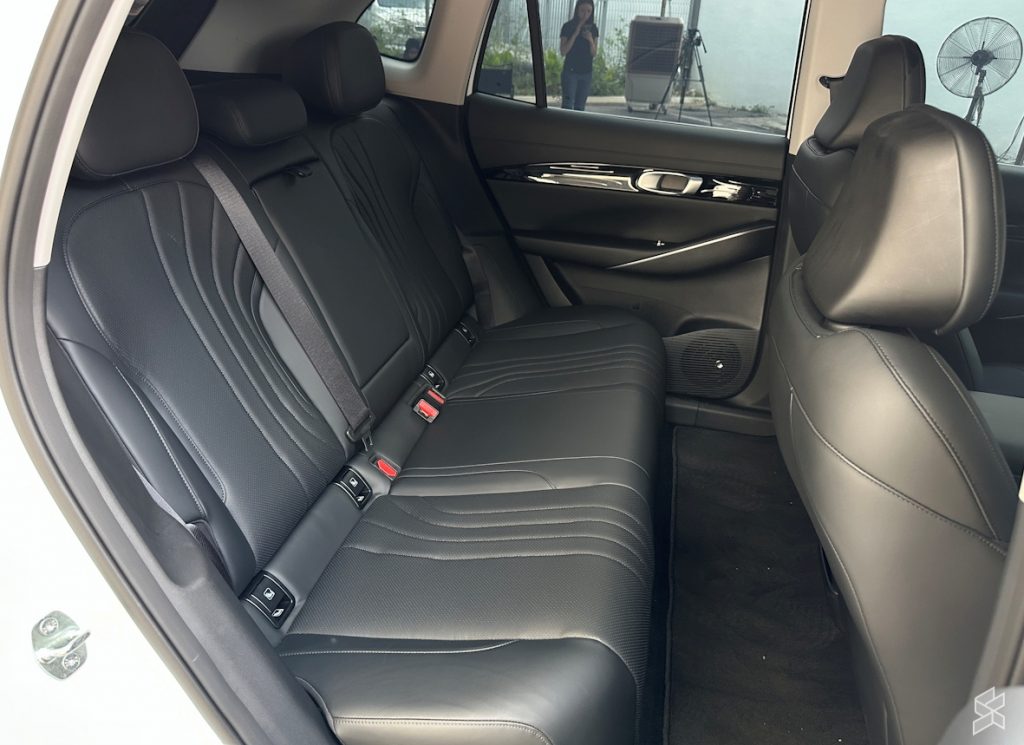
While the e.MAS 7 PHEV might be a larger vehicle with bigger bootspace alongside a different powertrain setup, the interior of the SUV is generally identical to the EV version. This applies to the design, upholstery material and even the shape of the steering wheel.
Similarly, the PHEV model still comes with the massive 15.4-inch 2.5K infotainment display as well as a 10.2-inch digital instrument cluster. With infotainment system powered by Flyme OS which includes integrated live charging map, Android Auto and Apple CarPlay support comes as standard.
For more details including ADAS features as well as the differences between Prime, Premium and Premium+, you can check out our e.MAS 7 PHEV specs breakdown right here.