

Malaysia Rail Link Sdn Bhd (MRL) today clarified that the East Coast Rail Link (ECRL) passenger train will travel at a maximum speed of 160 kilometres per hour (km/h), dismissing claims from recent media reports suggesting that it could more than double its speed to 351km/h.
MRL, the project owner of the ECRL, emphasised that the entire rail infrastructure, including foundation works, rail track, rail signalling system, and rolling stock, had been specifically developed based on a design speed of less than 200km/h.
“MRL wishes to highlight that the rail alignment of the ECRL has been meticulously designed, considering horizontal curves, cants (superelevation) and gradients that align with the characteristics of a fast train. The East Coast states’ alignment poses unique challenges, with sections built on sites featuring poor soil conditions, traversing hilly terrain and wide river crossings.
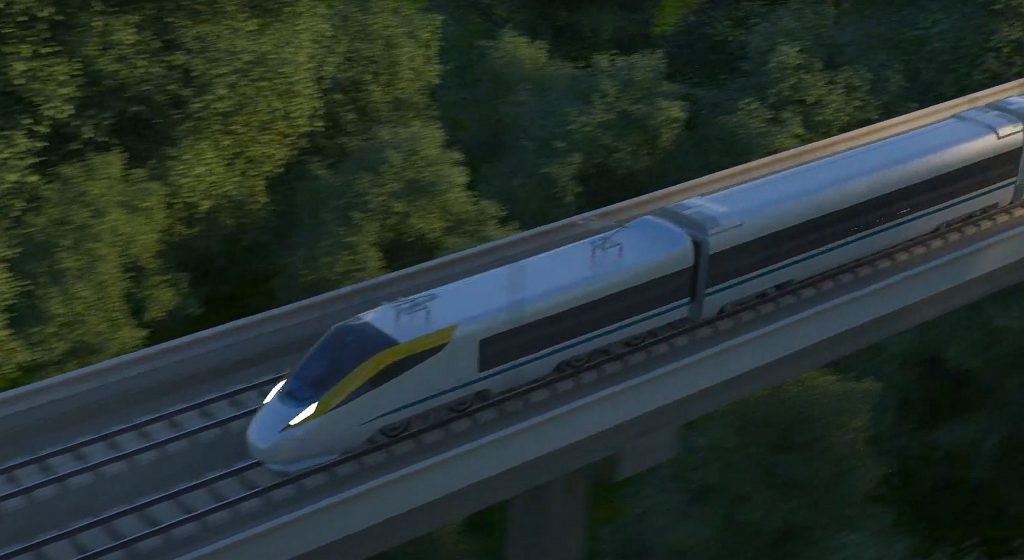
“Therefore, recent news reports citing a Chinese expert suggesting that ECRL can increase its speed to 351km/h during the Belt and Road Initiative in ASEAN forum is inaccurate and misleading,” it said in a statement this evening.
MRL said that since its inception in August 2017, the ECRL project has adhered to a vision of providing a fast train for passengers rather than a high-speed train, which industry standards typically define as having a running speed of at least 250km/h.
“ECRL remains a fast train for passengers exclusively and cannot be upgraded or converted into a high-speed train under current engineering specifications and operating systems,” it added.
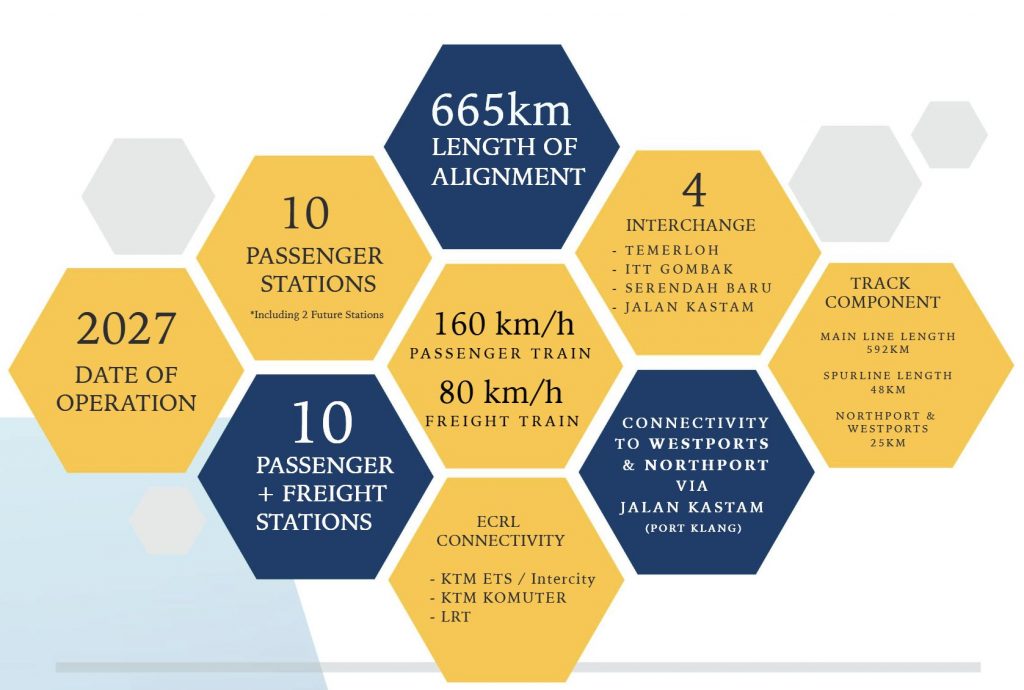
MRL underscored that ECRL is primarily designed for cargo transportation, with a projected operational revenue ratio of 70 per cent from freight and 30 per cent from passenger services.
The company said that the design requirements for freight trains made upgrading the planned passenger train to a high-speed one unfeasible.
“MRL wishes to emphasise that the ECRL alignment, although using a standard gauge (1.435 metres) tracks, will also cater to the operation of its freight locomotives and wagons that will travel at a maximum speed of 80km/h only,” it said.
Yesterday, national news agency Bernama reported Beijing-based Centre for China and Globalisation vice-president Victor Gao as saying, after Concorde Club’s forum discussion on the Belt and Road Initiative (BRI) in Asean, that the ECRL train speed could be increased from 160km/h to 351km/h.
“Hopefully, it (ECRL train) will be faster. It will be 351km/h rather than that of the Indonesian high-speed railway (HSR) at 350km/h. Malaysia can have an advantage of one hour extra,” he reportedly said.
The 665km ECRL will traverse the East Coast states of Kelantan, Terengganu and Pahang before linking the Klang Valley on the west coast of peninsular Malaysia.
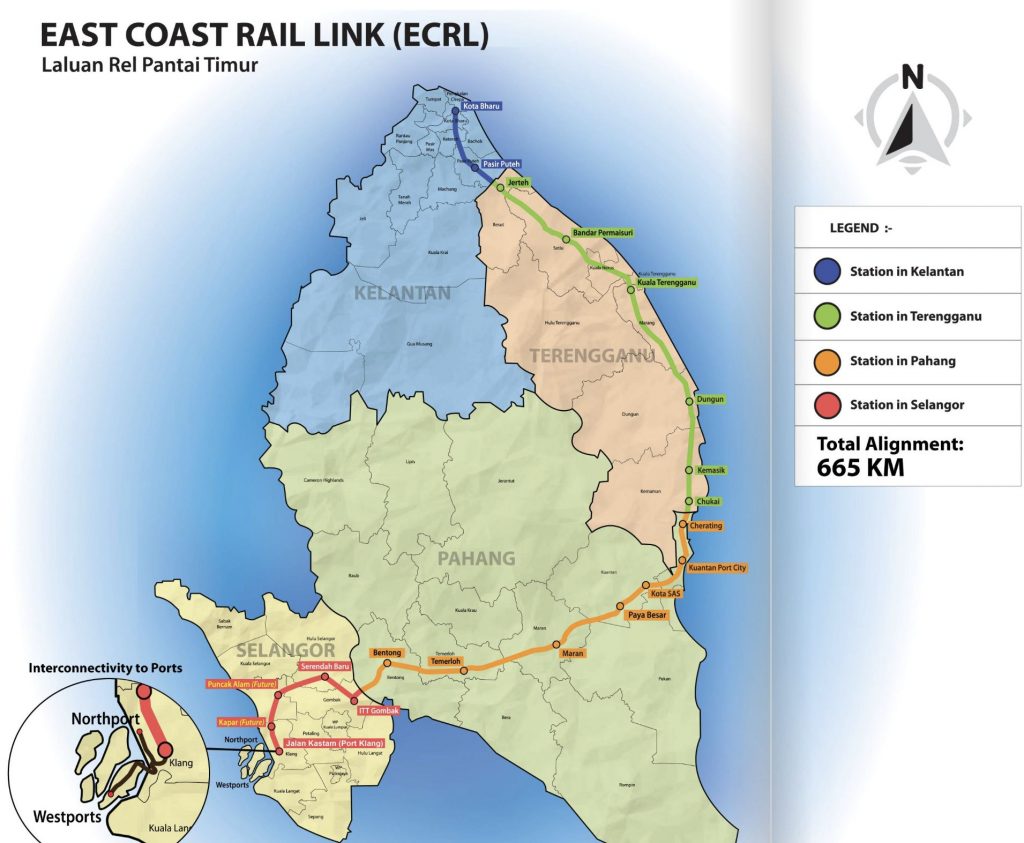
When operational in January 2027, the passenger train service will take approximately four hours to travel from Kota Baru to the Integrated Transport Terminal — Gombak (ITT-Gombak) in Selangor compared to seven hours by road.
On September 19, Transport Minister Anthony Loke told the Dewan Rakyat that the ECRL project had reached 52.9 per cent completion and was on track to finish by 2027.
He added that the ECRL line from Kota Baru to Gombak was set to be completed on December 31, 2026, and the Gombak to Port Klang stretch by December 31, 2027. — Malay Mail