

When you think about the COVID-19 pandemic, some of the first things to come to mind are the people impacted, the various lockdown measures implemented, and the economic impact of the coronavirus. However, researchers at global cybersecurity company Kaspersky have now shared that the online world is affected by current situation as well.
The pandemic has disrupted the world in a way that has rarely been seen on such a global scale, and this has resulted in a “reflection on the cyber domain”. Part of this is due to the implementation of remote working situations, where employees work from home. As such, home networks aren’t usually as secure as enterprise-grade ones, and this also “widens the surface of attacks” for malicious parties in the online domain.
Additionally, the researchers opined that the economic effects of the pandemic have spilled over into the cybersecurity world, with budgets being cut and lower standards of cybersecurity used. Many have also fallen victim to ploys based around social situations, such as malware disguised as COVID-19 related information in emails.
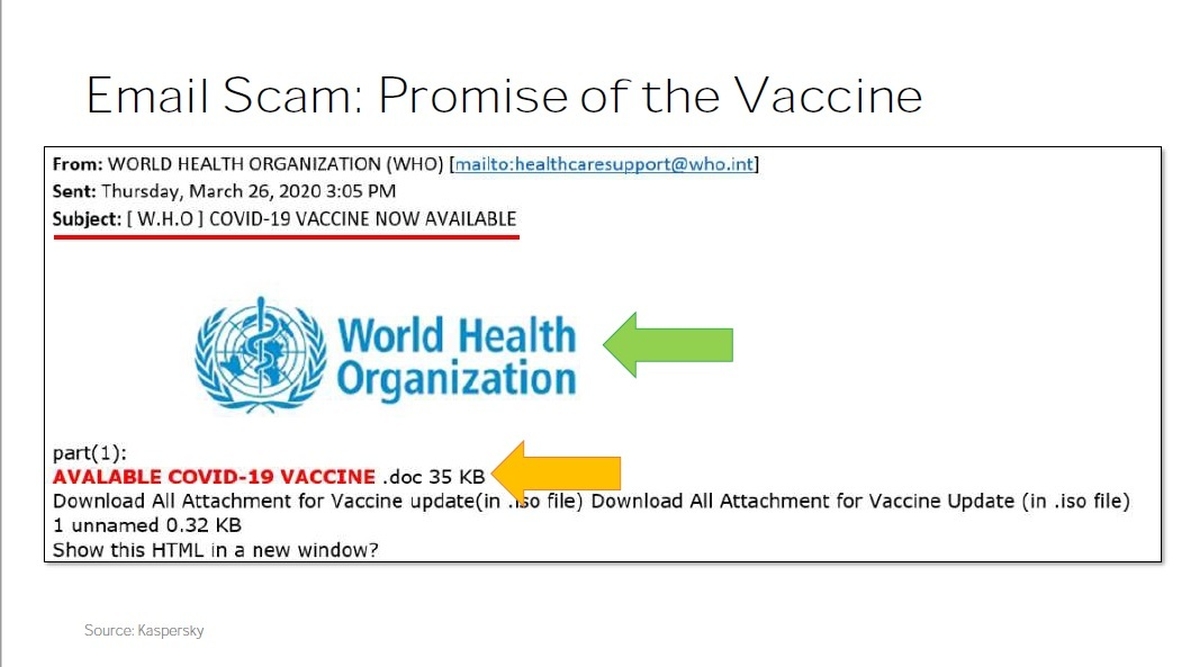
Malware that take advantage of the current situation are also hidden in different types of files now, with researchers noting that perpetrators have avoided the use of .zip or .rar files—containers that malware is usually found in. There are even emails that promise of a “vaccine”.
Some of the other common topics used in COVID-19-related scams include government orders, money reimbursements from the government or employer, vaccine, home test-kits, fake medical institutions, charities, virus tracking apps, investment options, medical supplies, and financial support. All of the above are hot topics in the current situation, so be sure to only download/click on reliable sources.

Cybersecurity professionals are uniting
The COVID-19 CTI League is a non-profit collective of over 150 individuals and organisations (including Kaspersky) around the world who volunteer to work against the rise of fake websites, COVID-19-themed malware, and so on. The group also offers a incident response for attacks.
Vitaly Kamluk, Director for Global Research and Analysis Team Asia Pacific at Kaspersky, explained that any big event that happens on a global scale will inevitably have an effect on the cyber world. However, Kamluk shared that the challenge can also be partly-assisted with the use of Biscourt, a digital forensics tool for cyber investigations that he developed open-source.
For now, it’s important to understand the prevalence of malware in COVID-19-related items, and how to stay safe. For one, never download or click on anything from a source that you don’t trust. Other tips include to lookout for spelling/grammatical errors in the emails/messages, and to only use official sources for important information.