
This post is brought to you by Visa.
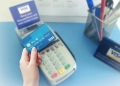
When it comes to making contactless payments, Visa payWave is the most convenient option for consumers today. Despite some misconceptions about contactless payments, Visa payWave is actually a lot safer than you think and here are three things that you need to know.
You don’t need RFID-proof bags and wallet
There have been rumours that criminals can steal your card details using wireless devices metres away with a special reader. Because of this fear, there are people taking the opportunity to sell RFID-proof bags or sleeves that claim to protect you from digital pickpocketing.
The truth is, you don’t need these because digital pickpocketing is extremely difficult in reality. Firstly, criminals would need to be within a few centimeters from your card to read any digital details. As you can imagine, this is extremely difficult to pull off. It gets even harder to scan the card if you have multiple contactless cards in your wallet.
Even if they manage to get your card details (which is not possible in real-life scenarios), all they will get is a 16-digit number and the expiry date. That’s still not good enough to clone or make fraudulent transactions online. They would still need the 3-digit CVV number that’s printed behind of the card and a one-time verification code that’s sent to your registered mobile number.
Visa payWave uses EMV chip technology that’s impossible to clone
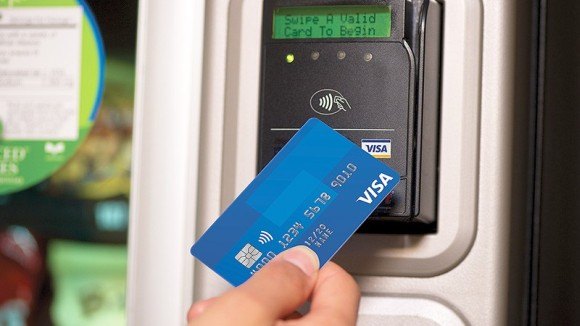
Visa payWave uses the same secure EMV chip technology that’s used on Visa chip-based cards. When you make a contactless transaction, your card details are encrypted which is much more secure than magnetic stripe transactions. Since EMV was introduced, fraud transactions have dropped dramatically due to its enhanced security features.
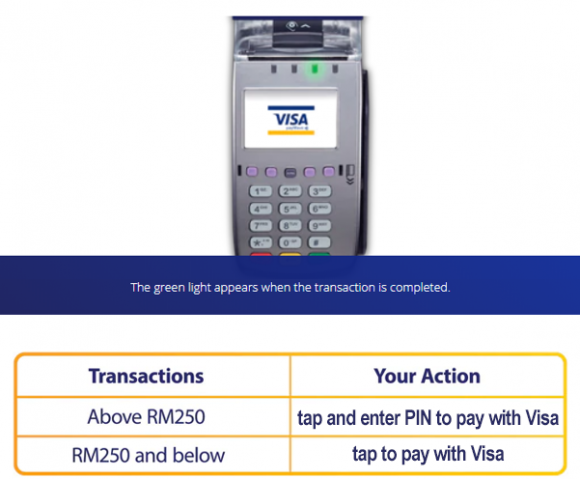
In addition, banks have also added additional layers of security to prevent unauthorised use. Any Visa payWave transactions above RM250 will require a PIN which only you as the cardholder will know. If you’re making payments using a smartphone like Samsung Pay, you can secure your payments with your iris or fingerprint.
Understand the basic security measures
With Visa payWave, you’re always in control but you still have the responsibility to keep your card safe. Your card’s PIN should not be shared with anyone else and it is best not to write it down. If your wallet is stolen, you wouldn’t want thieves to access both your card and PIN.
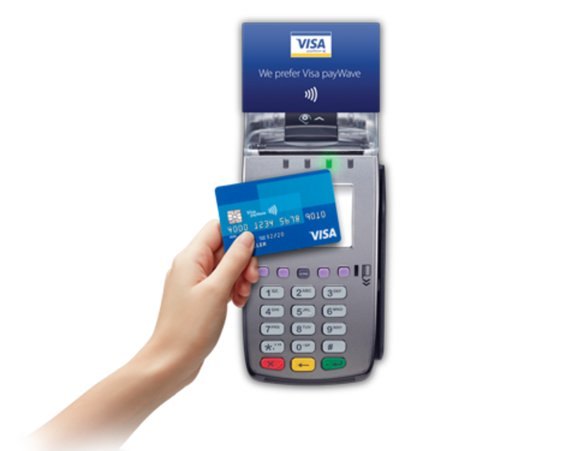
Since Visa payWave transactions are contactless, you don’t need to pass your physical card to anyone. When it’s time to make a payment, just tap your card against the terminal and you’re good to go.
With all these security measures in place, you can shop with confidence using Visa payWave. If you do lose your card, call your bank or card issuer so that they can block any unauthorised transactions on the card and issue a new card for you. You can learn about Visa payWave’s security features here or you can watch the video below: