OK. We thought this would be pretty obvious, but clearly there are more vulnerable people out there than we thought. In any case, here’s a super helpful PSA:
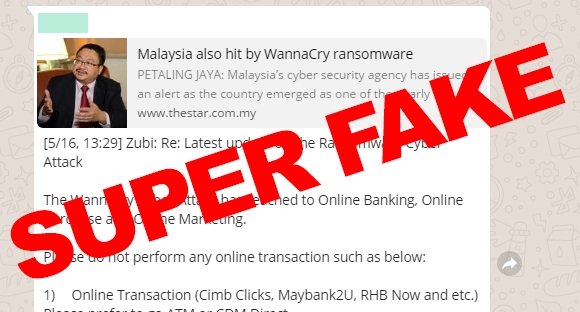
The WhatsApp messages regarding WannaCry affecting online transactions and spreading through WhatsApp are FAKE.
Deliberately misleading and false messages spread through WhatsApp are probably the most heinous of viral crimes because it preys on the naive and overly trusting few in our society. People who see a headline, panic and immediate decide that the best thing they should do at that point is to share the message with as many people as possible.
Well, the latest in such messages feeds off the fear surrounding the whole WannaCrypt0r 2.0, also known as WannaCry, ransomware attacks that exploit weaknesses in the Windows operating system. The malware will then encrypt all your files and hold them hostage. If you want access to your files, you will often be forced to pay a ransom before the attackers will send you the decryption key. If you want to learn more you can check out this informative article by TheSkop on what it is and how you can protect yourself from it.
And here comes the fake message being spread through WhatsApp. So far we’ve come across one version and it reads as follows:
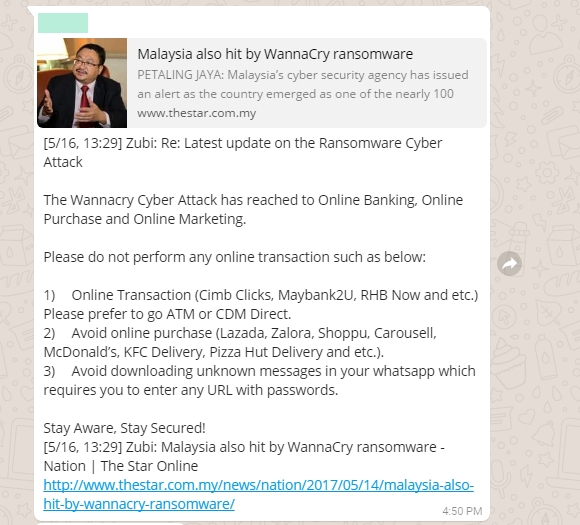
The message suggests that the WannaCry cyber attacks have “reached to Online Banking, Online Purchase and Online Marketing”. It also purports that if you make online transactions (purchases or transfers) you could be vulnerable to the attacks. It also suggests that you can get it through downloading unknown messages in your WhatsApp which is mostly untrue.
WannaCry, at least as far as we currently know, only affects Windows machines and not your iOS or Android phones. What’s more, it in no way affects online transactions because they have nothing to do with it.
If there was any part of the message that is true, it is regarding clicking on unknown links. But that’s pretty much Safe Internet 101 where you DO NOT CLICK ON ANY SUSPICIOUS LINKS FROM PEOPLE YOU DON’T KNOW. Doesn’t matter if it’s spread through WhatsApp, WeChat, Telegram, Emails or any other form of communication.
TheStar did a great job in debunking this myth in their article. The English daily contacted CyberSecurity Malaysia who promptly confirmed that the messages were absolutely false. Even the Association of Banks in Malaysia said that all their services were working as usual and that the messages on the disruption of internet banking services and ATM machines due to ransomware attacks are also fake.
I guess the important lesson to take away from this is that you should always double check ALL the information you receive. I’ll admit, this message was a little sneaky because they included a link to an article on TheStar to lend it some semblance of legitimacy. But, if you click into the story you will realise that Star’s article has absolutely no relation to the message whatsoever.
So, double check all your information. Google the contents of the message and choose to get your information from reliable sources. If it’s a subject that you’re not familiar with, check with someone who is familiar with that subject.
Please, don’t spread fake messages like these because people who do spread these messages are the reason why they exist in the first place. There’s that subset of people who get off on causing panic, what you don’t want to do is feed that.
Be wise, my friends.