
• 中文版
  • BM
  • News
  • Deals
  • Reviews
    • First Impressions
    • Hands-on
    • Comparisons
  • Tech
    • Mobile
    • Computers
    • Cameras
    • Wearables
    • Audio
    • Drones
  • Telco
    • Celcom
    • Digi
    • Maxis
    • Time
    • Tune Talk
    • U Mobile
    • Unifi
    • Yes
  • Cars
  • Contribute
  • Jobs
Menu
  • 中文版
  • BM
  • News
  • Deals
  • Reviews
    • First Impressions
    • Hands-on
    • Comparisons
  • Tech
    • Mobile
    • Computers
    • Cameras
    • Wearables
    • Audio
    • Drones
  • Telco
    • Celcom
    • Digi
    • Maxis
    • Time
    • Tune Talk
    • U Mobile
    • Unifi
    • Yes
  • Cars
  • Contribute
  • Jobs
Search
  • Tech
    • News
    • Mobile
    • Computers
    • Cameras
    • Wearables
    • Audio
    • Drones
  • Telco
    • Celcom
    • Digi
    • Maxis
    • Time
    • U Mobile
    • Unifi
    • Yes
  • Reviews
    • First Impressions
    • Hands-on
    • Comparisons
  • Buyer’s Guide
  • Opinions
  • Digital Life
  • Video
  • Deals
  • How-To
  • Cars
  • Bahasa Melayu
  • EV
  • Contribute
  • Advertise
Menu
  • Tech
    • News
    • Mobile
    • Computers
    • Cameras
    • Wearables
    • Audio
    • Drones
  • Telco
    • Celcom
    • Digi
    • Maxis
    • Time
    • U Mobile
    • Unifi
    • Yes
  • Reviews
    • First Impressions
    • Hands-on
    • Comparisons
  • Buyer’s Guide
  • Opinions
  • Digital Life
  • Video
  • Deals
  • How-To
  • Cars
  • Bahasa Melayu
  • EV
  • Contribute
  • Advertise
Search
Close
Home News

Google Cardboard just saved someone’s life

  • BY Rory Lee
  • 30 December 2015
  • 2:18 pm
  • Comment
Share on FacebookShare on Twitter

151230-google-cardboard-virtual-reality-saves-lives

Think about a printed image of a sprawling cityscape. Can you confidently tell how far apart one building is from the next and navigate it without a proper scale? What about those little parts that are obscured by a building or a shadow? Can you tell what’s hidden there?

Now imagine all of that detail compressed into the body of a baby girl and you’ve only begun to scrape the surface of how difficult surgeon Dr Redmond Burke’s operation was.

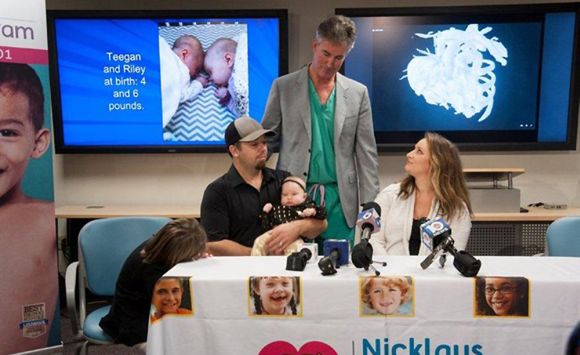
Teegan Lexcen, a 4-month-old baby was admitted into the Niklaus Children’s Hospital in Miami, Florida because she was born with a misplaced heart. Without surgery, she would be dead by Christmas.

The worst part? Doctors couldn’t see a way in to operate.

I don’t think I need to tell you how delicate heart surgery is, or how difficult it can be. It becomes nigh impossible when you don’t have all the information you need.

Burke says that surgeons need to be able to visualise the entire procedure before they step into the operating room, which is why many surgical teams passed on Teegan’s operation because they kept running into walls during this process: It seemed inoperable.

Burke had the same problem as he had no way of knowing if a standard incision over the sternum would be enough, but “inoperable” was not a word he enjoyed using. Exhausting medical solutions, the team began looking for creative solutions and one particularly enterprising member uploaded the scans of Teegan’s chest to Sketchfab, converting them into 3D stereoscopic imagines, which allowed them to view it in VR.
151230-google-cardboard-virtual-reality-saves-lives-3

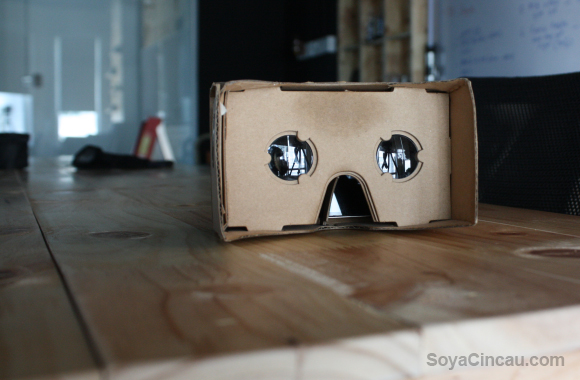
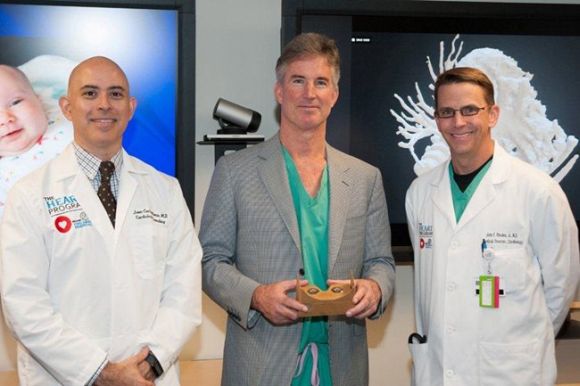
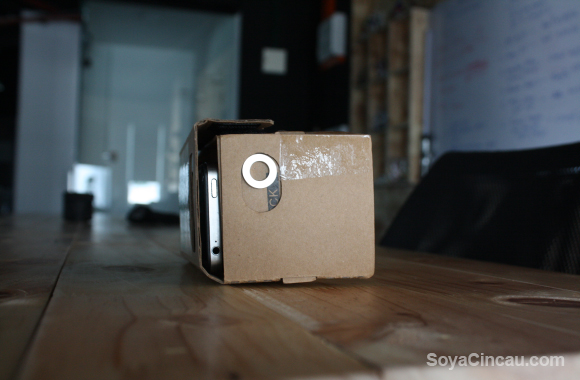
Virtual Reality. That was the answer. Burke said that with Google Cardboard and a smartphone he was able to see the patient’s entire heart by simply tilting his head. He could turn it and manipulate it as if he was already in the operating room.

From there, Burke could see Teegan’s heart as well as her chest wall and with that information, he knew that a standard incision would indeed be fine.
151230-google-cardboard-virtual-reality-saves-lives-2

According to Burke, this solution came just in the nick of time; any longer and her kidneys may have suffered too much from her being put under. She would be alive, but on dialysis for the rest of her days.
151230-google-cardboard-virtual-reality-saves-lives-1

We’re floored that a little bit of cardboard and a smartphone actually saved someone’s life. That and good old fashioned human ingenuity of course.

Burke views every operation as possible and it was down to whether the doctor had the confidence to perform it or not. With VR he could visualise the steps in his head and help him come up with a plan of operation for his team which allowed him to save his patient.

Seven hours later, little Teegan was all patched up and ready for Christmas and ho, ho, ho-pefully for many more Christmases to come.

[SOURCE, VIA]

Tags: Cardboardcardboard virtual realityCardboard VRdr redmond burkegoogleGoogle CardboardGoogle VRmedicineniklaus children's hospitalredmond burketeegan lexcenvirtual realityvirtual reality medicineVRvr in medicine
Rory Lee

Rory Lee

POPULAR

Image source: Jakub Zerdzicki on Pexels

AEON Bank’s Personal Financing-i (PF-i): Flexible Funds to Help Ease Budget Constraints

December 24, 2025

Google Cardboard just saved someone’s life

December 30, 2015

The Xiaomi 17 Proves You Don’t Need a Giant Phone for Pro-Level Photos

February 28, 2026

Is Your Current Phone Generations Behind? Here’s a Simpler Way to Close the Gap

March 13, 2026

Maybank MAE users: Update your app by 11 April or risk losing access

April 4, 2026

U Mobile’s new ULTRA Prepaid now offers no speed cap for 5G. RM50 prepaid offers 500GB data and 2x ULTRA5G Priority pass

April 7, 2026

Copyright © 2025 · SoyaCincau.com
Mind Blow Sdn Bhd (1076827-P)

  • ADVERTISE
  • DISCLAIMER

Copyright © 2026 · SoyaCincau.com – Mind Blow Sdn Bhd (1076827-P)

  • ADVERTISE
  • DISCLAIMER