
• 中文版
  • BM
  • News
  • Deals
  • Reviews
    • First Impressions
    • Hands-on
    • Comparisons
  • Tech
    • Mobile
    • Computers
    • Cameras
    • Wearables
    • Audio
    • Drones
  • Telco
    • Celcom
    • Digi
    • Maxis
    • Time
    • Tune Talk
    • U Mobile
    • Unifi
    • Yes
  • Cars
  • Contribute
  • Jobs
Menu
  • 中文版
  • BM
  • News
  • Deals
  • Reviews
    • First Impressions
    • Hands-on
    • Comparisons
  • Tech
    • Mobile
    • Computers
    • Cameras
    • Wearables
    • Audio
    • Drones
  • Telco
    • Celcom
    • Digi
    • Maxis
    • Time
    • Tune Talk
    • U Mobile
    • Unifi
    • Yes
  • Cars
  • Contribute
  • Jobs
Search
  • Tech
    • News
    • Mobile
    • Computers
    • Cameras
    • Wearables
    • Audio
    • Drones
  • Telco
    • Celcom
    • Digi
    • Maxis
    • Time
    • U Mobile
    • Unifi
    • Yes
  • Reviews
    • First Impressions
    • Hands-on
    • Comparisons
  • Buyer’s Guide
  • Opinions
  • Digital Life
  • Video
  • Deals
  • How-To
  • Cars
  • Bahasa Melayu
  • EV
  • Contribute
  • Advertise
Menu
  • Tech
    • News
    • Mobile
    • Computers
    • Cameras
    • Wearables
    • Audio
    • Drones
  • Telco
    • Celcom
    • Digi
    • Maxis
    • Time
    • U Mobile
    • Unifi
    • Yes
  • Reviews
    • First Impressions
    • Hands-on
    • Comparisons
  • Buyer’s Guide
  • Opinions
  • Digital Life
  • Video
  • Deals
  • How-To
  • Cars
  • Bahasa Melayu
  • EV
  • Contribute
  • Advertise
Search
Close
Home News

Which Smart Phone can stand the heat for 4K Video Recording? Watch this non-scientific test

  • BY soyacincau
  • 4 August 2014
  • 4:33 pm
  • Comment
Share on FacebookShare on Twitter

140804-4K-heat-recording-test

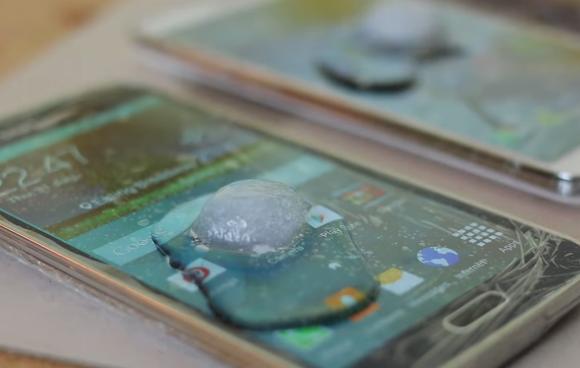
If you want to capture moments with greater detail, most new smart phones today lets you record videos at a higher 4K resolution. Not only it takes up bigger file size, taking a video in 4K is more hardware intensive and generates significantly more heat than standard Full HD 1080p formats. To find out which is the coolest, some folks at Btekt had compared the Samsung Galaxy S5 , Samsung Galaxy Note 3 , Sony Xperia Z2 and LG G3 heat generation by applying ice cubes on top.

It is interesting to point out that all smart phones except for the Xperia Z2 have 5 minutes recording limit for 4K mode. So after 5 minutes, they just left the screen on for the remainder of the test while the Xperia Z2 camera continues to roll. Considering the Xperia Z2 is able to take 4K videos without restrictions, storage was the only barrier as the video was uncompressed and it quickly takes up the remaining space on the device.

After the experiment, the LG G3 surprisingly came out on top as the coolest device as it was the last one to melt the ice completely. The Galaxy S5 and Galaxy Note 3 tied in the last spot and it is suspected that it could be due to its AMOLED display which could be warmer. Considering both the Galaxy S5 and Xperia Z2 being water resistant devices, it is strange that they need to shrink wrap them for this experiment. Check out the ice melting experiment after the break.


[ SOURCE, VIA ]

Tags: 4K4K Video RecordingCoolest TemperatureHeatLG G3Samsung Galaxy Note 3Samsung Galaxy S5Sony Xperia Z2Temperature Test
soyacincau

soyacincau

POPULAR

Which Smart Phone can stand the heat for 4K Video Recording? Watch this non-scientific test

August 4, 2014

Samsung Galaxy A26 5G for Just RM1,099: The Most A-mazing Deal in Town?

December 22, 2025

We Took the Samsung Galaxy S25 Ultra for a Festive Night Shoot: Here’s What We Learnt

December 23, 2025

Max Out Your Samsung Galaxy S25’s Camera Potential with These Must-Try Features

December 23, 2025

Instagram “Reset your Password” Email: Is there a Data Breach at Meta?

January 11, 2026

Grab the Samsung Galaxy Z Flip7 with up to RM2,550 savings this holiday season

December 27, 2025

Copyright © 2025 · SoyaCincau.com
Mind Blow Sdn Bhd (1076827-P)

  • ADVERTISE
  • DISCLAIMER

Copyright © 2026 · SoyaCincau.com – Mind Blow Sdn Bhd (1076827-P)

  • ADVERTISE
  • DISCLAIMER